Roma: How Alfonso Cuarón Shot His Own Memory in Black and White
He wrote the film for his lifelong cinematographer. When Lubezki couldn't make it, Cuarón picked up the camera himself — and made Oscar history.

Alfonso Cuarón wrote Roma for Emmanuel Lubezki. The two had shot together since their days coming up in Mexican film, and the plan was never for Cuarón to operate a single frame himself. Then Lubezki's calendar filled with other commitments, the schedule stretched, and the cinematographer meant to light Cuarón's own childhood wasn't free. So Cuarón picked up the camera — and the Roma cinematography that came out of that accident won him an Academy Award no director had ever taken home before.
The DP nobody planned for
Lubezki — "Chivo" to everyone who knows him — didn't just bow out. He pushed Cuarón to shoot it himself, which mattered, because Cuarón had trained in cinematography before he ever directed. What started as a scheduling problem turned into the film's method. With no separate operator standing between the director's eye and the lens, decisions collapsed into one head.
Cuarón has been blunt about what that did to the work. "I was forced to be on the set," he told Variety. "By me being there, different transformations would happen and subtle changes to each scene." A director watching a monitor a few feet away sees a performance. A director with his eye in the finder feels the frame breathing, and adjusts the whole scene around it in real time. That fusion is the reason the film feels less staged than remembered. It's a different relationship to the camera than the one Cuarón and Lubezki built out of natural light and the unbroken take across their earlier films — this time the eye and the hand belonged to the same person.
Why the Alexa 65 — and why he stayed wide
Roma was shot on the ARRI Alexa 65, the 65mm digital large-format system, with ARRI Prime 65 lenses running from 24mm up to 150mm. Cuarón lived at the wide end. That choice is the spine of the whole look.
Wide glass on a sensor that big does something specific: it holds enormous depth while keeping the foreground and the far background legible at once. A maid crossing a courtyard, the dog underfoot, the laundry on the roof, the plane crawling across the sky — all of it stays sharp and present in the same shot. Nobody in the frame gets promoted by a shallow rack of focus. The family and the world they move through carry equal weight, which is exactly how the film treats them.
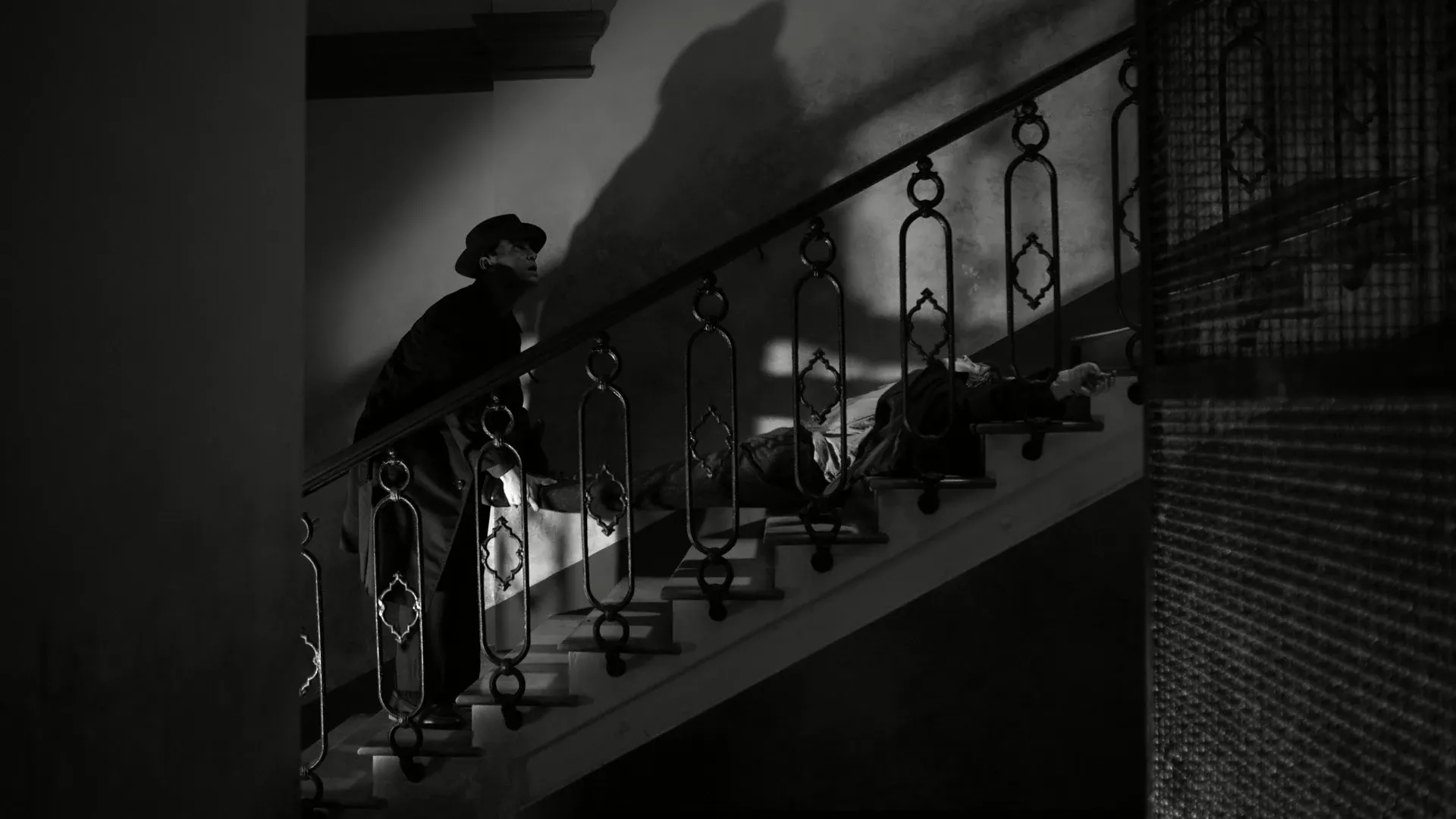
If you want to feel what large-format monochrome does with depth and hard geometry, look at how a modern black-and-white production like Ripley stacks a whole staircase into one legible plane — foreground rail, mid-ground body, background grille, nothing lost. That's the grammar Cuarón is working in. The wider you go, the more the focal length changes what the shot actually feels like: wide pulls the location into the story instead of just establishing it behind the actor.
Black and white, built to feel modern
Here's the part people get wrong about the Roma cinematography: it was captured in color and converted to black and white in post. That wasn't a shortcut. It was a decision about what kind of monochrome this would be.
Cuarón refused the obvious version. "I didn't want this to be a vintage black-and-white — a black-and-white that would look like something done in the '60s or the '50s," he said. What he wanted, in his words, was "a modern film that looks into the past." So instead of soft, grainy, period-emulated monochrome, Roma has the full dynamic range and resolution of a large-format digital negative, drained of color but not of clarity. Memory rendered in high definition.
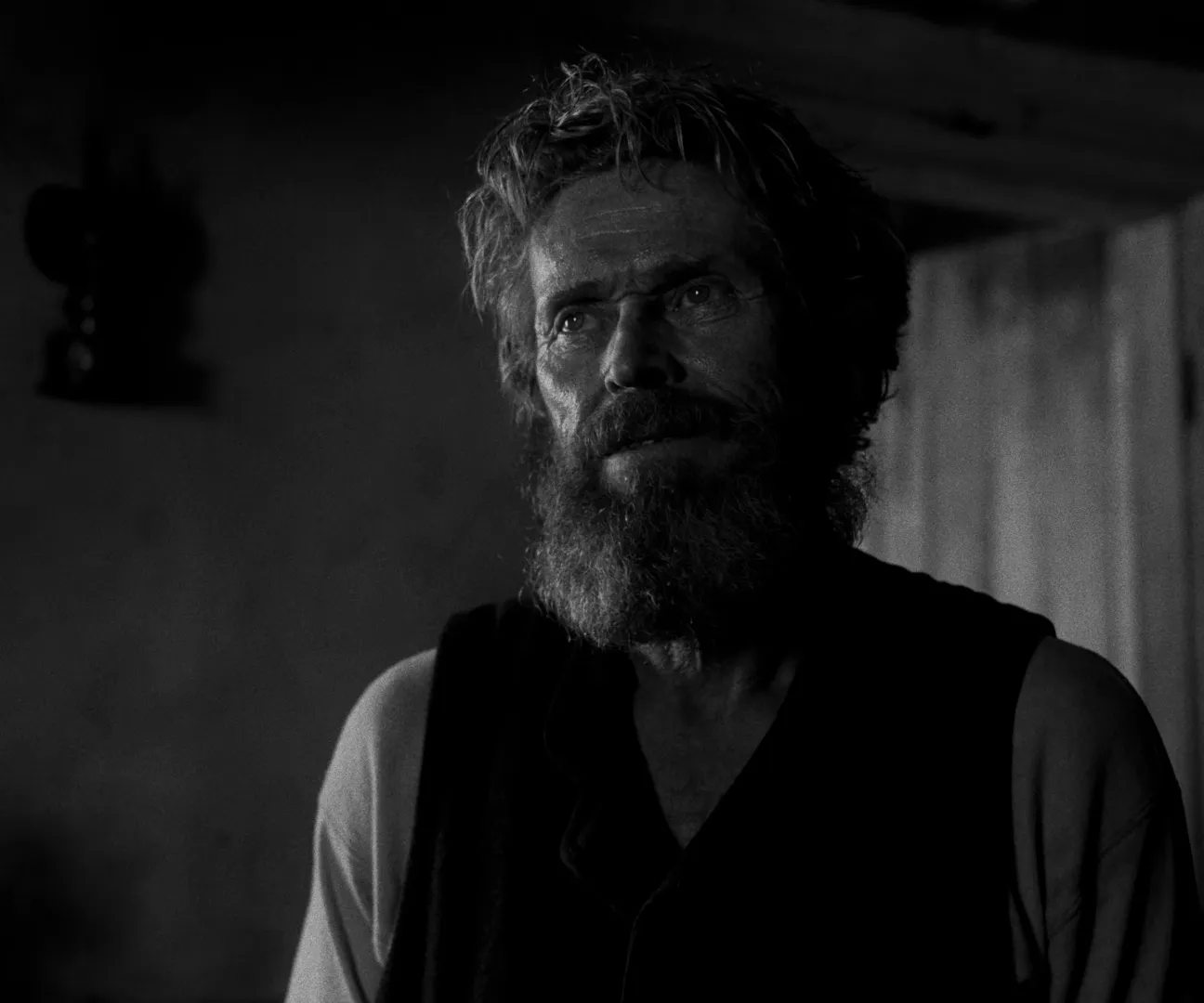
Strip color out and the whole burden of the image shifts onto tone. Skin, plaster, weather, the fall of a single light source — that's all you have left to separate one shape from another, the way a film like The Lighthouse leans its entire mood on contrast and texture. Cuarón made that job harder on purpose by keeping the grade clean and modern rather than nostalgic. If you're planning a monochrome shoot, it forces the same discipline you'd bring to building a color palette before you roll — except your only palette is the greyscale.
A camera that keeps its distance
The other signature of the film is how rarely it comes close. Cuarón mostly avoided close-ups, favoring steady wide framing and slow horizontal moves — long lateral tracks and unhurried pans that drift across a scene rather than cutting into it. Memory as a passing landscape, not a highlight reel.
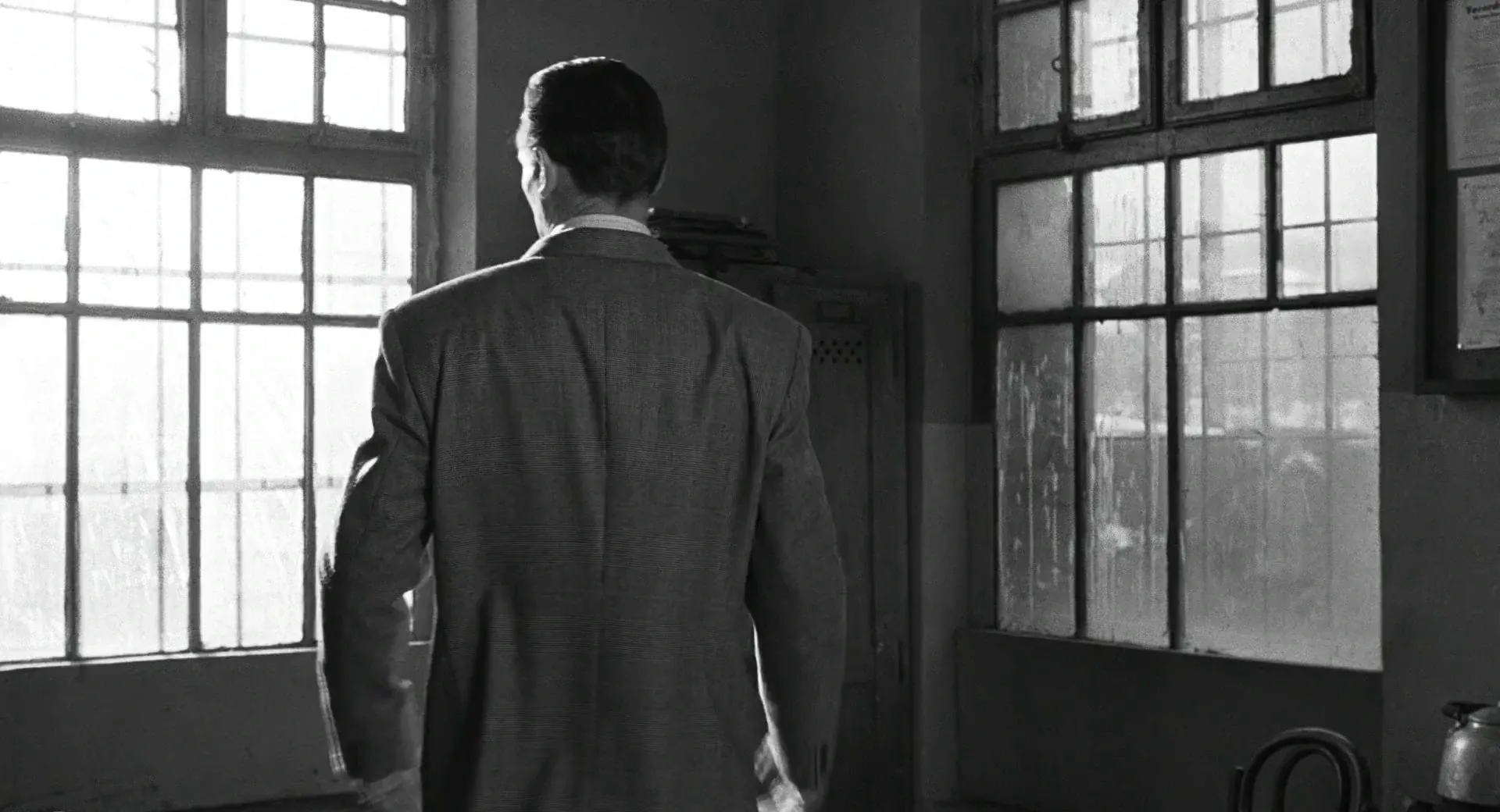
Holding a character at a respectful distance — backs of heads, figures small against a room, the camera declining to push in — is a choice with a long lineage in narrative black-and-white, and it changes how you read a scene. You watch behavior instead of being handed emotion in a tight single. Getting that restraint to work depends entirely on which move you pick and where you put it, which is the whole argument for treating camera movement as something each shot has to earn rather than default coverage.
The Oscar no director had won
The result rewrote a record. Cuarón became the first person ever to win the Academy Award for Best Cinematography on a film he also directed. He took Best Director the same night, and Roma became the first film from Mexico to win Best Foreign Language Film. One person, one eye, one set of choices — recognized for the two crafts the industry usually keeps in separate hands.
That's the quiet lesson under all the technical detail. The look of Roma isn't a bag of tricks; it's what happens when the person who remembers the story is also the person deciding where the camera stands. The wide lens, the deep field, the modern monochrome, the refusal to cut in — every one of those is a memory being framed, not a scene being covered.
You can't shoot your own childhood twice, but you can decide the look before you ever load a camera. That work starts with references — pulling frames that carry the exact depth, tone, and distance you're chasing, and building a visual reference library your whole crew can actually see, so the film in your head and the film on the day are the same film.
How did you like this article?
Login to react to this article
Discussion (0)
💬 No comments yet. Be the first to share your thoughts!