How to Block a Scene for the Camera
Most scenes get blocked for the actors and shot as an afterthought. Flip the order and the camera does half of the directing for you.

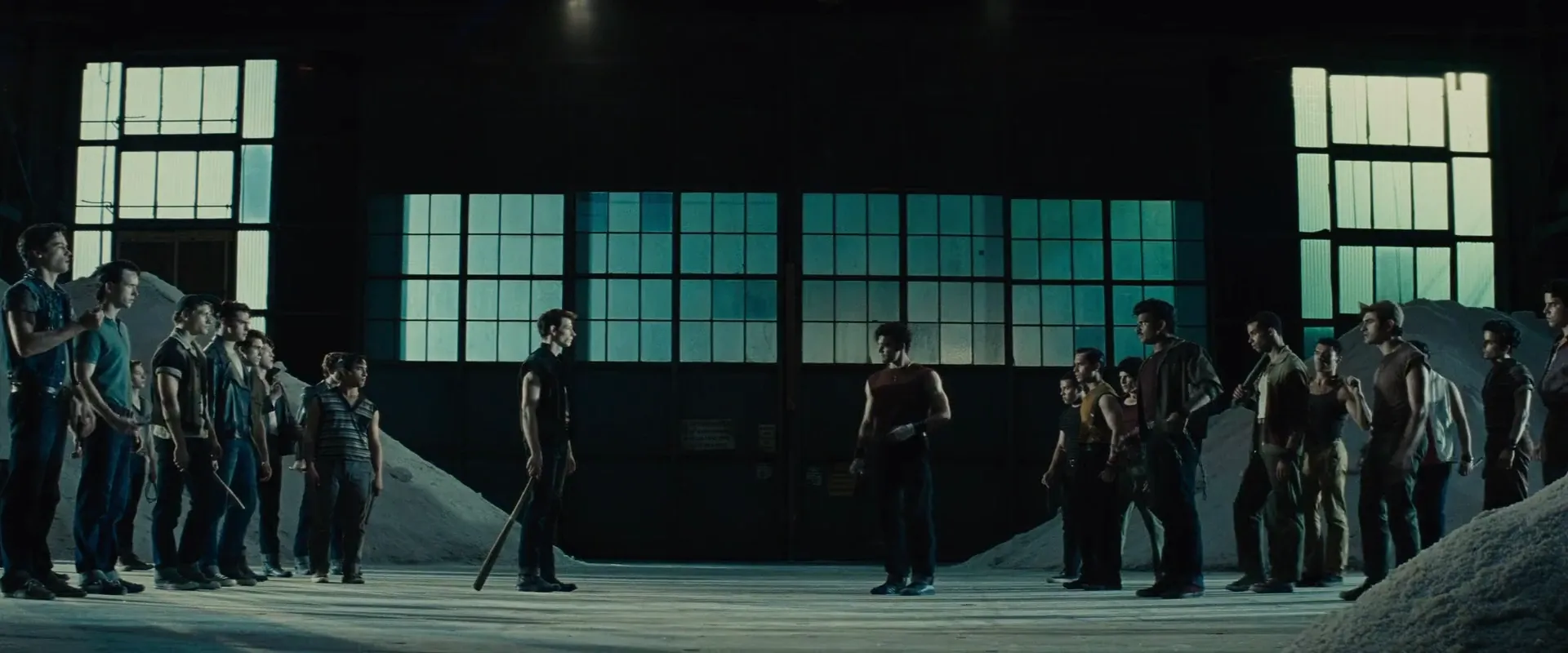
Watch a scene fall apart on the day and you can usually trace it back to one moment: the director walked the actors through their moves, everyone nodded, and nobody asked where the camera was. The performance got blocked. The scene didn't.
Blocking a scene for the camera means treating actor position, actor movement, and lens position as one problem instead of three. To block a scene well, work out the geography of the space first, stage the actors across depth instead of in a flat line, give the camera a motivated reason to move with them, and confirm the coverage you actually need falls out of those positions — before the truck arrives. Get that right and the shoot day stops being a negotiation with the clock.
Blocking Is a Camera Decision, Not Actor Traffic
The word "blocking" carries baggage from theater, where it only ever meant getting bodies to the right spot so the back row could see. On a film set that's half the job. The other half is what the lens does about it.
Every time you decide where an actor stands, you're also deciding what the camera can see, how far it has to travel to follow, and which faces you're giving up when you commit to an angle. When you block a scene purely for performance, you hand the DP a puzzle with no good solution — the emotional beat lands stage-left while the only clean camera position is stage-right, and now you're losing an hour relighting to save a shot you should have designed away in prep.
Look at how the two gangs are staged in the warehouse standoff in Steven Spielberg's West Side Story (2021). The geography is the story — two lines, a no-man's-land between them, the leaders pushed to the center where the frame forces the confrontation. You could shoot that a dozen ways, but the blocking already told the camera what the scene is about. That's the order to work in: stage the meaning, then find the lens.
Stage in Depth So the Frame Has Layers
The fastest way to make blocking read as cinematic rather than filmed-theater is to stop lining people up parallel to the sensor. Push someone into the foreground. Put someone in the deep background. Let the middle ground carry the beat.
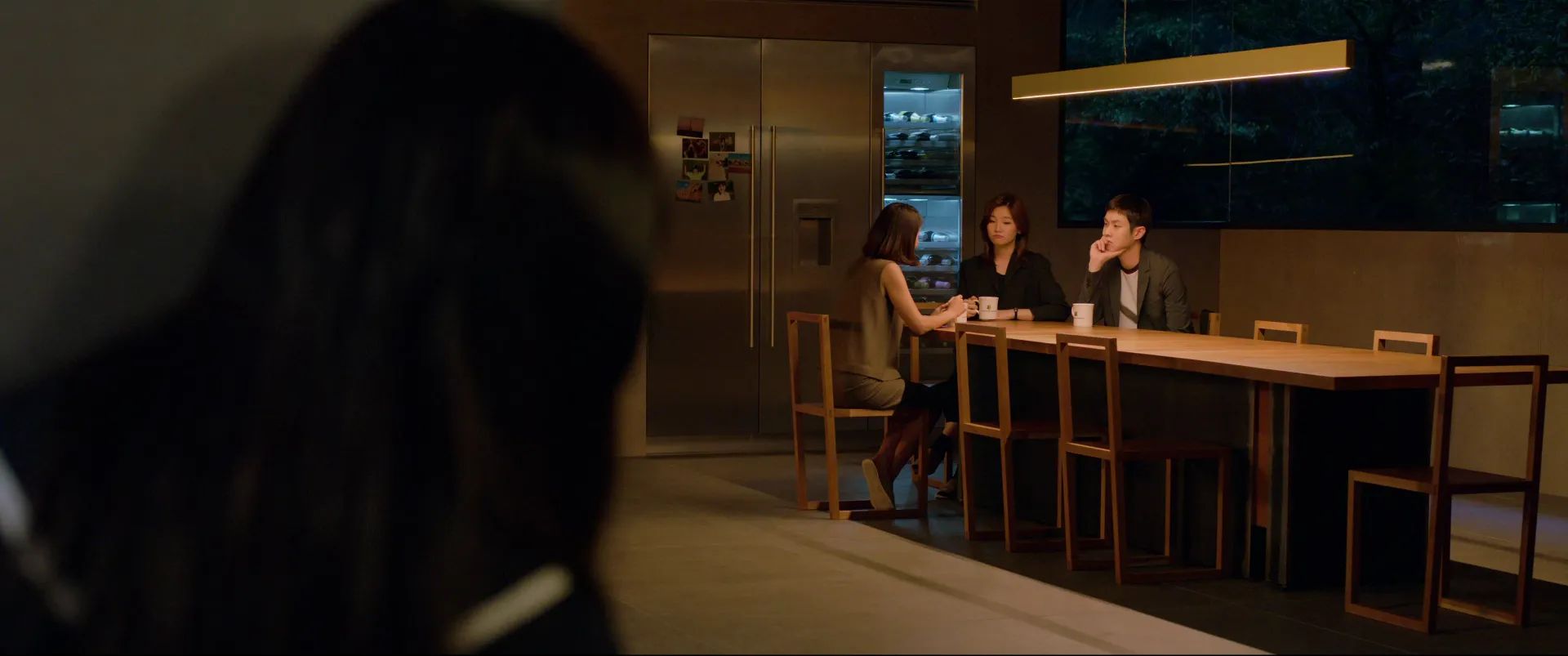
This is old knowledge — Gregg Toland built Citizen Kane (1941) around what he called pan-focus, keeping foreground and background equally sharp so several planes of action could play at once and the audience's eye could travel the frame. Bong Joon-ho's Parasite (2019) runs on the same instinct: a soft shape in the foreground, the conversation held in the middle, a window and the world behind it. Blocking an actor to cross a foreground object also buys you parallax — the near thing slides faster than the far thing as the camera moves, and suddenly a flat 2D frame reads as real space.
Depth staging does something practical too. When your actors occupy different distances, a single camera move can travel between them and reframe from a wide to a clean single without a cut. You've turned blocking into coverage. If you want to go deeper on how distance, aperture and focal length trade against each other to keep those planes readable, that's a whole craft of its own — but the staging decision comes first.
Give the Lens a Reason to Move
A camera move that isn't motivated by the blocking is just the camera announcing itself. A move that rides an actor's shift of weight, a turn, a walk to the window — that one disappears into the scene.
The gold standard is Alfonso Cuarón and Emmanuel Lubezki's unbroken car-ambush take in Children of Men, where the camera's every reframe is driven by where the characters go inside a cramped car — the blocking authors the move, not the other way around. You don't need a five-minute oner and a custom rig to use the principle. You need to ask, for every push-in or lateral track, what actor action justifies this? If the honest answer is "nothing, it looked cool," lock the camera off and let the blocking carry it.
This is also where deciding your camera movement while you plan the blocking pays off. A dolly move you designed around an actor's cross is cheap and repeatable on the day. One you improvise on set fights the blocking every take.
Let Coverage Fall Out of the Blocking
Here's the payoff for doing the work up front: when the staging is right, your coverage stops being a shopping list and starts being obvious.
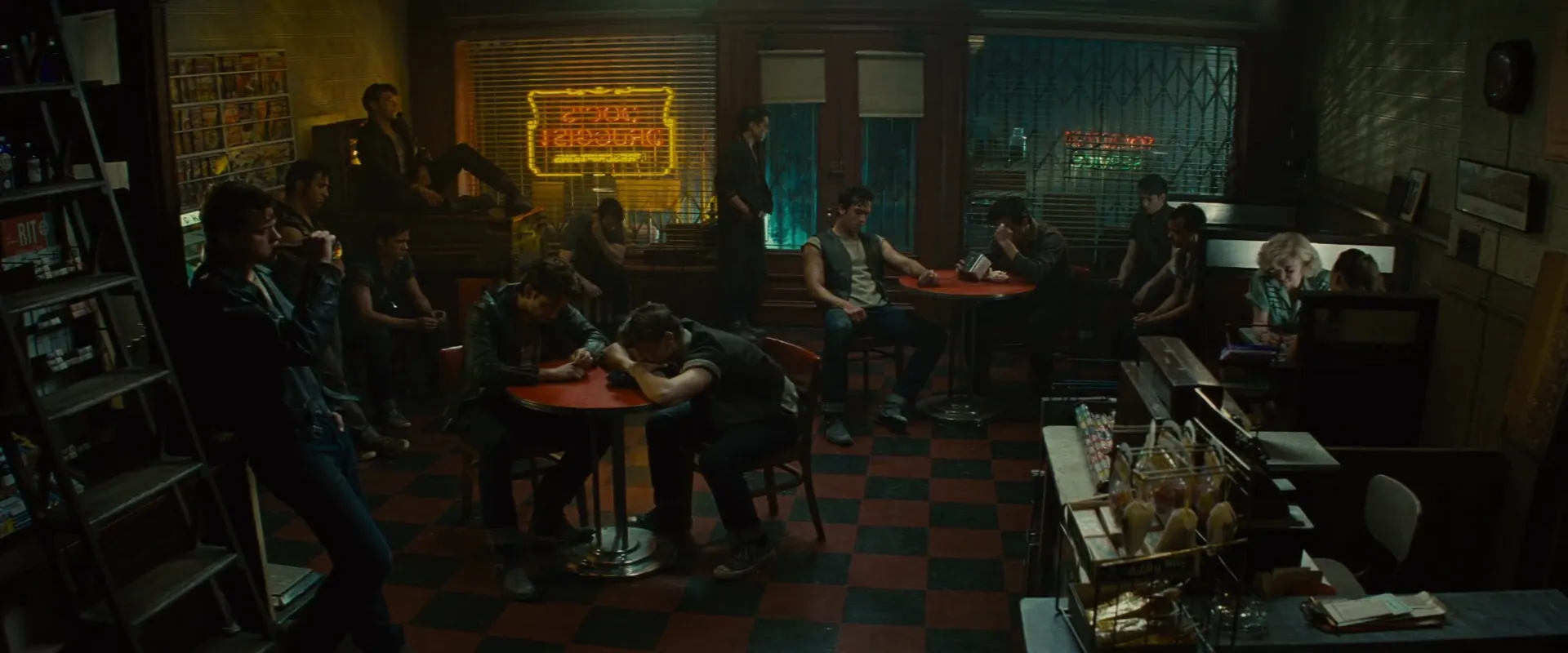
Spielberg is the reference case. Many of his scenes are staged so the whole thing can play in one developing shot — the drinking-contest sequence in Raiders of the Lost Ark is a classic oner where blocking and a moving camera do the work editing usually does. Even when he does cut, the blocking has already handed him the wide, the two-shot and the singles as the actors move through the space. Notice how bodies are arranged across the drugstore above — foreground, mid, deep — so a camera set almost anywhere in that room finds a usable frame.
That's the test. Before you commit to a blocking pattern, ask: does this give me the shots this scene actually needs, or am I about to spend the afternoon manufacturing angles the staging refuses to give me? If the coverage doesn't fall out naturally, the blocking isn't finished.
How to Block a Scene Before You're on Set
None of this survives contact with a chaotic set unless it exists somewhere before call time. The directors who look calm at the monitor are the ones who blocked the scene weeks earlier — overhead diagrams of actor paths and camera positions, the coverage listed against each setup, a reference frame for the look they're chasing.
That's the whole argument for planning blocking inside your working shotlist instead of in your head. When each shot carries the staging it depends on — and a visual reference sitting right next to it so the DP and director are looking at the same frame, not two different memories of one — the blocking stops being a conversation you have twice and start losing details of. On StillsLab you can pull the exact reference frame that shows the depth-staging or camera move you're after and pin it to the shot it belongs to, so the plan that lives in your head on the scout is the same plan the whole crew reads on the day.
How did you like this article?
Login to react to this article
Discussion (0)
💬 No comments yet. Be the first to share your thoughts!