Children of Men's Long Take: The Engineering Behind the Impossible Car Ambush
Four minutes, one moving car, no visible crew, no green screen. The trick was a purpose-built rig nobody had ever assembled before.

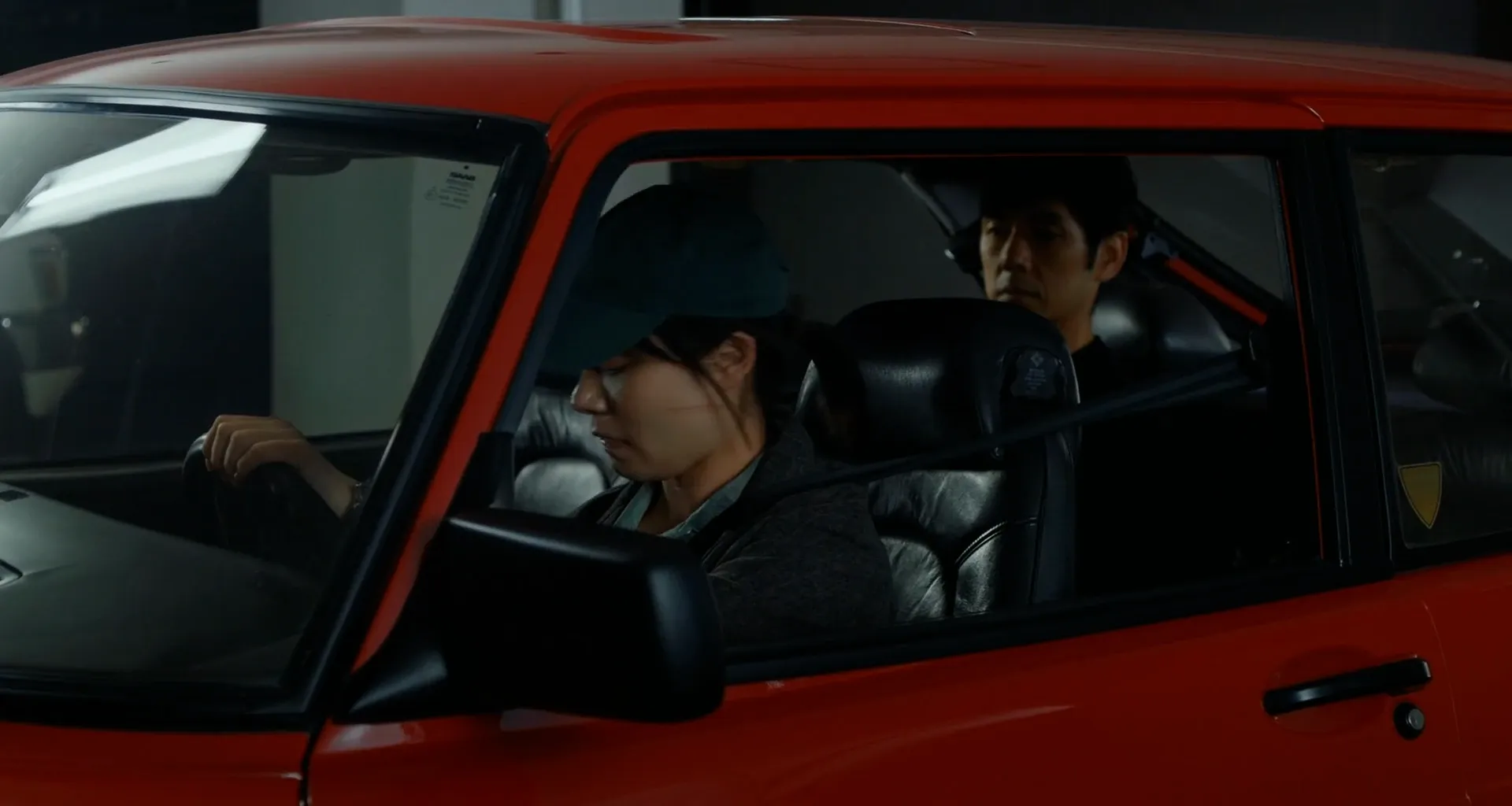
There's a moment about halfway through Children of Men (2006) where a car full of people drives down a country road, the mood loosens for a beat, and then the world caves in. A burning car rolls out of the trees, a mob swarms the windshield, a gun comes through the window. The camera never blinks. It swings from the front seat to the back, out to the road, and back inside, all in what looks like a single unbroken shot that runs close to four minutes.
Directors have been chasing that feeling ever since. But the reason the scene still holds up isn't the choreography — it's the hardware. Alfonso Cuarón and cinematographer Emmanuel Lubezki hit a wall that every filmmaker who has ever tried to shoot inside a moving car knows well, and they solved it by building a machine that didn't exist yet.
The problem: you can't fit a crew in a car
The brief was simple and nearly impossible. Cuarón wanted the whole ambush to play in real time, from inside the vehicle, with full freedom to look anywhere — front seats, back seats, out any window — while actors and stunt performers moved in and out of the car. No cutaways to hide the seams. No green screen behind the glass to fake the passing world.
Try to picture the mechanics. A standard camera operator plus a focus puller already fills the space a passenger would sit in. Point the lens across the cabin and you see your own rigging in the opposite window. Every practical fix — a smaller camera, a locked-off mount, plates shot separately and composited — trades away exactly the thing the scene needed, which was the sense that you are trapped in that car with those people.
That constraint is why in-car dialogue usually gets cut to pieces or shot on a process trailer with the actors barely moving. Keeping the camera loose inside the cabin, with a 360-degree view and nobody's gear in frame, is the hard version almost no one attempts.
The solution: a rig nobody had built before
Lubezki brought in Gary Thieltges of Doggicam Systems, and together they assembled what the crew ended up calling "the contraption." At its core was a two-axis dolly — the Sparrow Head from Doggicam paired with two PowerSlides — that let the camera travel forward and back, left and right, and rotate through the interior on command. That's the part that reads as impossible on screen: the lens gliding from a driver's face to a rear window without a human body attached to it in the frame.
The car itself was rebuilt around the shot. The seats were mounted on hinges so they could drop or lift out of the camera's path as it passed. The windshield could tilt away so the lens could move through the front of the cabin unobstructed. And the operating team — four people, Cuarón and Lubezki among them — rode on a platform built onto the roof, driving the rig from above rather than crowding the space inside.
Lubezki has said the striking thing was that none of the individual pieces were new. Each component had been used before, for other jobs. What nobody had done was bolt them all together into one system and run it live, in a moving vehicle, for a four-minute take. They put it together in about a week. If you want a sense of how deliberately those camera moves are motivated once the tool exists, it's worth studying the different types of camera movement and when each one earns its place — the ambush works because every push and pan is answering the action, not showing off the rig.
The honest part: it's not literally one take
Here's the thing filmmakers should know before they try to copy it. The ambush is not a single continuous take. It was shot in several separate pieces, across more than one location, then joined with digital transitions engineered to be invisible. What you're watching is stitched.
That doesn't cheapen it. It clarifies what the goal actually was. Cuarón and Lubezki weren't chasing the stunt of an uncut record; they were chasing the feeling of one — the claustrophobia, the helplessness, the sense that the camera can't escape any more than the characters can. Lubezki has talked about doing everything in real time precisely so the audience feels the desperation of the moment. The seams exist to serve the illusion, not to break it. This is the same instinct that runs through Lubezki's whole body of work, which is worth reading about in his approach to natural light and the unbroken take.
Why "for real" beats "fixed in post"
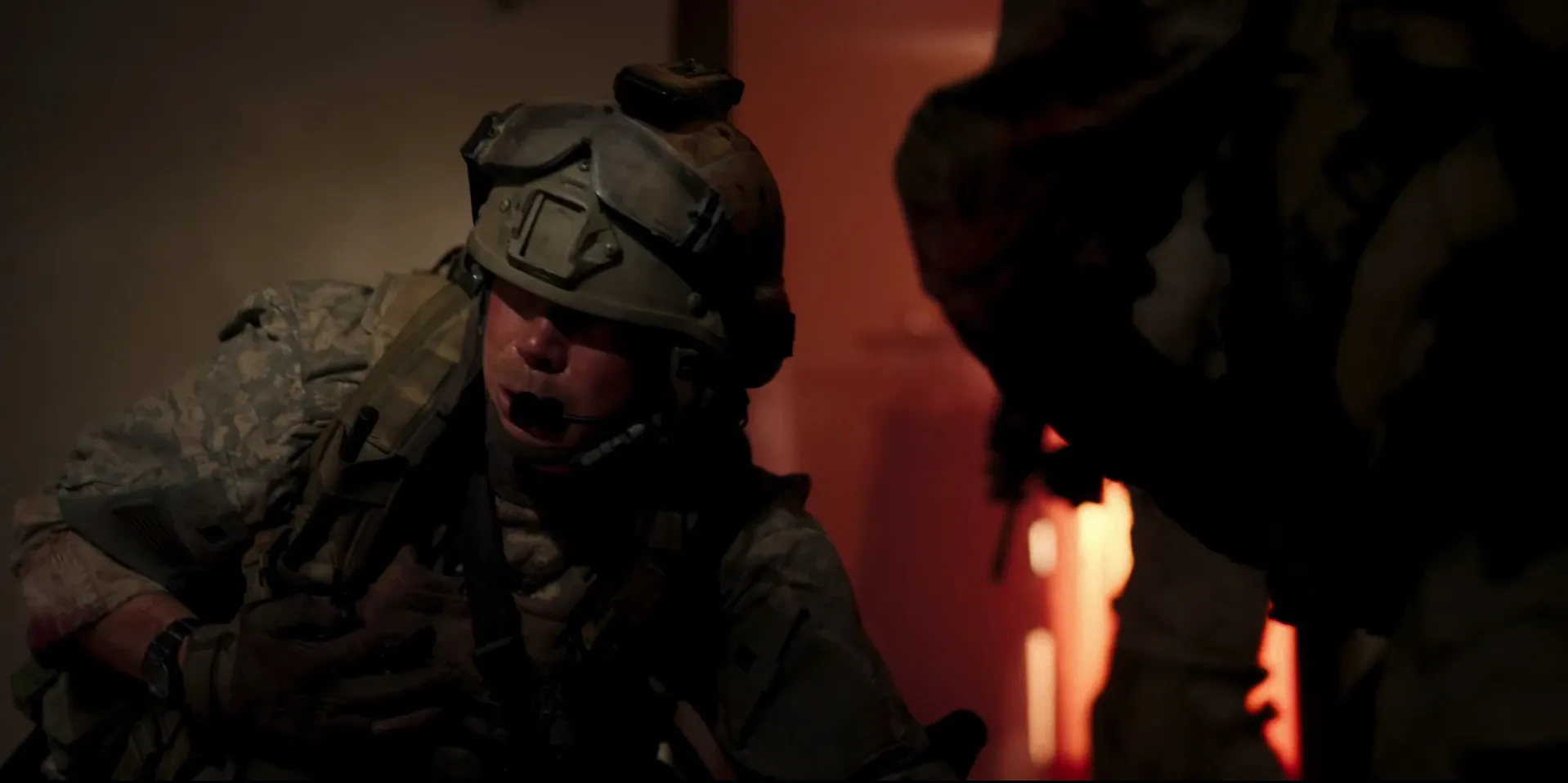
The refusal to fake it is the whole ethos, and it pays off again in the film's other showpiece — the Bexhill battle near the end, another extended take that puts you inside the fighting. During that sequence, real blood from a squib splattered directly onto the lens. Cuarón, watching his monitor, saw the frame go useless and yelled cut — but an explosion drowned him out and the camera kept rolling. He wanted to lose the shot. Lubezki argued to keep it, and the smear stayed in the finished film, turning a technical accident into one of its most quoted images.
You only get accidents like that when the camera is genuinely in the middle of the event instead of protected behind glass or added later. Chaos becomes legible when the frame commits to being there — a principle George Miller and DP John Seale pushed to its limit, as covered in how Mad Max: Fury Road made chaos legible. Children of Men earned its reputation the same way: it built the tools to stay inside the action rather than cutting around it.
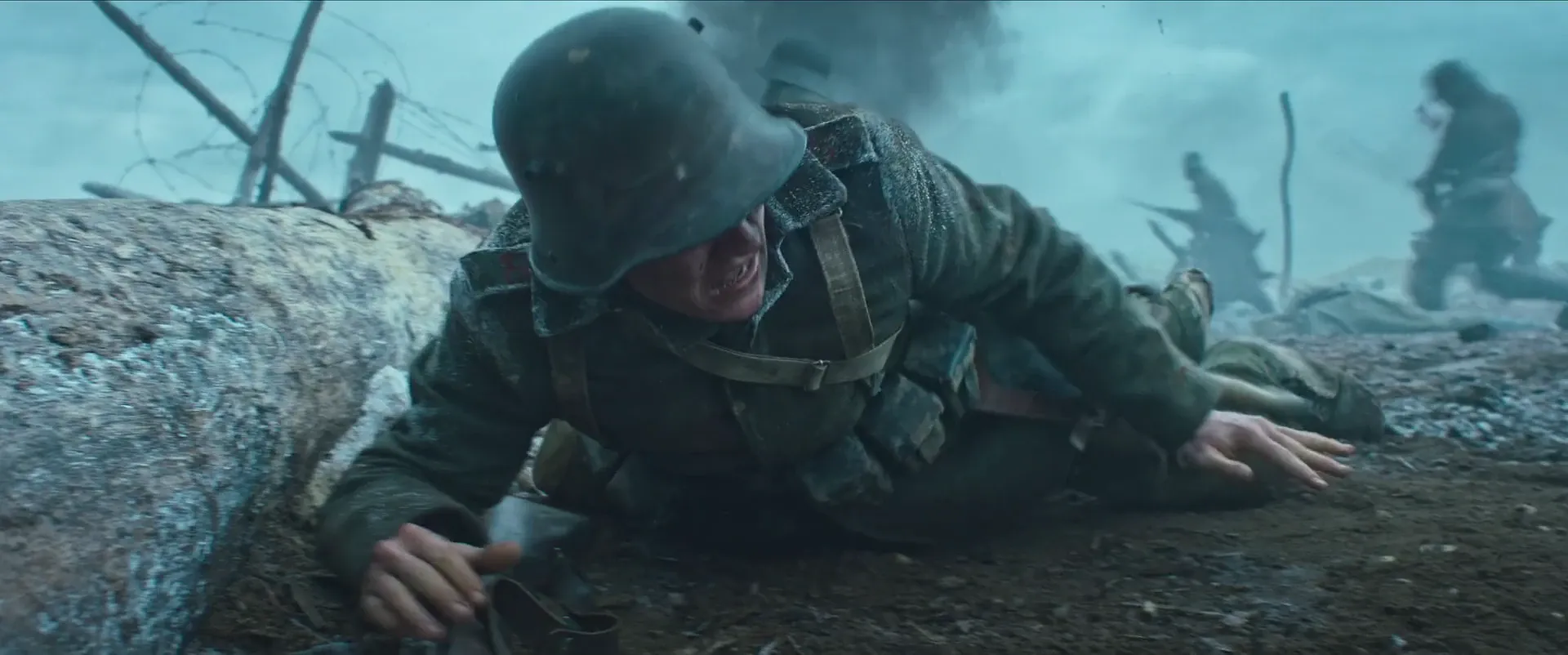
Lubezki was nominated for the Academy Award for Best Cinematography for the film and won the BAFTA for it — recognition less for any single trick than for the discipline of making a whole picture feel this immediate.
What this means for your own long take
The lesson isn't "build a Doggicam rig." Almost nobody has that budget. The lesson is that an ambitious oner is a hardware-and-blocking problem long before it's a directing problem. Before you promise a producer a four-minute take, you work backwards from the physical questions: where does the camera live, what has to move out of its way, where are the hidden cut points, and what feeling are you actually protecting by not cutting.
That planning starts on paper, or on screen. Working out a complex moving shot means holding real reference in front of your camera team — the exact frames you're chasing, marked up and shared so the DP, the operator, and the AD are all looking at the same thing instead of the same words. Pulling those references together, from Children of Men or any film that solved a problem like yours, is exactly what a visual reference library built for pre-production is for — so the shot you storyboard is the shot you actually walk onto set to get.
How did you like this article?
Login to react to this article
Discussion (0)
💬 No comments yet. Be the first to share your thoughts!