Depth of Field, Demystified: How Aperture, Focal Length, and Distance Actually Trade Off
Fast glass isn't the only way to melt a background - and sometimes the braver choice is keeping the whole frame sharp.

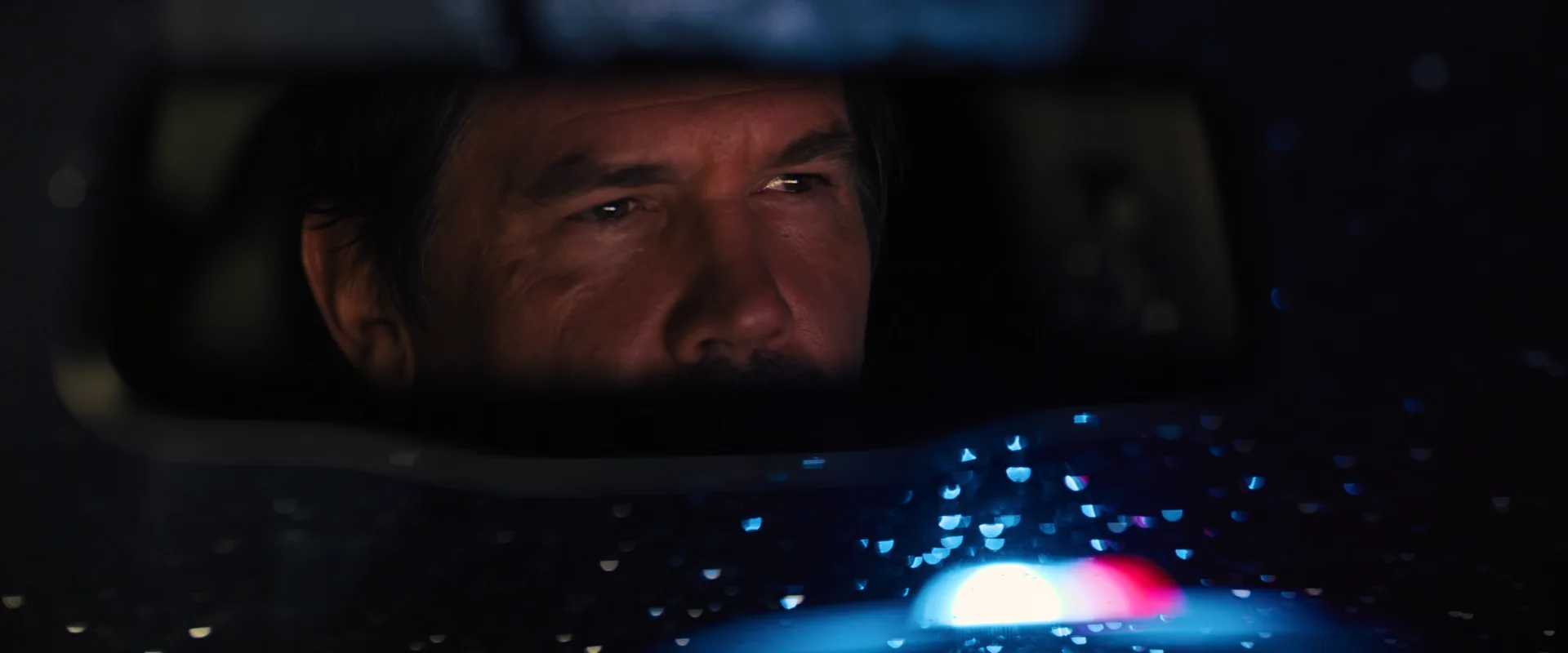
A 1st AC pulling focus on a moving actor at a T2 has maybe an inch of margin to work with. Miss it and the take is dead, no matter how good the performance was. That thin blade of sharpness — where it sits, how thick it is, what dissolves on either side of it — is the thing most crews fight all day and few directors actually plan.
Depth of field in film is the band of acceptable sharpness in front of and behind your point of focus. Three things set how wide that band is: the aperture, the focal length, and the distances between camera, subject, and background. Open the iris, go longer, or move closer, and the band collapses — the subject snaps out and everything else falls to mush. Stop down, go wider, or back off, and it deepens until the whole frame holds. Those are the only levers you have. Every "look" you admire is some mix of the three.
The three levers you actually have
Treat them as a set, because they fight each other on every setup.
- Aperture. Wider (lower T-stop) means shallower focus and more light. It's the fastest way to isolate a subject, and the first thing most people reach for.
- Focal length. Longer lenses render less apparent depth and compress the space behind the subject. A 100mm at the same stop looks far shallower than a 25mm.
- Distance. The closer you are to the subject — and the farther the background sits behind them — the more the background separates, regardless of the glass.
The trap is thinking aperture is the whole game. It's the loudest lever, but leaning on it alone paints you into a corner: wide open, your AC is living on a knife's edge, and a slow drift or a step-in blows the shot.
Aperture is the loudest lever — and the most expensive
There's a ceiling to how far aperture will take you, and Kubrick found it. For the candlelit interiors in Barry Lyndon, John Alcott shot on a Zeiss Planar 50mm f/0.7 — one of ten lenses Zeiss originally built for NASA to photograph the far side of the Moon. It was fast enough to expose a scene lit by nothing but real candle flames.
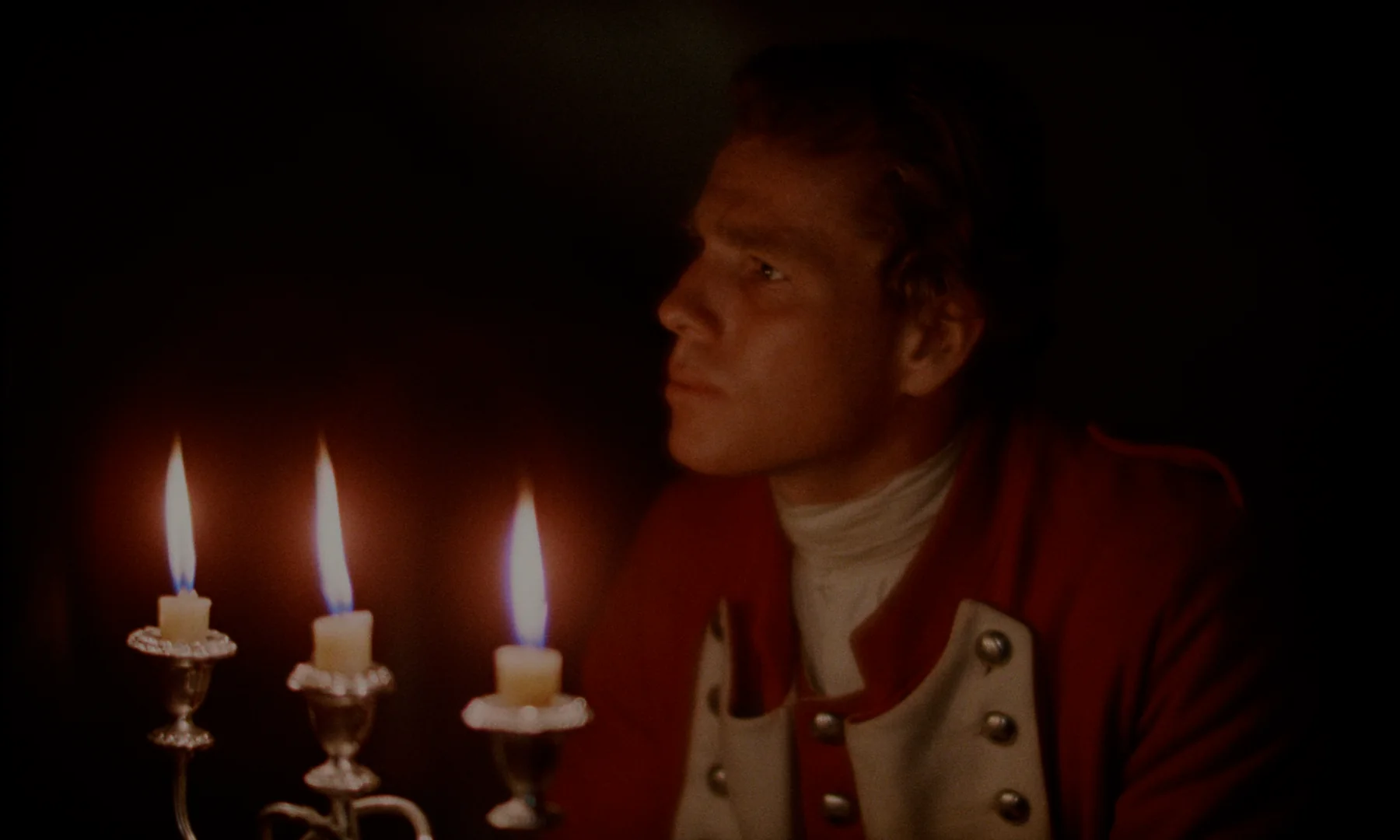
Look at that frame and you see the bargain. The candlelight is genuine, the mood is unrepeatable — and the focus is a hair's breadth. Wide open like that, an actor can't move more than a few inches without sliding out of it, which is exactly why those scenes are so still. The lens bought the darkness and paid for it in focus margin. If you want the full story of how they built it, we broke down the whole Barry Lyndon candlelight rig separately. The lesson for a normal day: reaching for the widest stop solves your light problem and hands your AC a new one.
You don't need a fast lens to isolate a face
Here's the part that saves productions money. If all you want is the subject to lift off the background, aperture is the least important of the three levers. Go longer, get closer, and put some air between your actor and whatever is behind them, and the background falls away on its own — even at a sensible working stop.
That's the whole trick of the tense car interiors in Sicario: a tight lens, a face close to the glass, and a wet windshield full of distant lights that read as pure bokeh. The stop doesn't have to be reckless because the focal length and the distance are doing the separation. This is where the focal-length choice stops being about "feel" and starts being about focus control — the two are the same decision seen from different sides, which is why it's worth reading how focal length changes what a shot feels like before you commit to a lens for a scene.
When deep focus is the braver call
Shallow is the reflex. Deep is the decision. Sometimes the story lives in the layers — foreground, mid-ground, and background all doing something at once — and blurring two of them throws away the shot.
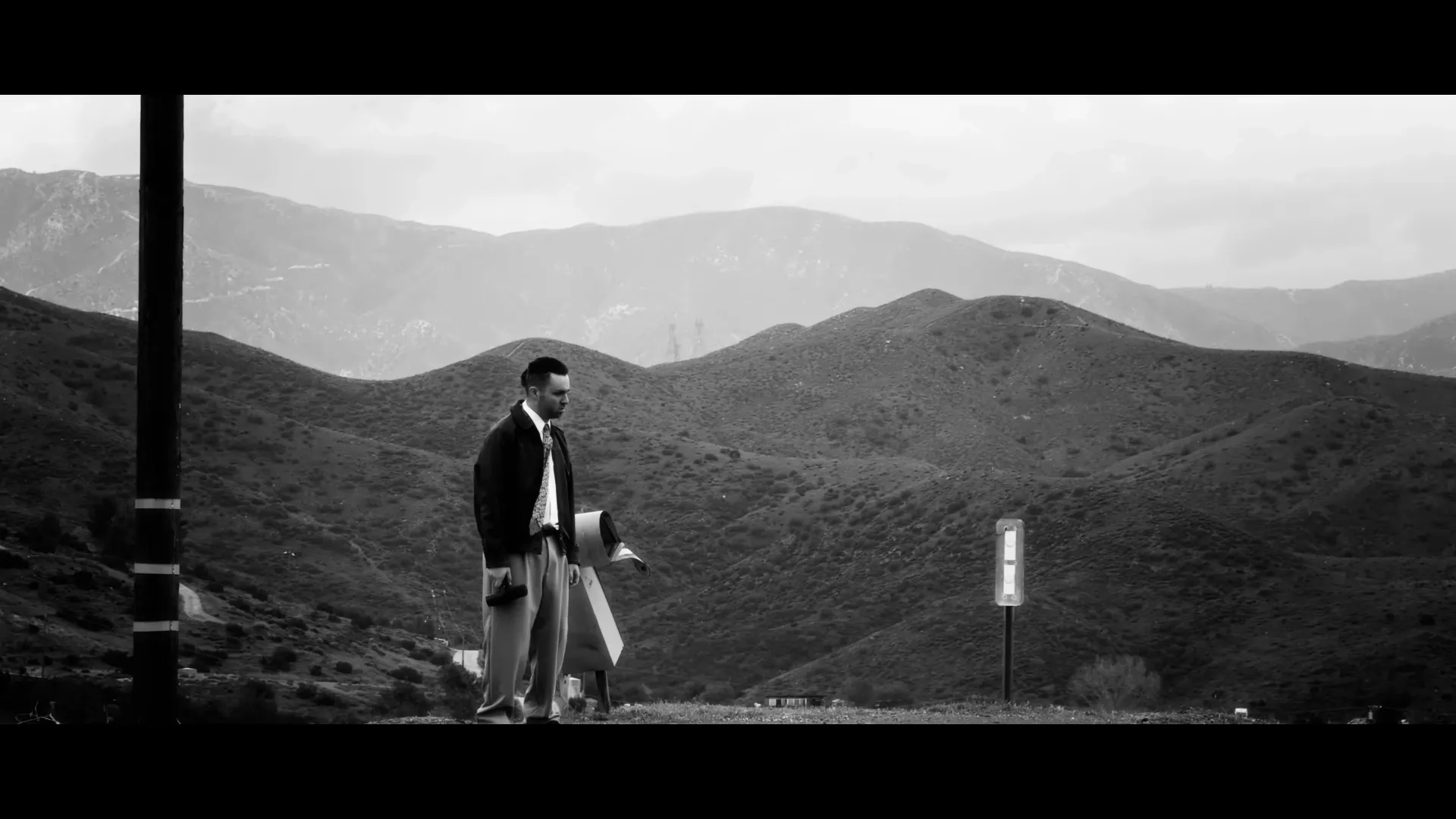
Keep everything sharp and the environment becomes a character instead of wallpaper. The figure doesn't get isolated from the world; it gets swallowed by it, and that's the point. Gregg Toland built a whole language out of this on Citizen Kane — stopping down hard, shooting wide, and even cutting holes in the sets so the camera could sit low enough to hold a face in the foreground and a doorway forty feet back in the same crisp plane. Deep focus lets you stage in depth and let the audience's eye choose where to look, which is a different kind of control than pointing it with a blur.
Plan focus before the day, not at the monitor
The mistake isn't picking shallow or deep. It's picking neither, defaulting to whatever the lens does wide open, and discovering your focus strategy at the monitor while the clock runs. Depth of field is a storytelling choice — isolation versus context, one plane versus many — and it belongs in prep, next to the shot size and the lens.
That's the point where a shot actually gets planned instead of improvised. When you're building the plan, pulling the exact reference frames that show the focus you're after — the shallow single, the deep staging — turns an abstract argument into something the whole camera department can look at and agree on. A shotlist that carries its visual references alongside the lens and stop is how that decision survives contact with the shooting day, instead of getting made three inches at a time by whoever's on the follow focus.
How did you like this article?
Login to react to this article
Discussion (0)
💬 No comments yet. Be the first to share your thoughts!