Wide vs. Telephoto: How Focal Length Changes What a Shot Feels Like
A 24mm and an 85mm can hold the same face at the same size — and leave the audience in two completely different emotional places.

The director says "get closer," and you've got two ways to do it — and they are not the same shot. You can pick up the camera and physically walk in, or you can plant your feet and reach for a longer lens. Either way the actor's face ends up filling the same slice of frame. But the two shots will feel like they came from different films. That gap is where a lot of cinematography actually lives.
Here's the thing most gear guides get backwards: focal length is not a framing tool. The relationship between focal length and emotion in cinematography is really a question of where you're putting the audience — inside the scene, or across the street watching it. A 24mm and an 85mm can hold a face at the same size and still leave the viewer in two completely different emotional places. Pick the wrong one and the coverage is technically fine and quietly lying about what the moment means.
It's not about framing — it's about distance
Strip away the mythology and there's one fact underneath all of it: perspective is set by where the camera physically sits, not by the lens. What the lens does is force that distance. To fill the frame with a face on a 24mm you have to get within arm's reach, so you inherit all the exaggerated depth that comes with being that close — the nose looms, the ears fall away, the background stretches back for miles. To fill the frame with that same face on an 85mm you stand ten feet back, and everything flattens: the face reads natural, the background piles up right behind the head like a painted flat.
So wide and long aren't just "more of the scene" versus "less of it." Wide exaggerates depth and space. Long compresses it. That single trade — expansion against compression — is the emotional dial, and it's worth thinking about the same way you'd think about whether an anamorphic or spherical look fits your story. It's a story decision wearing a technical costume.
Wide lenses put the audience inside the room
Go wide and the viewer stops watching the scene and starts standing in it. The frame swallows the environment, the character becomes one element inside a bigger world, and the space itself starts doing emotional work.
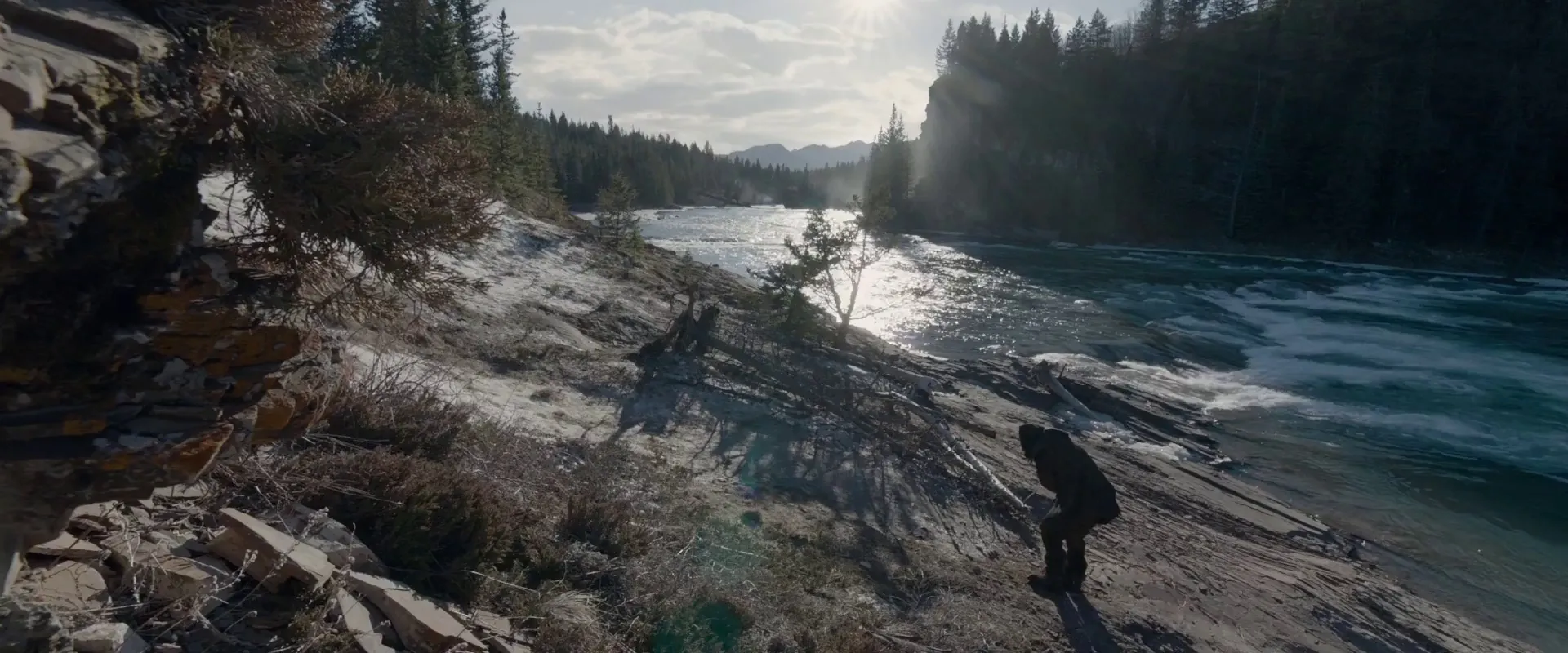
This is the whole argument behind how Emmanuel Lubezki shot The Revenant — mostly on very wide glass, in the 12–21mm range on the ALEXA 65. His reasoning was blunt: the wide lens lets you "show all the context, all the environment, at the same time as we can show emotion and be close to the actors." You feel the cold because the cold is in frame with the man, not cut away to. Wide lenses are how you make a landscape a character, which is also why they pair so naturally with a moving, handheld camera that walks alongside the actor instead of observing from a tripod.
Push a wide lens too close to a face, though, and it turns. The same exaggerated depth that makes a room feel immersive makes a person feel wrong — stretched, off, subtly monstrous. Kubrick knew exactly what he was doing with that.
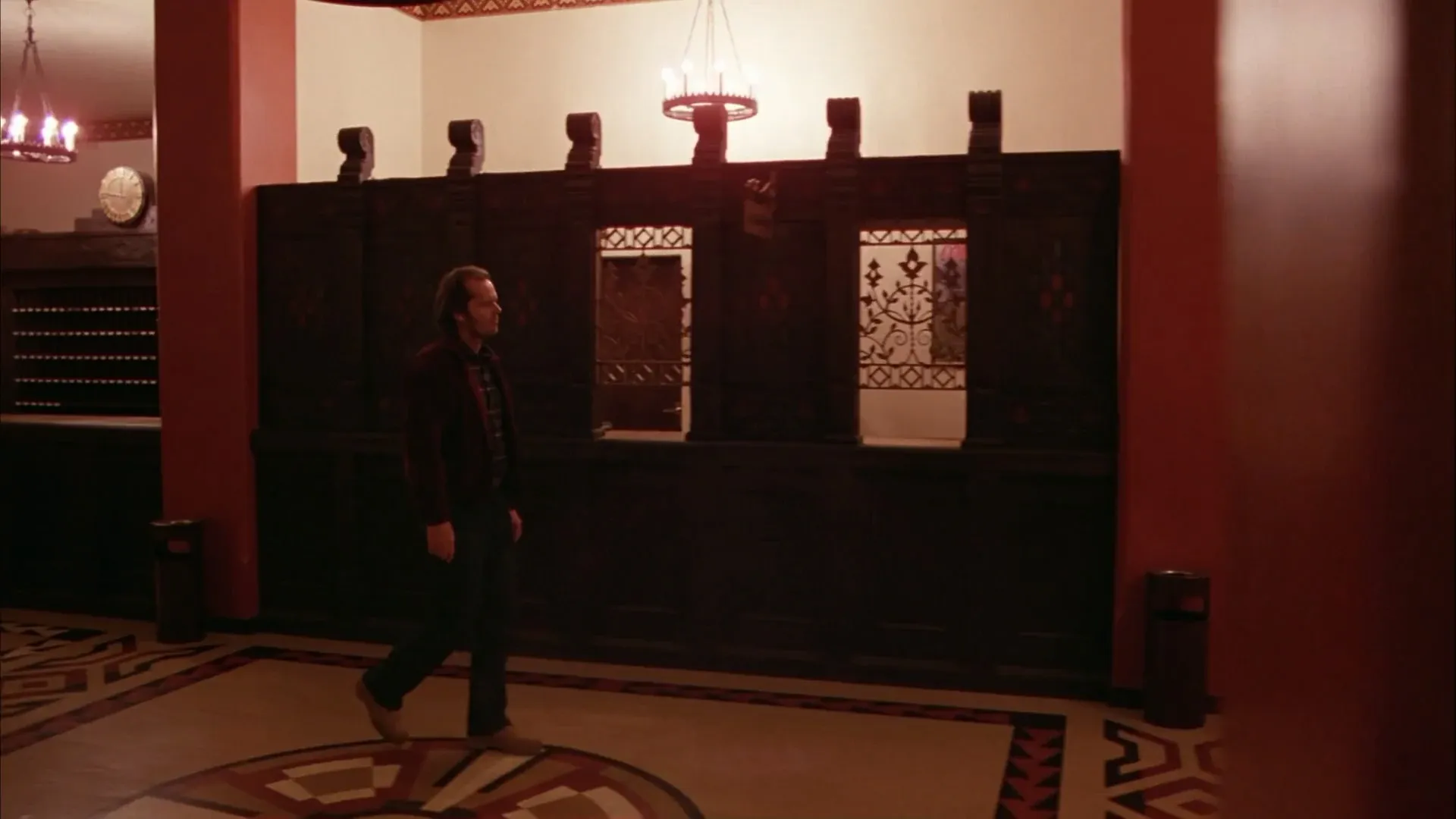
He and John Alcott shot huge stretches of The Shining on a Cooke 18mm. Shelley Duvall remembered the lens being "great for furniture but terrible for faces" — which was the point. Wide-angle geometry makes the Overlook's endless halls and symmetrical rooms feel physically impossible, and it makes the people inside them feel slightly deformed by the space. That's not a lens flaw. That's a horror movie using distortion on purpose.
Telephoto lenses turn the audience into an observer
Now go the other way. A long lens does the opposite job: it pulls the world flat, lifts the subject cleanly off the background, and puts a sheet of glass between the audience and the moment. You're not in the scene anymore. You're watching it from a distance, and the distance itself carries meaning — longing, surveillance, isolation, helplessness.
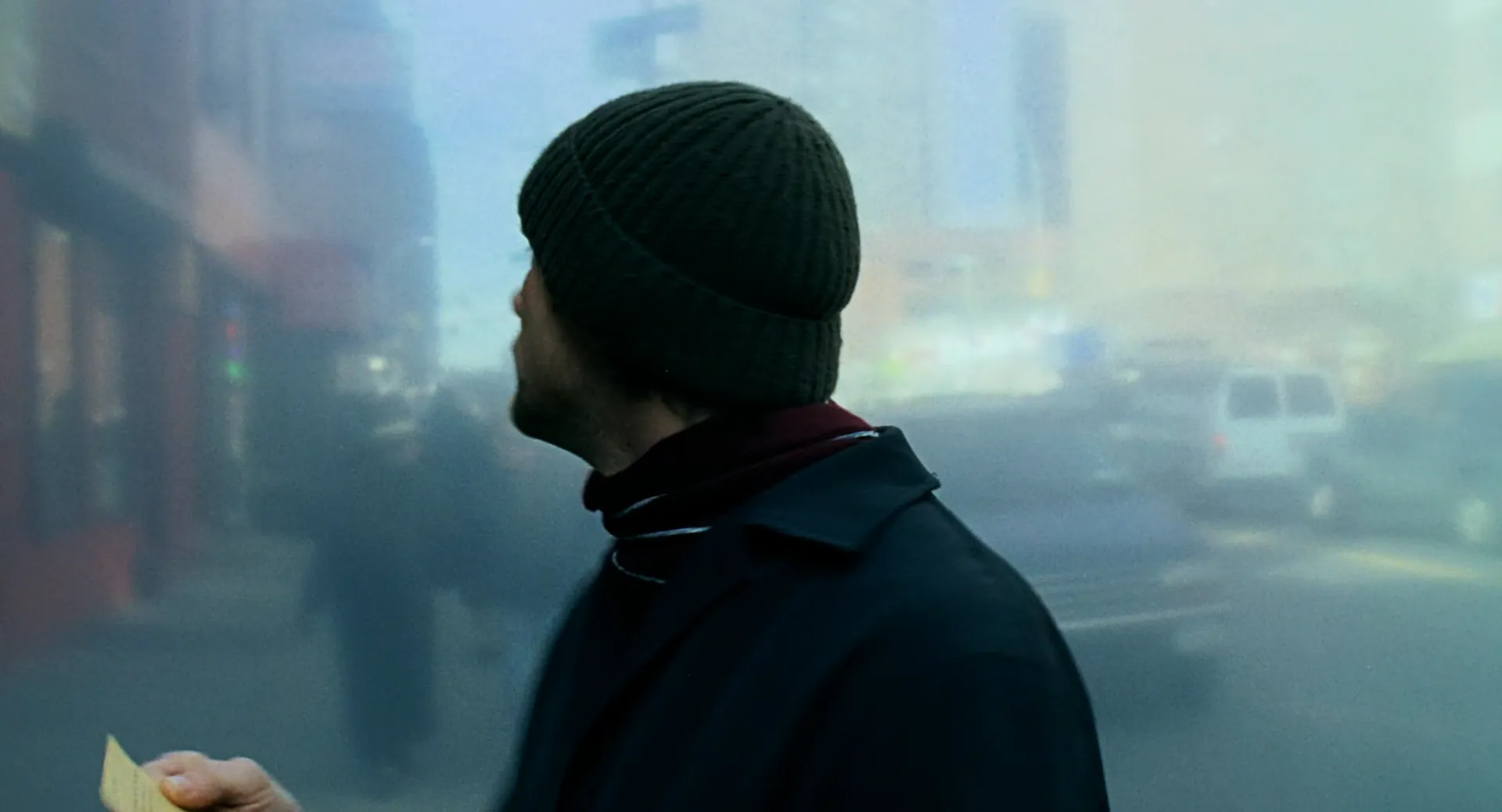
Look at how the street behind him collapses into mush. Every plane stacks up and softens, so the figure feels alone even in the middle of a city. That flattening is the telephoto's signature, and filmmakers have leaned on it for decades — Kurosawa gets credit for the long-lens battle look, though he actually lived mostly in the 35–50mm range and reached for real telephoto only when he wanted that specific crush.
The most famous version is the end of The Graduate. Mike Nichols and DP Robert Surtees shot Benjamin's sprint to the church on a 500mm lens, running him straight at the camera. At that focal length the compression is so extreme he seems to run and run and run without getting any closer — a man moving as fast as he can and going nowhere, which is the entire emotional content of the scene rendered in optics alone. No performance note could sell that panic better than the lens does.
Pull in tighter and the long lens does one more thing: it isolates a single face and lets the rest of the world dissolve.
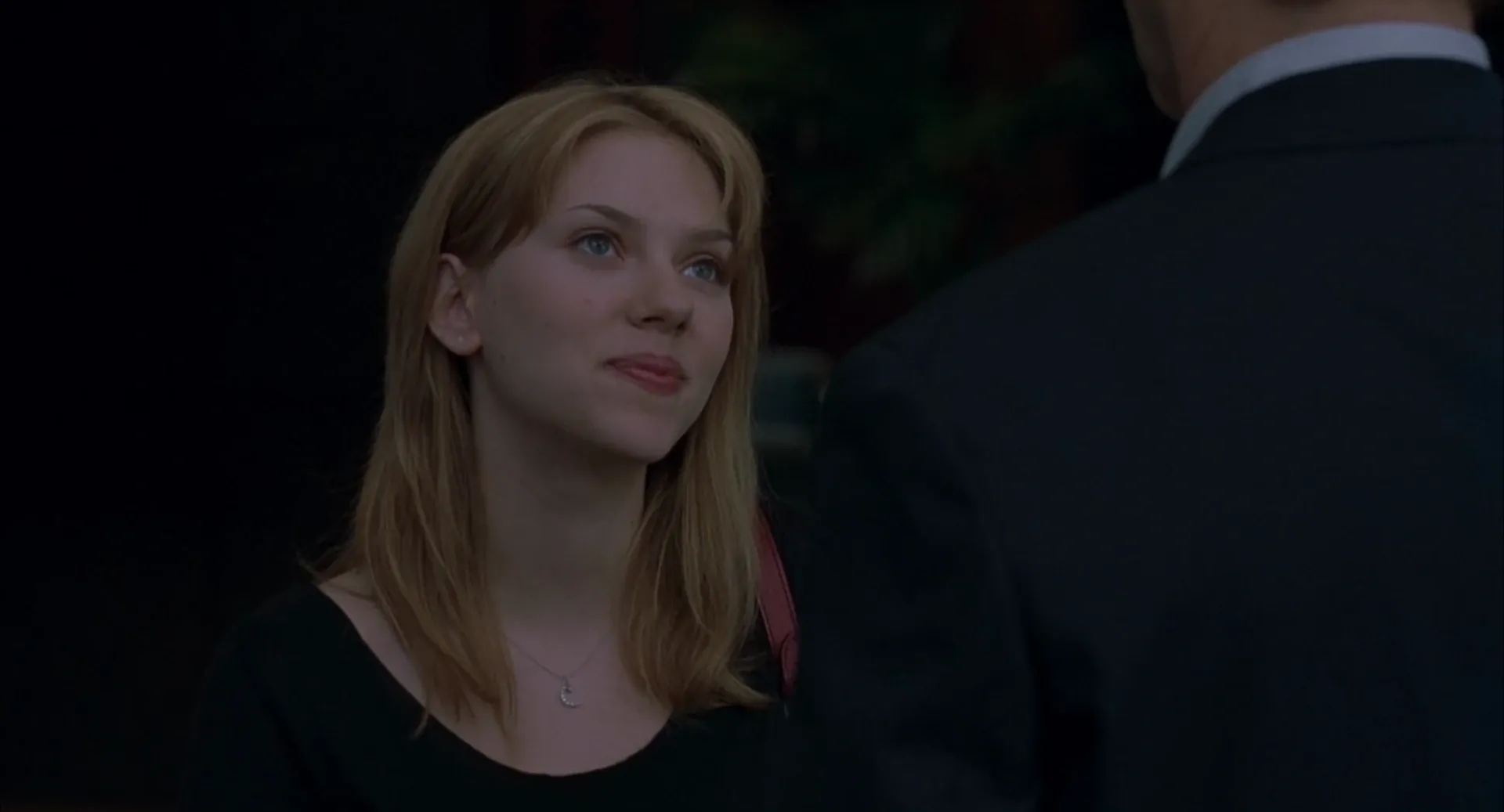
The shallow focus that comes with a longer lens is how you say "nothing else in this room matters right now." The background isn't decoration anymore; it's a suggestion. That's the 85mm promise — intimacy through separation rather than proximity.
Choosing the feeling on the day
So the practical question on set is never "how much do I want in frame." It's "do I want the audience to participate or observe." Go wide when the moment needs the viewer inside it — the environment matters, the space is oppressive or vast, the camera wants to move with the actor. Go long when the moment needs distance — the character is isolated, being watched, or unreachable, and you want the audience to feel that pane of glass.
There's a movement wrinkle too. Motion toward or away from a wide lens reads as fast and aggressive; that same motion on a long lens reads as stalled and futile, à la The Graduate. If you're planning how a character crosses space, the lens choice and the camera move have to be decided together, not one after the other.
The trap is defaulting to a comfortable focal length and shooting the whole day on it because relighting for a lens swap is a hassle. That's how a film ends up emotionally flat in the literal sense — every scene shot at the same distance, so every scene feels the same. Decide the relationship you want between the viewer and the subject first, then pick the glass that builds it.
The fastest way to develop that instinct is to stop reading about it and start looking. Pull the frames that hit you — the wide ones that put you in the room, the long ones that leave you outside it — and study what focal length was doing in each. That's exactly what a visual reference library is for: so that when the director says "get closer," you already know which kind of closer they actually mean.
How did you like this article?
Login to react to this article
Discussion (0)
💬 No comments yet. Be the first to share your thoughts!