Anamorphic vs Spherical Lenses: Which Look Fits Your Story
Oval bokeh and blue flares get all the attention. The real choice is about depth, faces, and what your budget and schedule can actually carry.

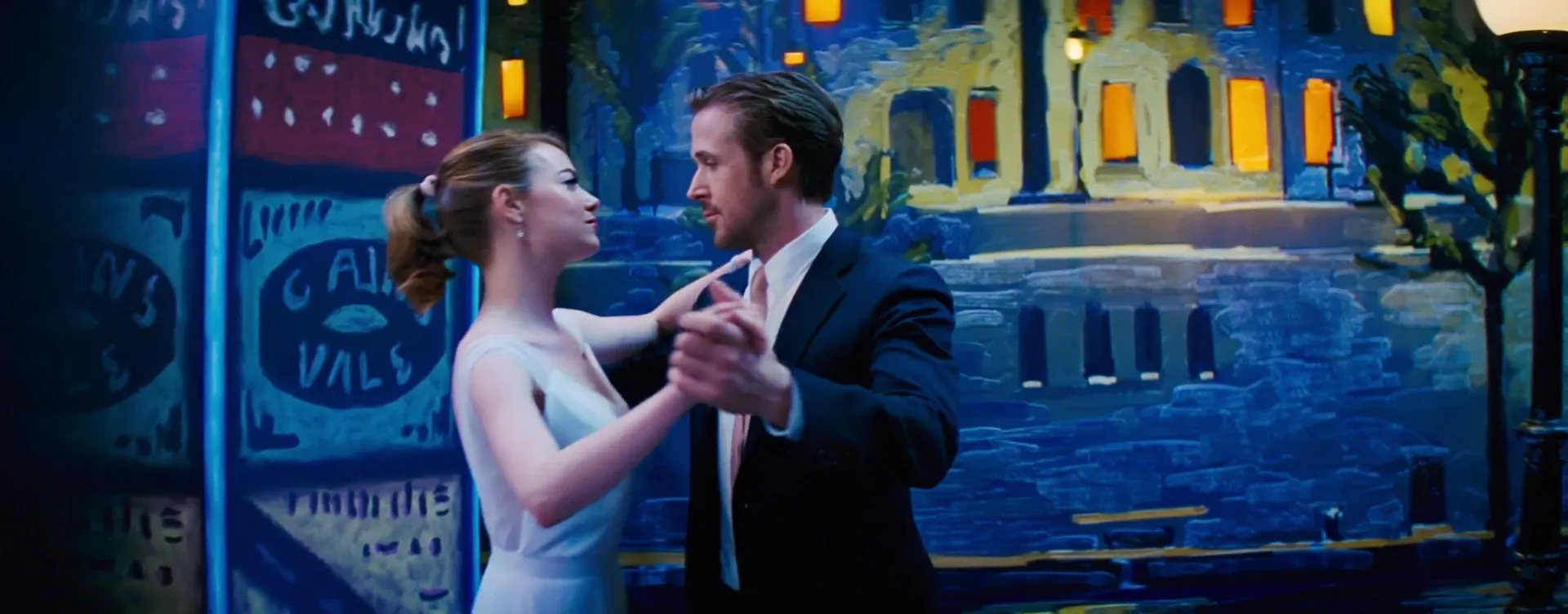
Every few months a fresh set of anamorphic primes lands on a rental floor and half the indie DPs in town suddenly want them. The pitch never changes: oval bokeh, blue horizontal streaks, that big-screen stretch. What the pitch leaves out is the T-stop you'll actually be shooting at, the sets you'll have to build a foot wider, and whether any of it serves the film in front of you.
The anamorphic vs spherical lenses question isn't really about which glass looks more "cinematic." Both have shot masterpieces. It's about what each one does to depth, to faces, and to your budget — and matching that to the story you're telling instead of the look you saw on someone else's reel.
Here's the whole difference in one sentence. A spherical lens records the world the way your eye reads it: a circle stays a circle. An anamorphic lens squeezes the image horizontally on the way in — classically by a factor of two — and you stretch it back out in post. Every trait people chase, the ovals, the flares, the wider frame, falls out of that one optical trick.
What actually happens inside the glass
An anamorphic lens carries cylindrical elements that compress the image along the horizontal axis. Shoot with a 2x lens and you're capturing twice the horizontal information onto the same sensor or negative, then de-squeezing it later to get a widescreen ratio around 2.39:1. Modern glass comes in gentler squeezes too — 1.33x and 1.5x for large-format sensors, Cooke's 1.8x — but the principle holds: capture squeezed, project stretched.
A spherical lens does none of that. It has no preferred axis, so what hits the sensor is already the image you'll cut. Simpler optics, fewer surprises, and generally a sharper, faster lens for the money.
What anamorphic does to depth, faces, and the frame
Because the horizontal squeeze effectively builds two focal lengths into one lens, out-of-focus highlights render as vertical ovals rather than circles — with a 2x lens, roughly half as wide as they are tall. Point a strong light into it and the cylindrical elements smear that light into the horizontal streaks everyone recognizes. Those are the fingerprints.
The depth-of-field part is subtler and more useful to understand. Anamorphic and spherical lenses have the same depth of field on paper. But to frame the same shot, an anamorphic lens needs a longer focal length — so at matched framing you get a shallower, softer separation between subject and background. That's the "dimensionality" people credit to anamorphic, and it's real, but it's a consequence of focal length, not magic.
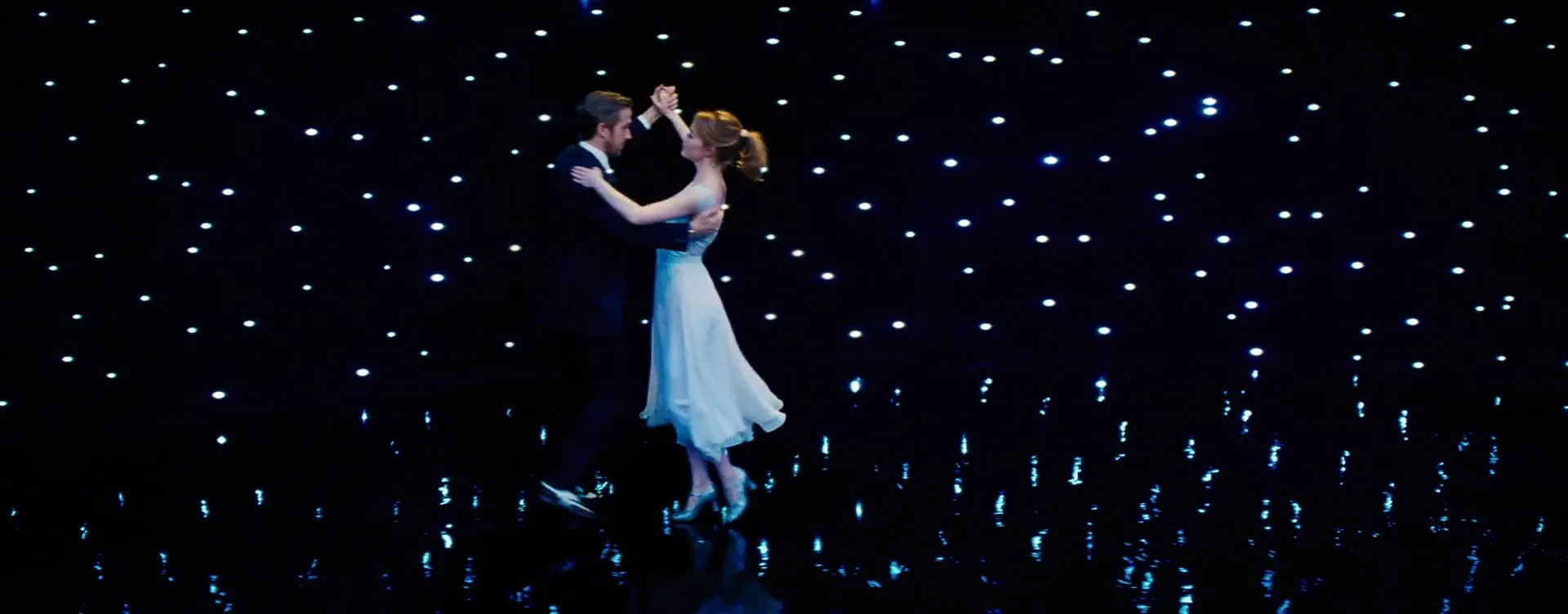
La La Land is the clean example. Damien Chazelle asked Linus Sandgren for something "very anamorphic," and Sandgren shot it on 2x Panavision primes in a 2.55:1 CinemaScope frame — even commissioning a custom 40mm that could hold focus far closer than anamorphic glass normally allows. The romance of that film lives in the format: the falloff on faces, the way a streetlight blooms sideways.
The wider frame changes how you compose, too. A 2.4:1 canvas gives you room to isolate a figure in negative space in a way a boxier ratio can't — which is why lens choice and frame choice are the same conversation, and worth thinking through alongside how you pick an aspect ratio for the film.
Where spherical earns its keep
Spherical glass is sharper, faster, and focuses closer, and for a lot of stories that's exactly what the film needs. Roger Deakins has never shot a feature on anamorphic — on Blade Runner 2049 he used Zeiss Master Primes precisely because he wanted the cleanest, most resolved image he could get, and because a spherical 2.40:1 extraction plays better for IMAX than cropping an anamorphic frame would. That restraint is a through-line in Deakins' whole approach to light and lens.
Emmanuel Lubezki went the other direction with the same tool. On The Revenant he shot wide spherical lenses — 12mm to 21mm on the large-format Alexa 65 — to keep the environment and the actor in the same breath: deep focus, natural light, the landscape pressing in on the character rather than sitting softly behind him.
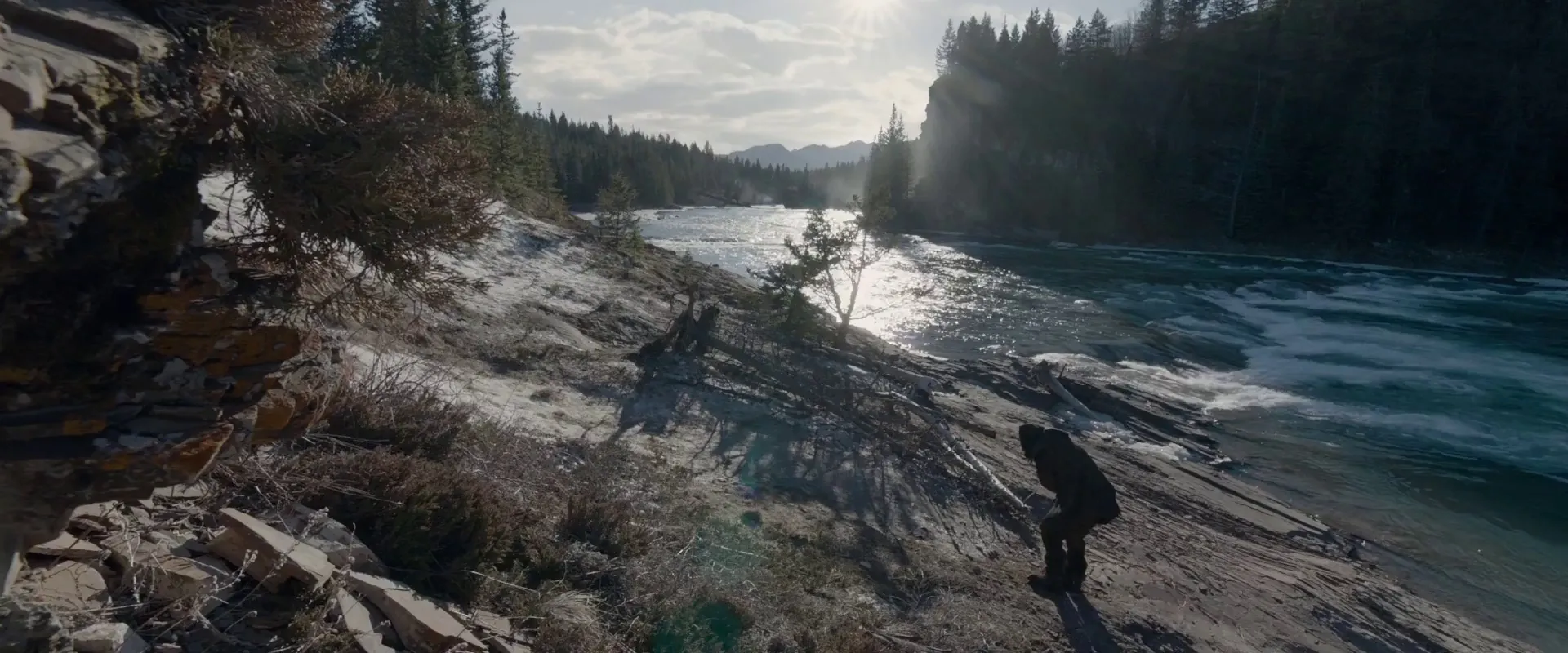
You can't do that shot on anamorphic without a fight. The wide end distorts, the close focus won't cooperate, and you'd be stopping down to hold that depth. Spherical just does it.
The logistics nobody puts in the trailer
Anamorphic looks the way it looks partly because it's a compromised optic, and those compromises cost you on set. Classic Panavision C-series primes top out around T2.8 and want to be stopped to T4 to sharpen up, so you're lighting to a brighter stop than a spherical shoot — more units, more power, more time. They focus poorly up close, which means bigger sets and awkward blocking on tight interiors. And the glass is heavy; a long anamorphic prime can outweigh the camera, which turns Steadicam, handheld, and gimbal work into a real problem instead of an afterthought.
None of that is a dealbreaker. It's just the bill. If your schedule is tight, your budget is thin, or half your day is run-and-gun handheld, spherical removes a stack of obstacles anamorphic quietly adds.
Choosing anamorphic vs spherical lenses for your story
Strip away the trend and the decision gets simple. Reach for anamorphic when the film is about memory, romance, scale, or a heightened, larger-than-life world — when you want the frame itself to feel like an event. Reach for spherical when you're after realism, intimacy, deep focus, tight spaces, or mobility — when the story should feel like it's happening rather than being presented.
Then test both. Rent one prime from each family, shoot the same face and the same wide under the same light, and look at them on a real screen before you commit a whole schedule to a look you've only seen on other people's films. The glass that flatters your actor and suits your logistics is the right glass, regardless of what's fashionable this quarter.
That test is easier when you already know what you're chasing. Pull frames from films that shot the way you're considering, anamorphic and spherical side by side, and study how each handles the exact situation you're about to face — a night exterior, a two-shot, a landscape. Building that kind of visual reference library before you prep turns a lens test from a guess into a comparison, and it lets you note the intended lens right next to each shot in your list, so the whole crew is chasing the same image.
How did you like this article?
Login to react to this article
Discussion (0)
💬 No comments yet. Be the first to share your thoughts!