Blade Runner 2049: How Roger Deakins Built Its Impossible Light
The trick behind the film's look isn't a rig — it's treating weather as the key light.

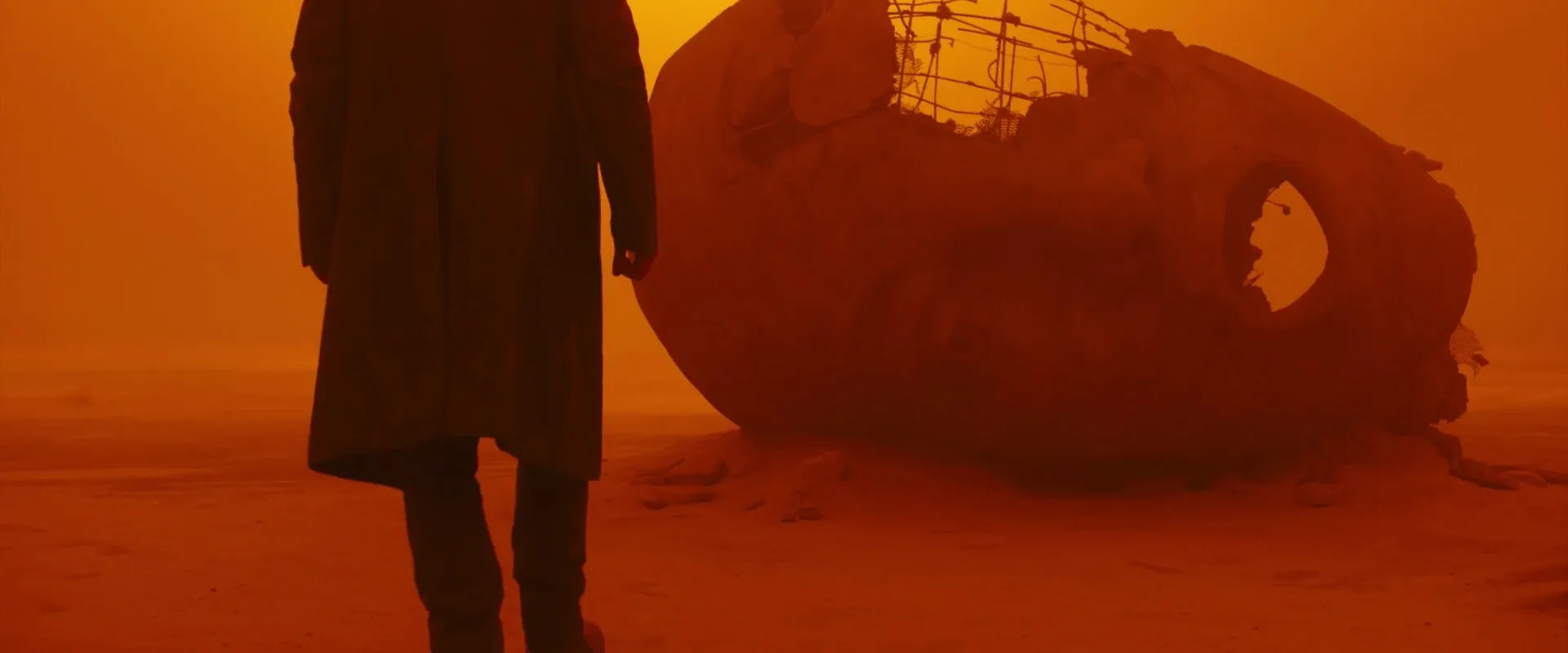
K walks into what used to be Las Vegas and the whole world has turned the color of a struck match. No visible sun, no lamp you can point to — just a wall of orange that swallows the giant statues before he reaches them. Study
frame and you genuinely can't say where the light is coming from. That isn't an accident. It's the whole idea.

The fastest way to understand Blade Runner 2049 cinematography is to stop thinking about fixtures and start thinking about weather. Roger Deakins — shooting for Denis Villeneuve, and finally taking his first Oscar on a fourteenth nomination — built a two-hour science fiction film where the atmosphere does the lighting. Fog, dust, smog and rain aren't set dressing. They're the key light.
Weather as the key light
Most big-budget sci-fi drowns its actors in rim light and flares to sell "the future." Deakins went the opposite way. He and Villeneuve grounded the film in real places they'd both looked at — the brutalist concrete of London, the smog of Beijing, the shipbreaking yards of Bangladesh, the red dust storms of the Sahara — and let those conditions set the light instead of fighting them.
The technical choice underneath is almost contrarian. For a film this size you'd assume large-format everything. Deakins tested the ARRI Alexa 65 and passed on it. He shot the bulk of 2049 on the Alexa XT and Mini — Super 35 sensors — with Zeiss Master Primes, spherical, composed for 2.40:1. He and Villeneuve preferred the texture and "activity" of that image over the clinical sharpness of the 65. The atmosphere gives the frame its depth. The camera just stays out of the way.
The orange Vegas that feels lit by dust
The ruined-Vegas sequence is the clearest statement of the whole approach. Deakins has said the look came from photographs of the 2009 Australian dust storm that turned Sydney red — a real weather event, not a mood board. On set he chased it in camera rather than in the grade: a filter pack on the front of the lens (a Lee Moroccan Pink and orange combination) tinted the whole world, while Maxi-Brutes gelled green pushed a sickly yellow highlight into the sky.
The result is a scene lit like a single overwhelming environmental condition. There's no motivated window, no hero source — the orange is simply the air. It reads as radioactive weather, which is exactly the story point: a dead city choking under something you can taste. This is orange pushed way past the usual orange-and-teal reflex, a near-monochrome the film earns because it commits completely.
What Blade Runner 2049 cinematography does with haze
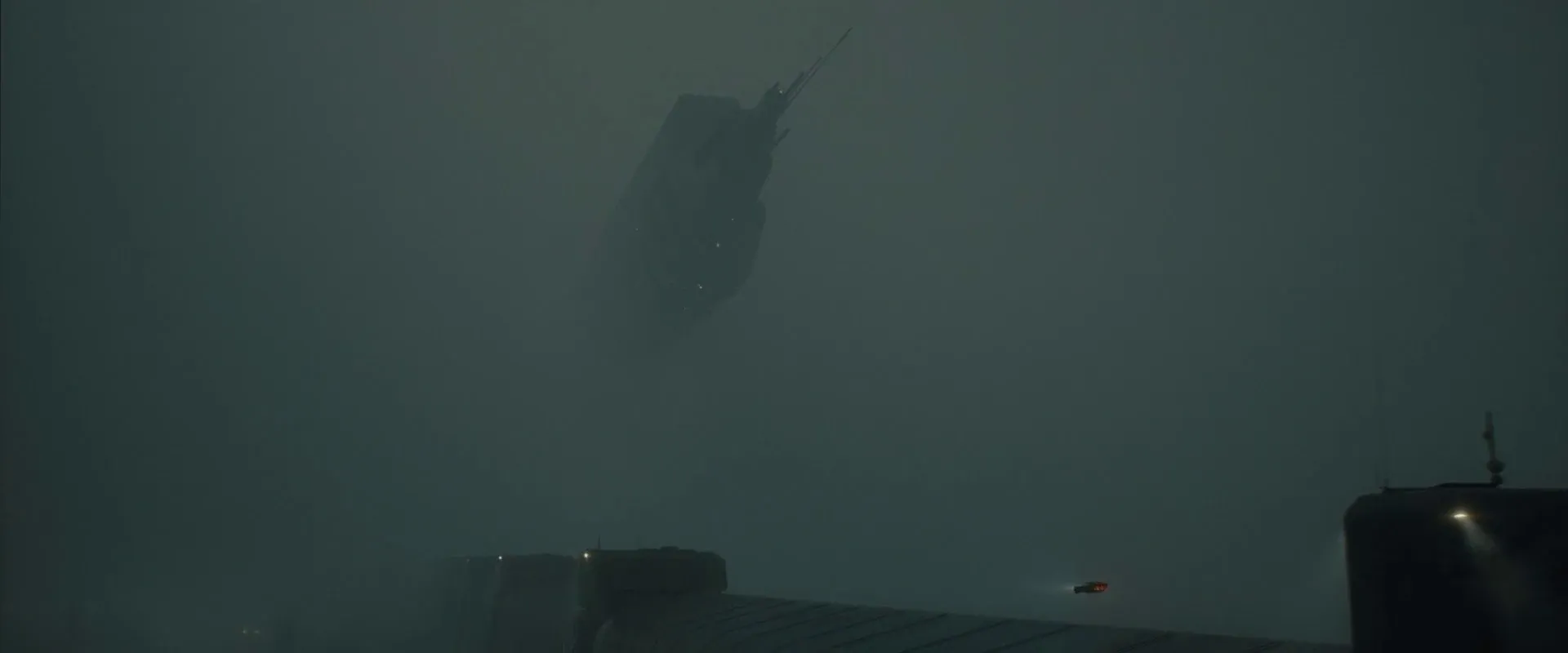
Away from Vegas, the tool is fog, and Deakins uses it the way a novelist uses white space. Atmosphere hides the top of a building so the scale reads as infinite. It softens a spinner into a shape you half-recognize. It buries the horizon so a character has nowhere to look but inward. Haze isn't there to prettify the frame — it decides how much of the world you're allowed to see, one shot at a time.
That restraint is the craft. A lesser version of this film would light every corner to prove the production value was there. 2049 lets whole planes of the image fall into grey nothing, trusting that the sliver you can see is the sliver that matters.
The one room he controlled down to the ripple
For all the talk of weather, the film's most engineered light is bone dry. Wallace's headquarters is a platform sitting in a pond, and the walls crawl with the caustic reflections you get off moving water. None of that was left to chance. The water was lit with a small number of 10K Fresnels — eight lamps in all — and Deakins had gaffer Billy O'Leary build long barn-door extenders so the two sides of each reflection would merge into a clean, symmetrical ripple.
The moving light on the actors in that space is its own piece of engineering: 256 ARRI 300-watt Fresnels arranged in two concentric circles, the barn doors stripped off so every lamphead touched the next, then programmed to chase around the ring so a soft source of roughly eight lamps drifts continuously around the subject. Different method, same philosophy. Whether it's a dust storm or 256 lamps on a timer, the goal is light that behaves like an environment instead of a setup.
Why it still holds up
Almost everything people still praise about Blade Runner 2049 cinematography traces back to one stubborn habit. Deakins reportedly refused a second unit and mostly refused to run multiple cameras — one camera, one considered frame at a time, the light built practically in front of it. That's slow, expensive filmmaking, and it's why almost every frame survives being pulled out and hung on a wall. The film doesn't have "coverage." It has photographs.
You don't need a 256-lamp ring to steal the lesson. The move worth copying is upstream of the budget: decide what single condition owns a scene — the dust, the fog, the water, the smog — and let it carry the light instead of stacking sources until everything is legible. It's the same instinct behind the only other single-film teardown we've run here, on how Nolan and Hoyte van Hoytema handled color in Oppenheimer: one committed idea, held without blinking.
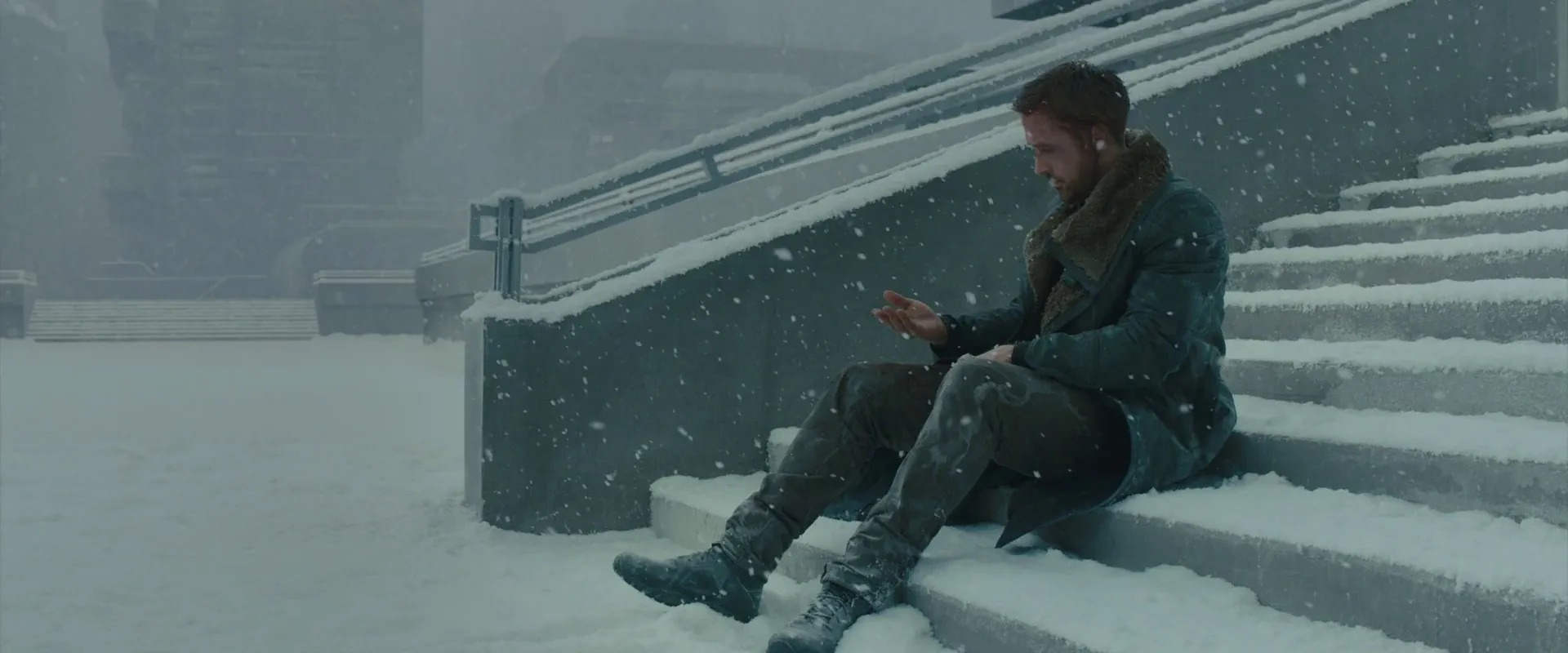
That decision starts long before the shoot, in the references you pull. Before you brief a gaffer, build the look out of real frames — pull the orange-dust stills, the fog exteriors, the caustic-water rooms into one board so the whole team is lighting the same picture. That's exactly the gap using movie stills as lighting reference on set is meant to close, and it's what the StillsLab library is built for — search 2049 or any Deakins frame, drop it straight into a shotlist, and hand your crew the weather you're after instead of describing it. (Deakins background via British Cinematographer.)
How did you like this article?
Login to react to this article
Discussion (0)
💬 No comments yet. Be the first to share your thoughts!