How to Light a Scene With Practical Lights (and Nothing Else)
Great rooms come pre-lit. A field guide to shaping a scene around its own lamps, windows and neon — without flooding the set or blowing out the source.

You've got a location that already looks right. A bar with a buzzing neon sign in the window, a bedroom with one warm lamp, a hallway lit by a single bare bulb. Then the instinct kicks in: roll in the truck, flood the room, "fix" it. And half the time you've erased the exact thing that made the place feel like somewhere real people live.
Practical lighting in film is the discipline of resisting that instinct. You light the scene with the sources that belong in the frame — lamps, windows, candles, TVs, neon, firelight — and you shape exposure and contrast around them instead of over them. Done well, nobody watching can tell where the light came from, because the answer is: from the room. That believability is the whole reason the technique keeps earning its place, from period dramas to modern night exteriors.
Motivation is the point, not the constraint
The word that matters here is motivated. Every pool of light in the frame should have a reason to exist that the audience can see or infer. A face is warm because a table lamp is three feet away. A wall glows blue because there's a window and it's night. The moment light has no visible source, the brain quietly registers "movie lighting," even if the viewer couldn't name why.
Working source-first also forces better decisions on set. Instead of asking "how do I make this look cinematic," you ask "what's actually lighting this room, and how do I make the camera love it?" That second question has a right answer, and it's usually cheaper.
Build the frame around the sources you can see
Start by finding your sources in the blocking, then compose so they do real work. Put the practical in shot, or just out of it, and let the actor move into and out of its throw.
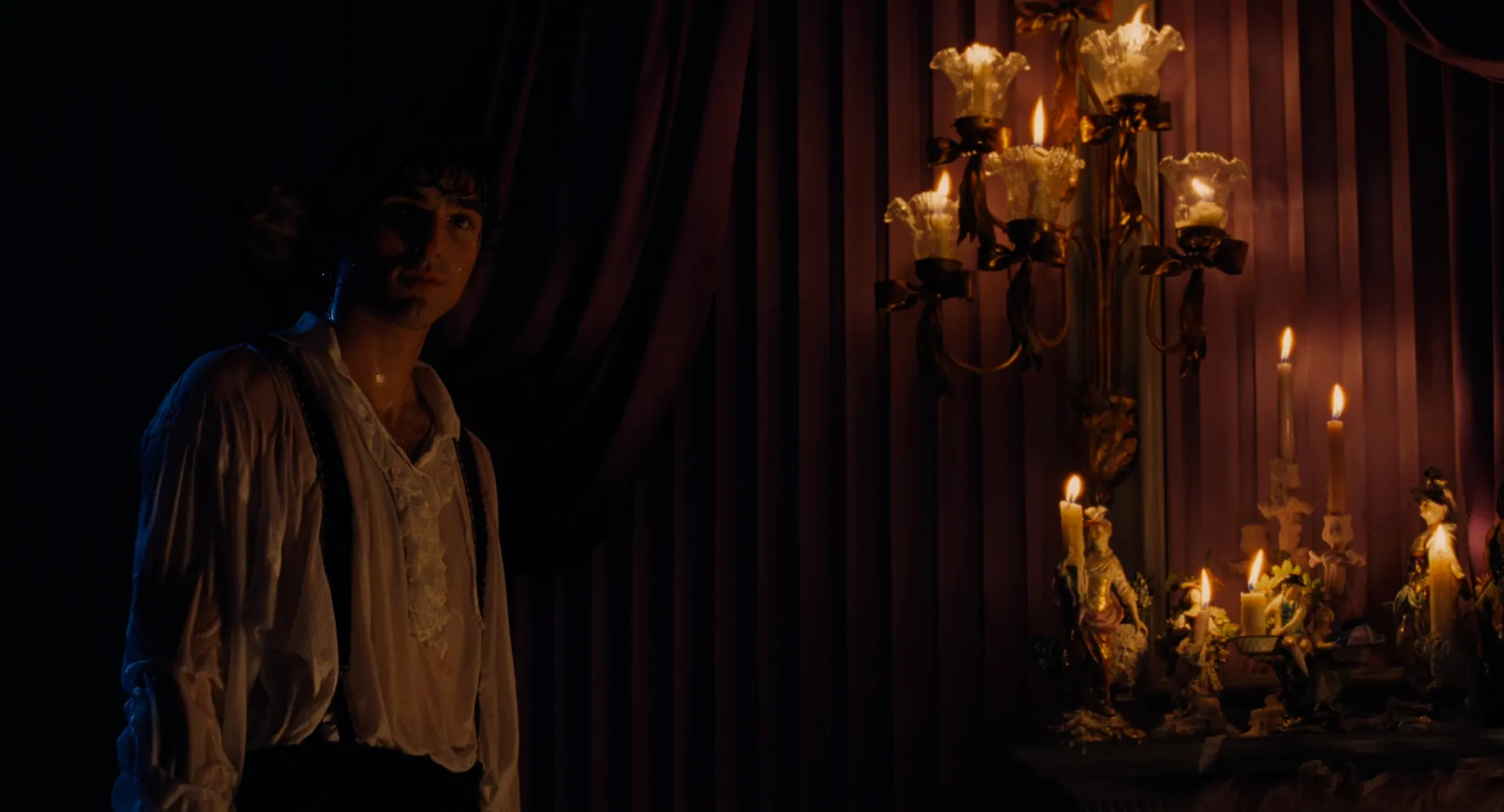
This is the oldest version of the trick, and still the purest. The most famous swing at it is Barry Lyndon: DP John Alcott and Stanley Kubrick shot the interiors by actual candlelight, using a set of stills-camera Zeiss lenses left over from NASA's Apollo program — 50mm optics that opened to roughly f/0.7, fast enough to expose on a few flames. You don't need moon-mission glass to use the idea. You need to accept that the candle or the lamp is the key, and build the shot so it can be.
Control exposure without killing the source
Here's the trap: a bare household bulb or a practical fixture is often either blowing out or leaving your subject two stops under. The fix is not a bigger light next to it — it's controlling the practical itself.
- Dim it. Put the lamp on a hand dimmer so you can dial the level to your stop, not the wall switch's.
- Reburn the bulb. Swap in a photo bulb, an oversized globe, or a dimmable LED so the fixture can legitimately put out more light than a 40-watt would.
- Hide a boost. A small LED tucked behind the lampshade or just off-frame, matched to the practical's color, reads as the same source at twice the output.
- Open up the camera. Fast primes and a sensor with real low-light headroom mean you expose the room, not fight it. This is the modern equivalent of Alcott's f/0.7 — the glass does the lifting.
The goal is that the light on the actor and the light you see in the fixture agree with each other. When they don't, the illusion cracks.
Let contrast fall where it wants
Practical light is uneven by nature, and that's a feature. One source in a room means deep falloff — bright near the lamp, black in the corners. Chasing an even exposure across the whole frame throws that away.
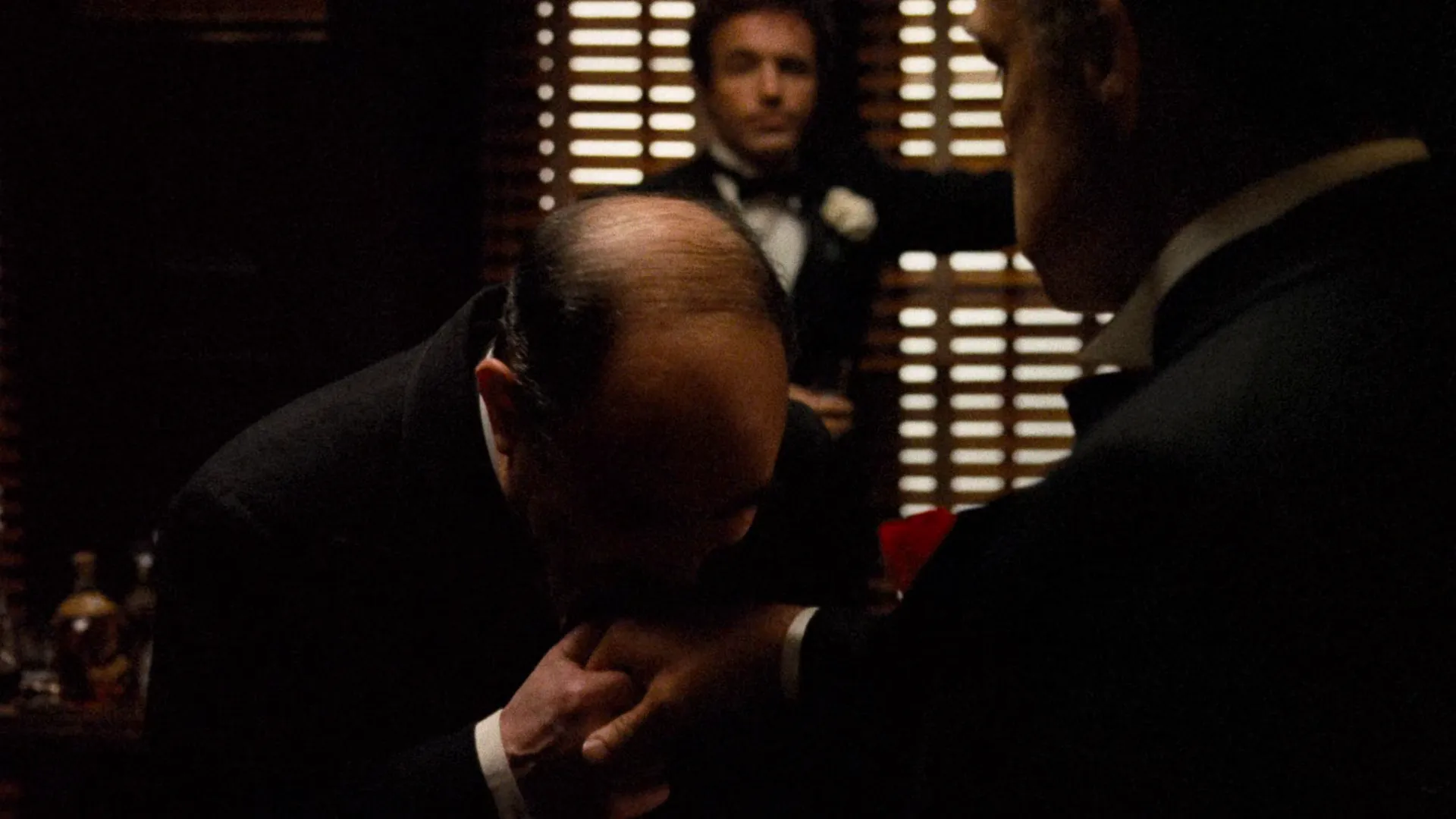
Gordon Willis built the entire look of The Godfather on exactly this. He lit largely from above and let the practicals and shuttered windows carve out the bright zones, so his characters could sit in shadow with their eyes going dark. Paramount executives panicked when they couldn't see their star's eyes in the rushes. Willis was right and they were wrong, and the film's whole moral weather lives in that darkness. If your scene wants menace or intimacy, protect the shadow. Don't fill it because a meter told you to. If anything, the case for letting exposure ride low the way Bradford Young does when he shoots into shadow is stronger with practicals than with any other approach.
Mix color temperatures on purpose
Real rooms are never one color. Tungsten lamp, cool moonlight through the window, green off a fluorescent in the next room, red spill from a sign outside. Instead of correcting all of that to a clean neutral, lean into it.
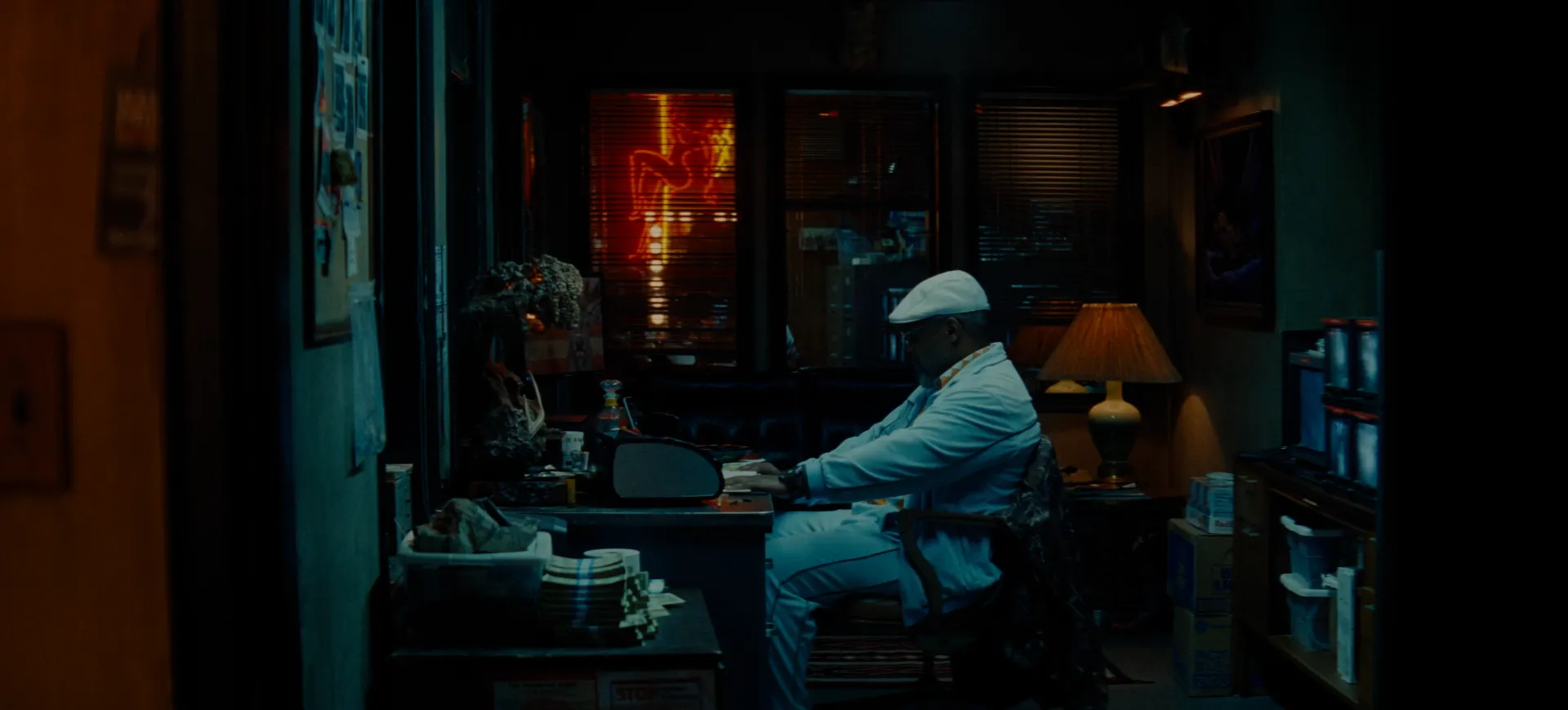
Marcell Rév's work on Euphoria is a masterclass in this. He plays warm sodium-vapor streetlamps against cooler backlights and colored practicals, pushing the orange-versus-blue separation past what a real room would do — but grounding all of it in sources you can point to on screen. The contrast reads as heightened, not fake, because every color has an on-set alibi. Pick two temperatures, put a motivated source behind each, and let them fight in the frame. (If you find yourself reaching for the same warm-cool split every time, it's worth knowing when the orange-and-teal reflex is working for you and when it's a crutch.)
Windows and off-screen light count too
A practical doesn't have to be a lamp you can name. A window is a source. A doorway with light spilling through it is a source. A streetlight you never see is a source, as long as the angle sells it.
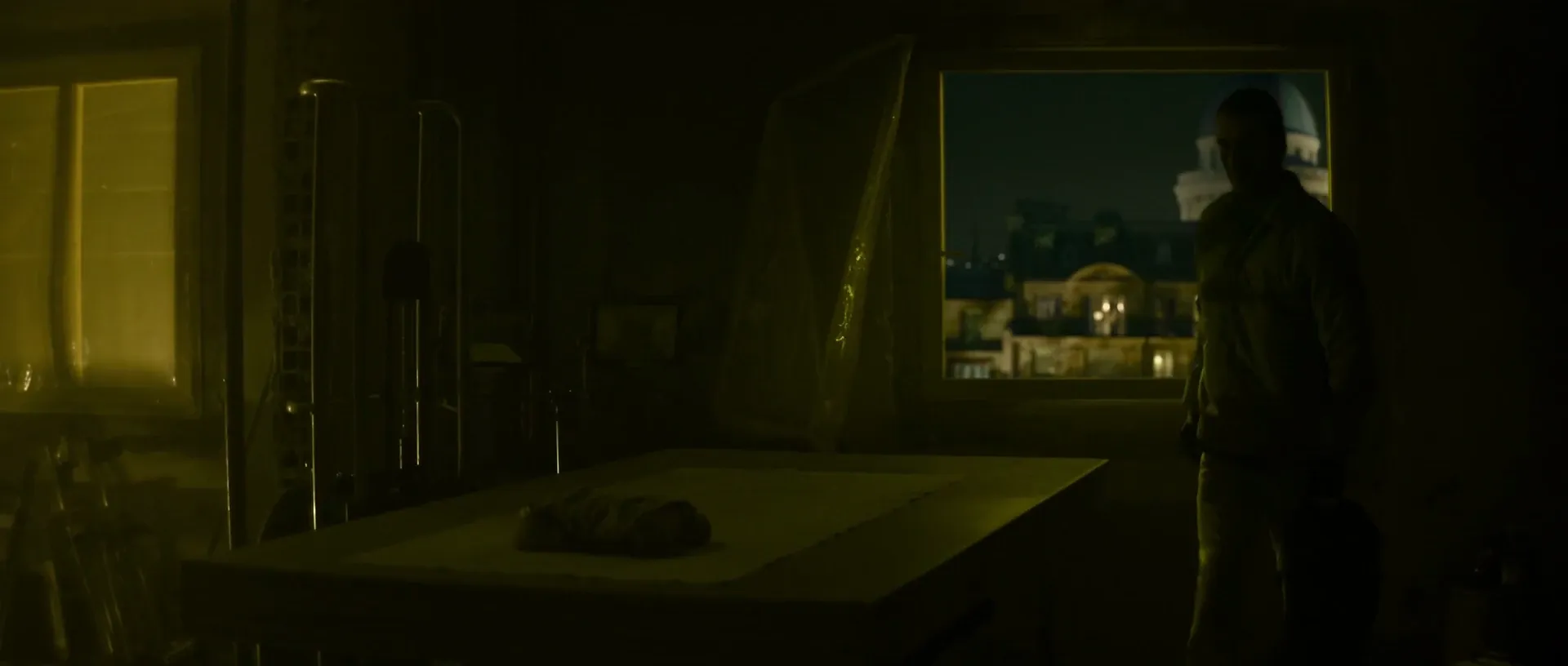
Even the biggest night exteriors run on this logic. On 1917, Roger Deakins lit the burning-village sequence with flares hoisted on cranes, timed to burn for a set number of seconds and deliberately warmed off their usual blue — a motivated source floating above the set, throwing the huge, moving shadows the scene needed. Scale changes; the principle doesn't. Find the source, justify the light, and let the darkness between sources do half the work.
Where the reference work happens
The hard part of practical lighting isn't rigging — it's deciding, before the day, what look you're chasing and being able to show it to your gaffer and director without waving your hands. That's a visual problem, and it's the one StillsLab is built for. Pull the Godfather shutter frame, the Euphoria neon room, the candlelit interior, drop them into a board, and now the whole department is arguing about the same picture instead of three different memories of it. From there it's a short step to turning those stills into a real on-set lighting reference and building a reference library you actually reach for when prep gets short. The lamp in the corner is already doing your job — your job is to know, before you walk in, exactly how you want it to.
How did you like this article?
Login to react to this article
Discussion (0)
💬 No comments yet. Be the first to share your thoughts!