How Many Shots Does a Scene Actually Need? A Guide to Coverage
Most crews shoot five setups on every scene and cut with three. A look at coverage as something you spend on purpose, not out of fear.

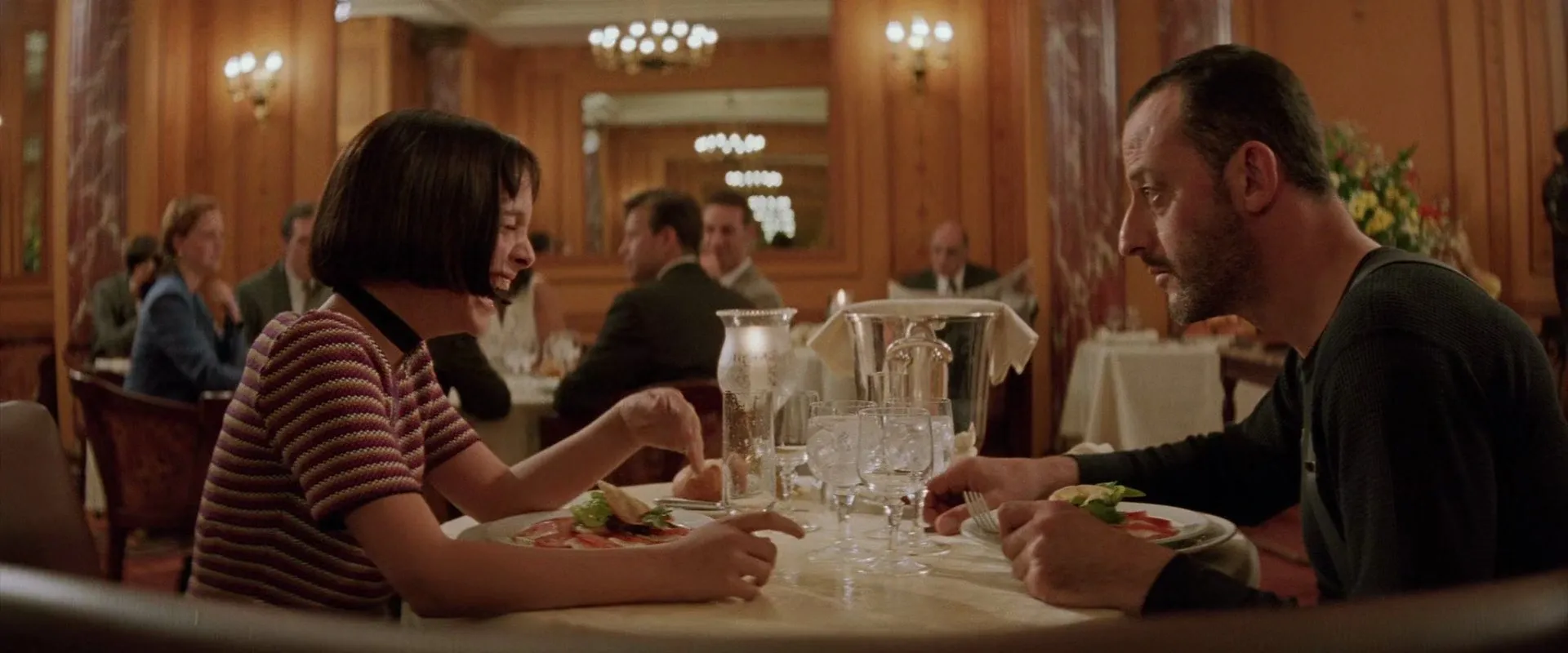
Two actors, one kitchen, four pages of dialogue. The director calls for a master, then a clean single on each, then the over-the-shoulders, then close-ups, then a couple of inserts on the coffee cup — just in case. By lunch the scene is "covered." By the time the editor sits down, half of what got shot never touches the timeline.
Film coverage shots are the set of angles you capture so a scene can actually be cut together: a master to hold the geography, singles and over-the-shoulders for the exchange, close-ups for the beats that have to land. That part is film school. The part nobody teaches you is the harder question — not which angles exist, but how few of them a given scene can survive on. Treat coverage as a budget you spend deliberately, not insurance you buy out of fear, and the whole day changes.
The default set, and why it exists
Ask most crews to cover a two-person dialogue scene and you'll get some version of five setups: a master, an over-the-shoulder on each actor, and a matching close-up on each. StudioBinder lays out this exact five-shot template, and it's a sane default because each angle does one job the others can't.
The master holds the room. It tells the audience who is where, how far apart they're sitting, who's near the door. Everything you cut to afterward borrows its sense of space from that one wide frame.
Look at the two-hander above. Before a single close-up, the wide establishes the whole grammar of the scene — the table between them, the distance, the crowded room they're ignoring. Cut to a close-up an hour of screen time later and the viewer still feels that geography, because the master planted it.
The singles are where the scene actually lives
Here's the thing the master can't do: sit inside a performance. The over-the-shoulder and the clean single are the workhorses of any dialogue scene, because that's where the audience reads a face while still feeling the person across the table.
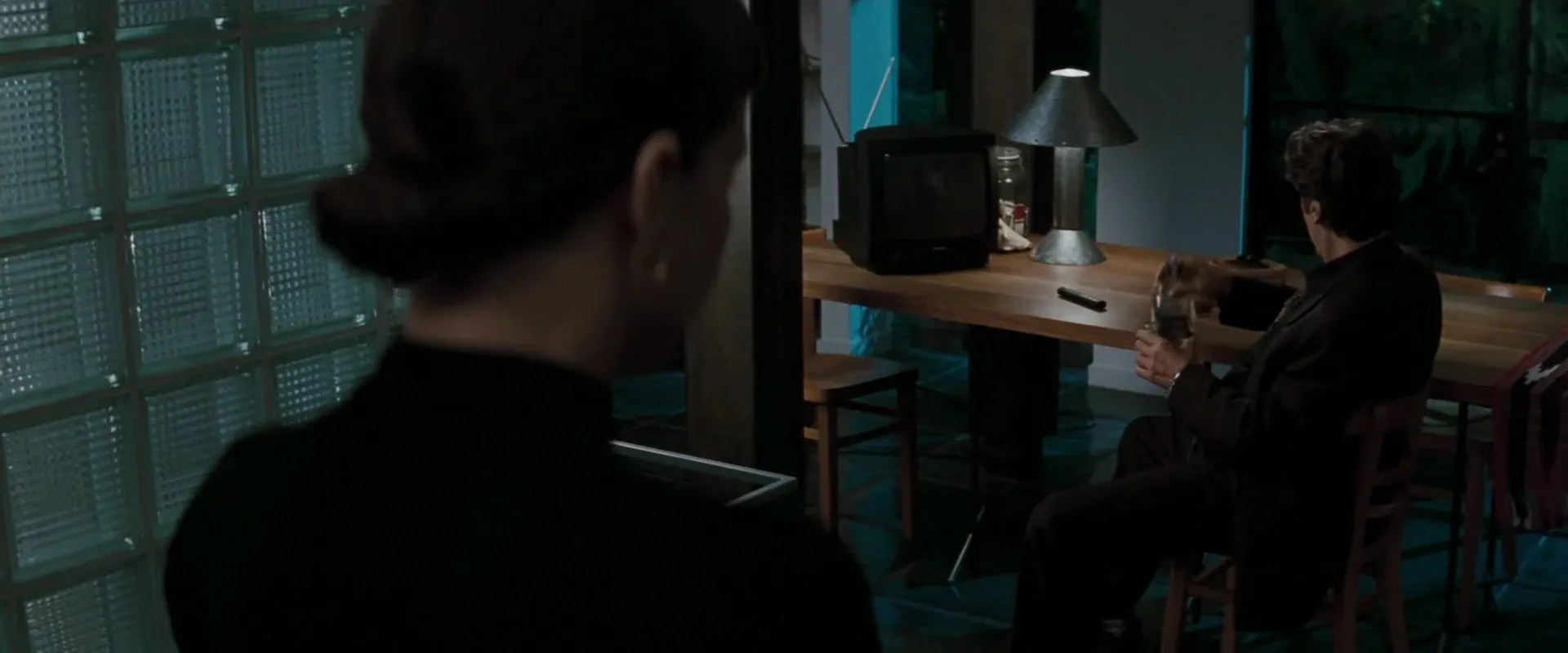
The over-the-shoulder keeps both bodies in the frame, so the geometry stays intact while you push in on the one who's talking. It's the angle you'll live in for most of the runtime. Which is exactly why shooting all five setups on every scene is such a quiet waste — the editor is going to build most of the cut from two or three of them and quietly abandon the rest.
More coverage isn't more safety
The myth is that extra angles are a safety net. Sometimes they are. Mostly they're a tax you pay twice.
You pay first on the day. Every additional setup is a relight, a re-slate, a reset of the actors' energy. Shoot nine angles on a scene that needed four and you've spent two hours the schedule didn't have — hours that come out of the scene at the end of the day that actually needed them.
Then you pay again in the edit. A pile of redundant film coverage shots doesn't make the cut easier; it makes it slower and mushier. When every line exists in six versions, the editor spends the first pass just auditioning angles instead of shaping the scene. Directors like David Fincher run enormous take counts, but the discipline that makes Fincher's precision work is that he knows exactly which frames he's building the scene from — the takes pile up, the setups don't sprawl.
Coverage as a budget: decide the minimum set
The useful reframe is to walk onto set already knowing the smallest set of angles that will cut together into the scene you're after. Not the maximum you can grab before the light goes — the minimum that tells the story.
Work backward from the cut. Ask what the scene has to say, then ask which frame says each thing. A power shift between two characters might need exactly three: a wide to establish the standoff, and two opposing close-ups for the moment it turns.
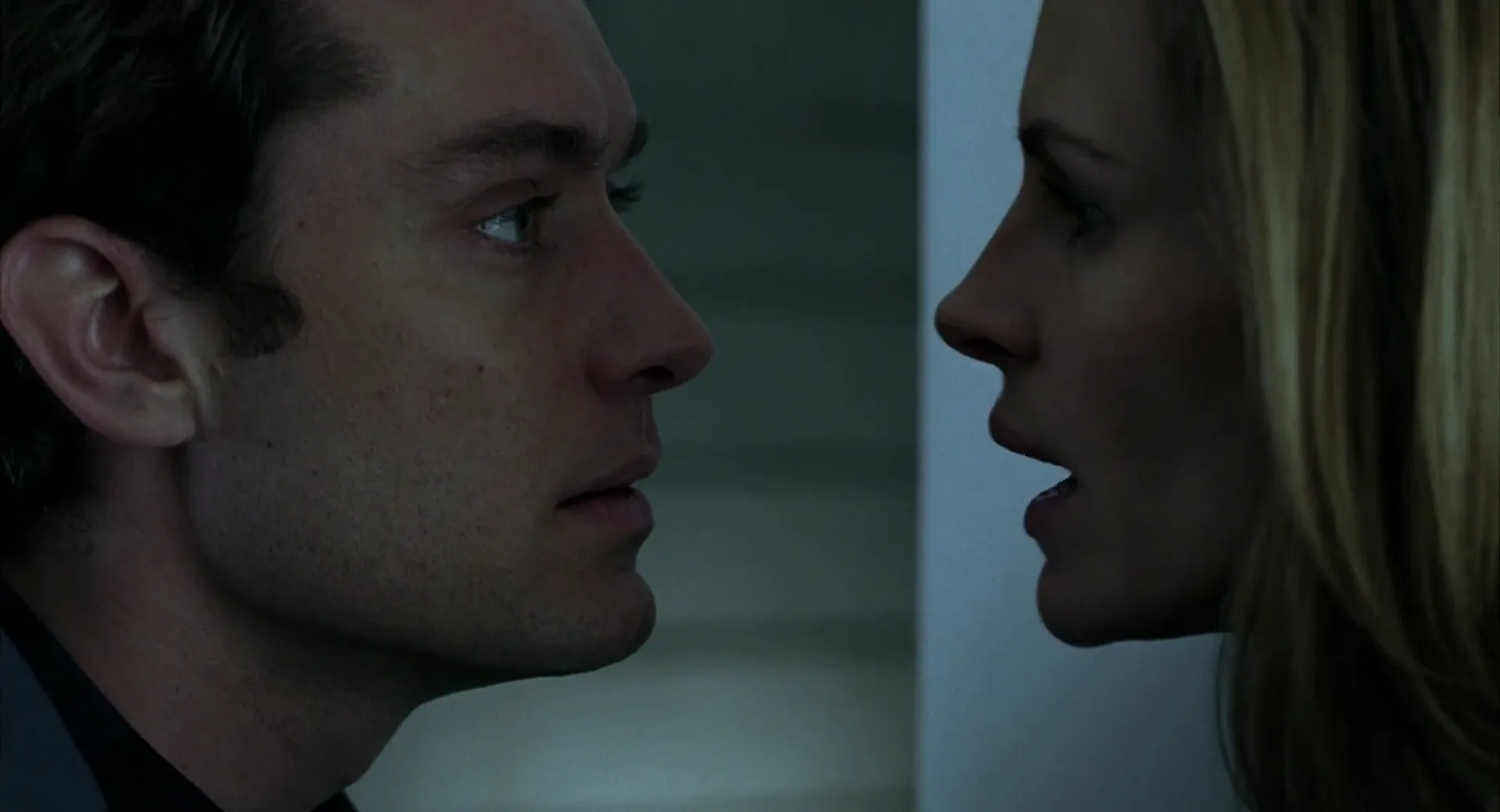
That's the frame that carries the turn — you don't need six other angles hedging around it. When a beat is really about one face at one moment, the close-up isn't part of the coverage, it is the coverage, and the rest is scaffolding you can skip. Decide that in prep, not at the monitor with the clock running.
What the efficient shooters already know
The directors famous for shooting lean aren't cutting corners — they've just made the budget decision before the truck rolls.
The Coen brothers barely shoot traditional coverage at all. They storyboard tightly, favor clean singles over the-other-actor's-shoulder framing, and only shoot what they know they'll use, which is why their films feel so controlled — the cut was decided on paper. Clint Eastwood works the other end of the same idea: known on set as "one-take Clint," he routinely prints the first take and wraps ahead of schedule, because he casts and blocks the problem out before he's rolling.
The extreme version is a film with no coverage at all. When Sam Mendes and Roger Deakins built 1917 to play as one continuous shot, they gave up the editor's safety net entirely — and both have said the real challenge wasn't the day, it was the planning. Mendes had to keep reshaping scenes in prep so every beat worked in sequence, because there was no cutting away to fix it later. Zero coverage is only survivable when the plan is airtight.
You don't have to shoot a oner to steal the lesson. The through-line from the Coens to Eastwood to 1917 is the same: the fewer angles you commit to, the more the plan has to carry — and the plan is cheap to get right.
Make the decision in prep
Coverage stops being a guessing game the moment you've already decided, scene by scene, which frames earn their place. That's a shotlist doing its real job — not a wish list of every angle you might want, but a committed set of the ones the cut needs. Getting there is also where the line between a shot list and a storyboard matters most: the storyboard shows you the frame, the shotlist commits you to how few of them you need.
The best way to pressure-test that in prep is against real frames. Pulling references for each setup — this master, this over-the-shoulder, this close-up — forces the same decision on paper that you'd otherwise make on the day at 4 p.m. with the light going. Building a visual reference library for your scene and attaching a frame to each planned angle in your StillsLab shotlist turns coverage from a nervous habit into a budget you spend on purpose.
How did you like this article?
Login to react to this article
Discussion (0)
💬 No comments yet. Be the first to share your thoughts!