Barry Lyndon: How Kubrick Shot by Candlelight With a NASA Lens
One director refused to fake candlelight — and had to raid the space program to pull it off.

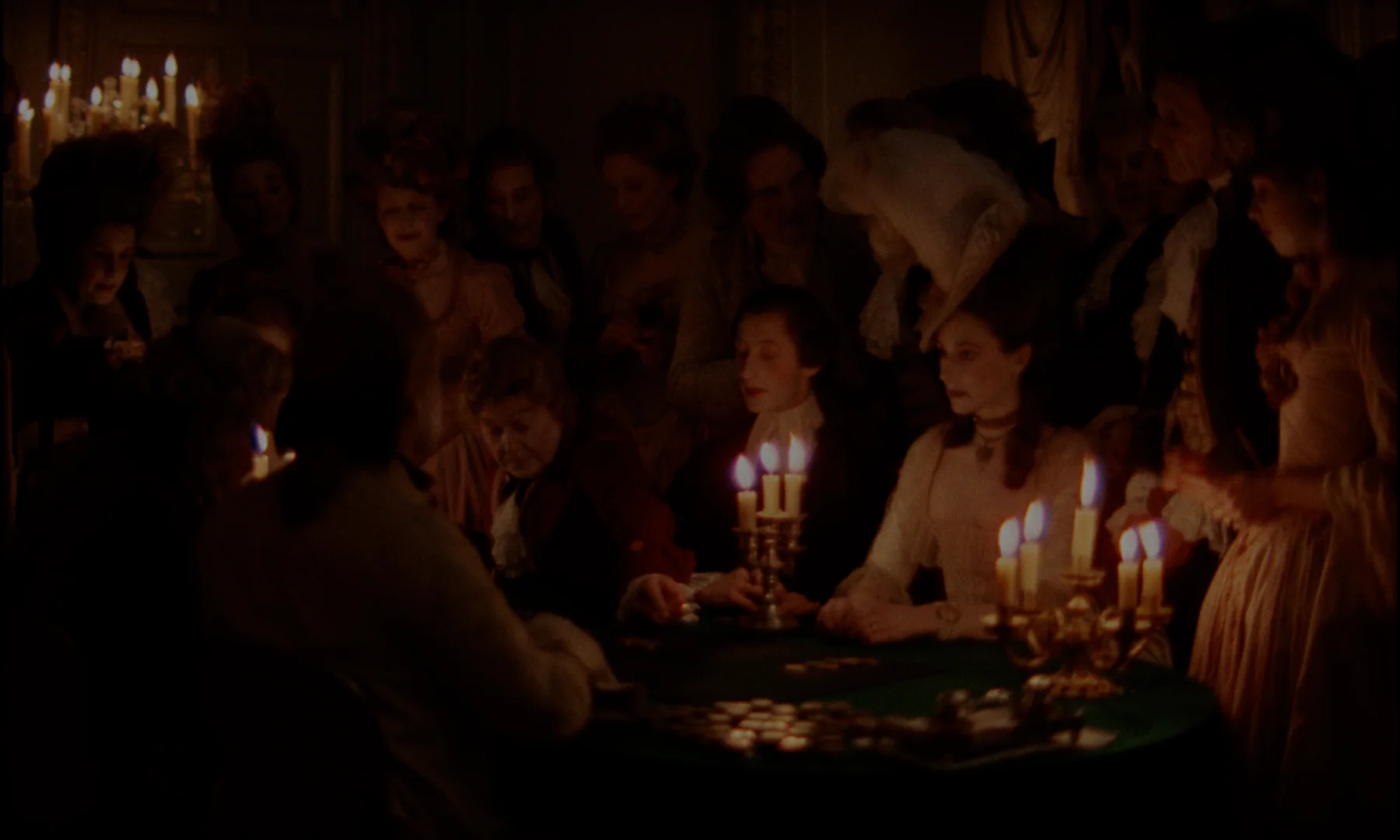
Point a camera at a dinner table lit by nothing but candles, load it with 1975 film stock, and you get black. Not moody — black. There simply isn't enough light hitting the emulsion to register an image. Every period drama before this one solved the problem the obvious way: hide electric units behind the set and pretend the candles were doing the work. Stanley Kubrick refused. The story of the Barry Lyndon cinematography — how Kubrick and DP John Alcott exposed a full period interior on candle flames alone — is still the most famous lens story in the movies.
The lens that came off the space program
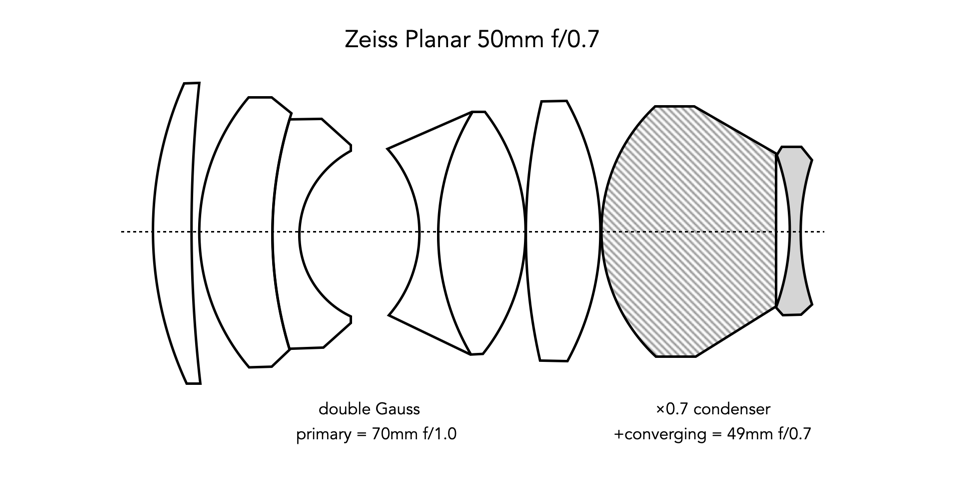
The problem was arithmetic. A candle throws almost no light, so Kubrick needed glass that could gather every last photon of it — a lens far faster than anything ever built for a motion-picture camera. He found it in an unlikely place. Carl Zeiss had produced a small run of 50mm Planar lenses at f/0.7 for NASA, built to photograph the far side of the Moon during the Apollo program. Kubrick tracked down and bought three of them.
A stills lens doesn't just bolt onto a movie camera, though. Ed DiGiulio's Cinema Products Corporation reworked both the lenses and the camera to marry the two. The rear element had to sit roughly 2.5mm from the film plane — close enough that the rotating shutter of the Mitchell BNC had to be cut back to clear it. For wider shots, where even a 50mm was too tight in a real room, they mounted a projection-lens adapter on the front to pull the view out to around 36.5mm. A 24mm version was tested and dropped; Kubrick didn't like the distortion.
What f/0.7 actually cost
Speed like that is never free. Wide open at f/0.7, depth of field collapses to almost nothing — at a normal conversational distance, the zone of sharp focus is an inch or two deep. The plane where an actor's eyes land sharp and the plane where the tip of their nose goes soft are that close together.
That reshaped how every scene could be staged. Actors couldn't drift; they had to hit marks with near-surgical precision, which is exactly why the candlelit interiors feel so unusually still — people sit, turn slowly, hold. The focus ring on the lens was re-engineered to travel two full revolutions (720 degrees, against the usual 270) just to give the puller enough resolution to ride a face. Even then, the focus puller worked off a closed-circuit video feed with a grid laid over it to catch the smallest shift. Kubrick leaned on slow zooms rather than dollies, and that telephoto compression flattens the frame until the characters look pinned inside a painting.
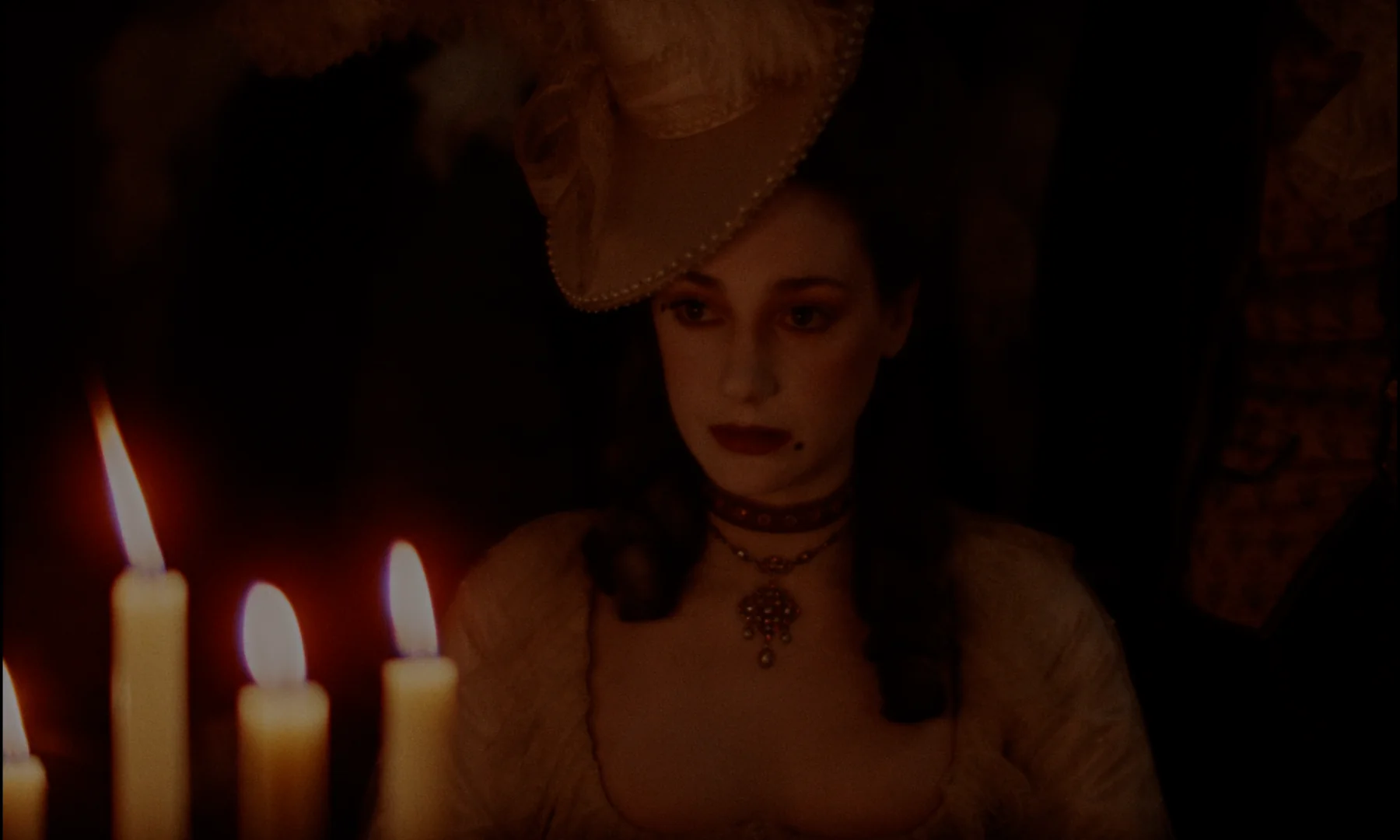
It's the same discipline behind any scene built on real sources instead of movie units — the exact trade you make when you commit to lighting a scene with practical lights and nothing else.
Why the Barry Lyndon cinematography still looks like a painting
None of this was a technical stunt for its own sake. Kubrick and Alcott studied 18th-century painting — Hogarth above all — and wanted frames that sat in the same register: warm, soft, lit from the side by whatever flame happened to be in the room. To wring a usable image out of that little light, Alcott had the negative push-developed one stop, rating the Kodak 5254 stock at EI 200 instead of its native 100. The push buys exposure but also opens the shadows into a milky, low-contrast softness — a good part of why the candlelit footage glows the way it does instead of falling into the hard pools you'd expect from a single point source.
The look everyone chased afterward
The film didn't just win John Alcott an Academy Award — one of its four Oscars — it set a bar that period filmmakers have measured themselves against ever since. You can read the inheritance any time a modern production commits to firelight and practicals rather than faking them: the candlelit gatherings of Pride & Prejudice (2005), the chandelier-lit halls of Crimson Peak, the dim interiors of Marie Antoinette. None of them shot on an f/0.7 NASA lens — modern fast glass and clean high-ISO sensors made that particular heroics unnecessary — but the ambition traces straight back to what Kubrick proved a camera could do.
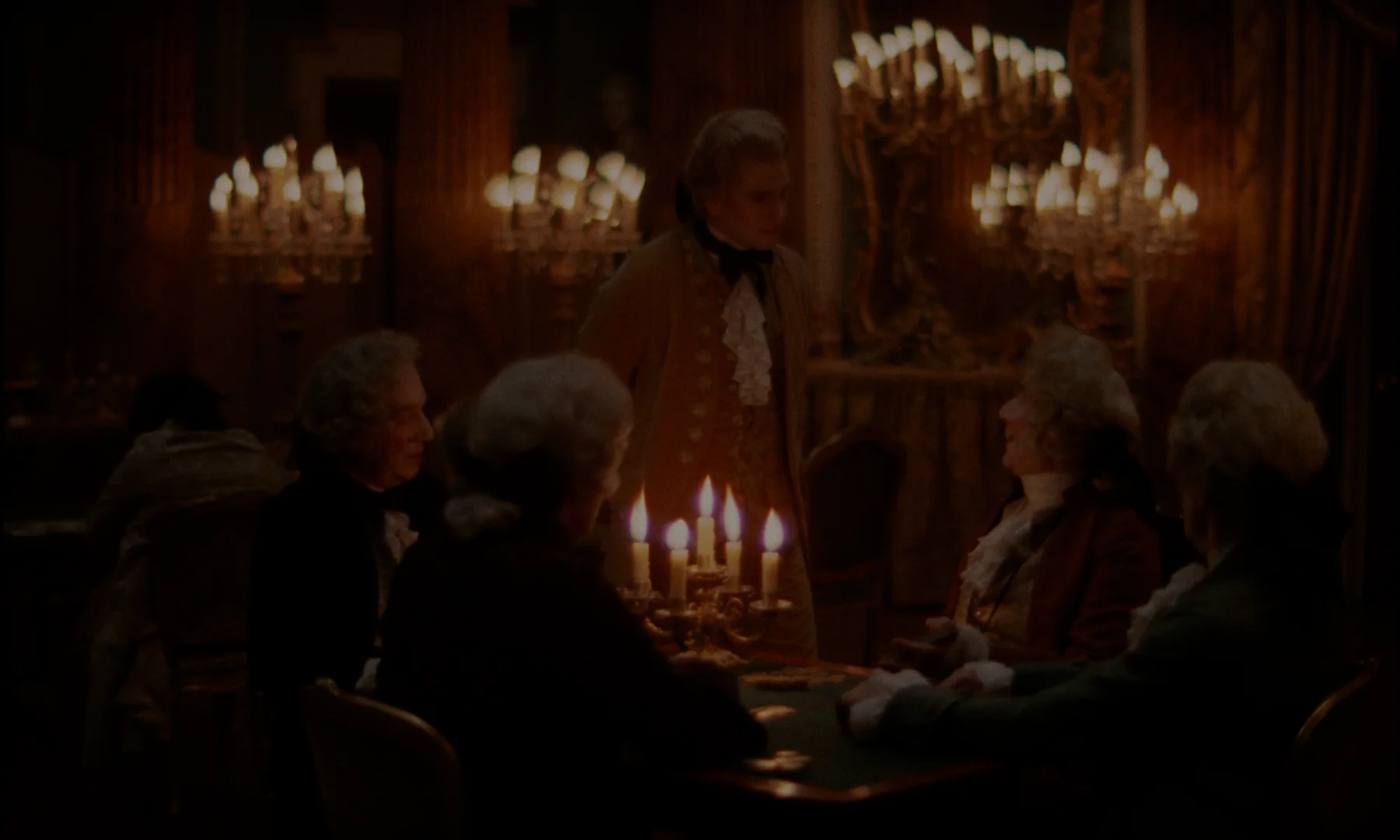
Faster lenses and better sensors have changed the math, not the eye behind it. Deciding how a room should read — where the flame sits, how shallow the focus runs, how a face holds against the dark — is still a call you make with your eyes long before you make it with a camera. Studying how a DP like Hoyte van Hoytema rebuilds night from scratch, or pulling apart how a film like this was actually lit, is the fastest way to build that instinct.
That's the habit worth keeping: study the frame before you're ever on set. StillsLab's reference library lets you pull the exact stills you're learning from and set them right beside your shotlist — so the look you're chasing is sitting next to the plan for getting it.
How did you like this article?
Login to react to this article
Discussion (0)
💬 No comments yet. Be the first to share your thoughts!