Hoyte van Hoytema: The Cinematographer Who Rebuilt Night From Scratch
The DP who would rather engineer a camera that doesn't exist than settle for the one already in the case.

On Nope, Hoyte van Hoytema needed a night sky that read as a real place — deep, textured, legible — instead of the blue-gel mush that "night" usually turns into on camera. So he built a camera that didn't exist. That instinct, to rebuild the tool itself for the film in front of him, is the center of gravity in the Hoyte van Hoytema cinematography style: most DPs pick a camera off the shelf; he tends to make one.
The rig on Jordan Peele's 2022 film is the clearest example. Van Hoytema mounted two bodies on a repurposed 3D-stereo mechanism so they'd frame the exact same image — an ARRI Alexa 65 shooting infrared, locked in parallel with a Panavision System 65 loaded with film. Infrared reads a sunlit scene the way your eye adjusts in the dark: bright subjects, a dropped-out sky, huge contrast. The film camera carried the color and grain. Composite the two in the grade and you get night that still has depth and information in it, shot in daylight. He'd tested the same infrared idea earlier on the 2019 space drama Ad Astra, where he needed a sky that looked genuinely airless.
If you've ever wrestled with the old blue-gel-and-underexpose approach, it's worth seeing how day-for-night actually works when you shoot it in broad daylight — van Hoytema's rig is the far end of that same problem.
Before Nolan, he was a naturalist
The infrared spectacle is easy to fixate on, but it grew out of something quieter. Van Hoytema, a Dutch-Swedish DP, broke through on Tomas Alfredson's Let the Right One In (2008), a vampire film he shot like a cold, painterly romance — muted palette, snow, available light doing most of the work. Nothing about it screams technology. It screams restraint.
Then came Her (2013) for Spike Jonze. He and Jonze wanted a near-future that felt warm and lived-in rather than chilly and chrome, so they pulled blue almost entirely out of the frame and built the whole film on reds, oranges and soft yellows. It's a color decision, not a gear decision, and it's why the film feels tender instead of dystopian. Both movies landed Best Picture nominations, and both prove the point people miss about him: the tech is in service of a feeling, never the other way around.
Large format as a feeling, not a flex
Christopher Nolan is where the scale became the signature. Their run together — Interstellar (2014), Dunkirk (2017), Tenet (2020), Oppenheimer (2023) — is essentially an argument that a bigger negative isn't about resolution, it's about presence.
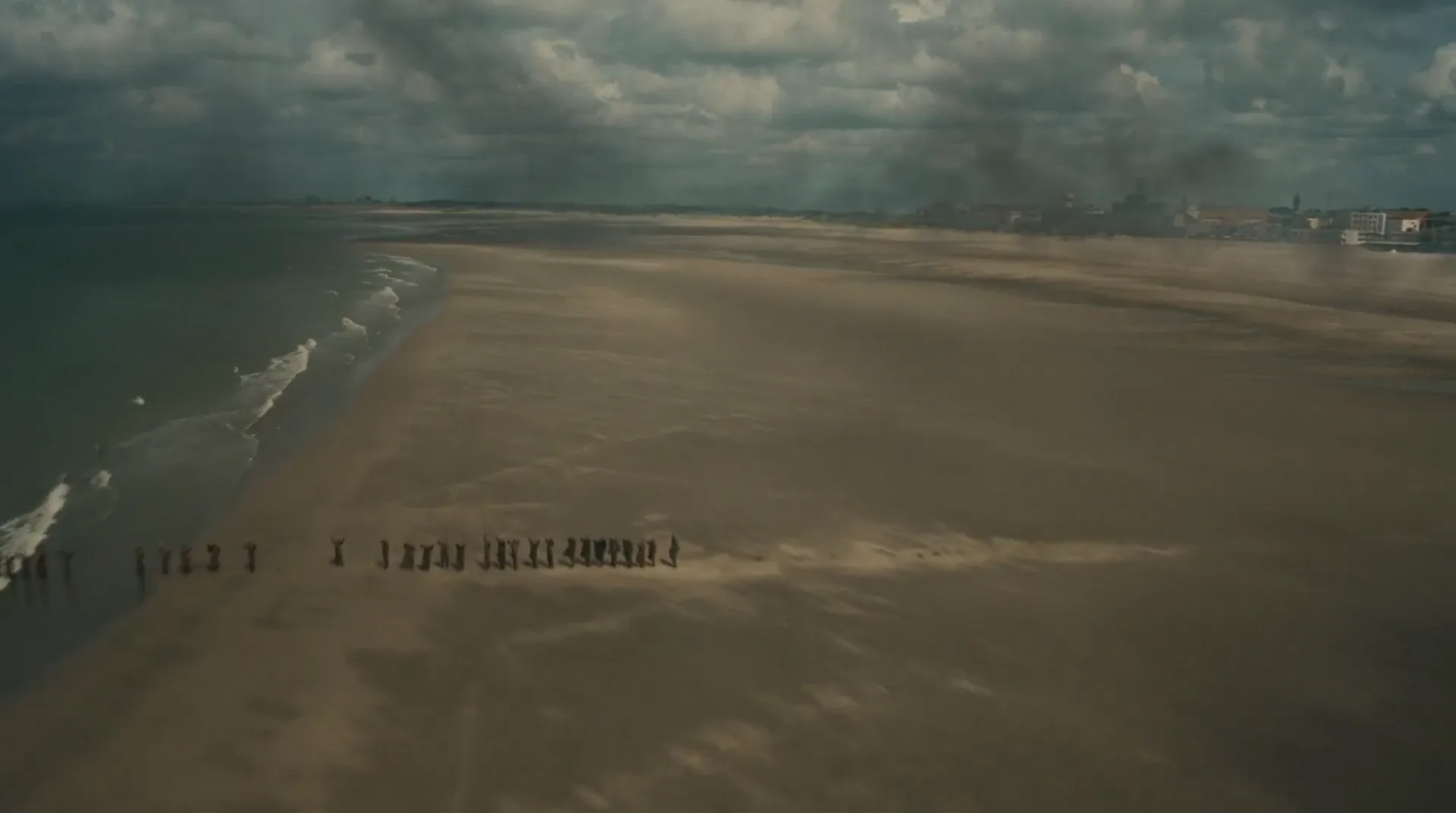
Dunkirk is the proof. Roughly 70% of it was shot on IMAX 65mm, and it was the first feature to use those notoriously heavy IMAX cameras handheld at that scale — van Hoytema literally rebuilt the camera's ergonomics so he could carry it into the surf and onto a mole. The result isn't "look how sharp." It's that the beach feels vast and you feel stranded on it. The work earned him his first Academy Award nomination for cinematography.
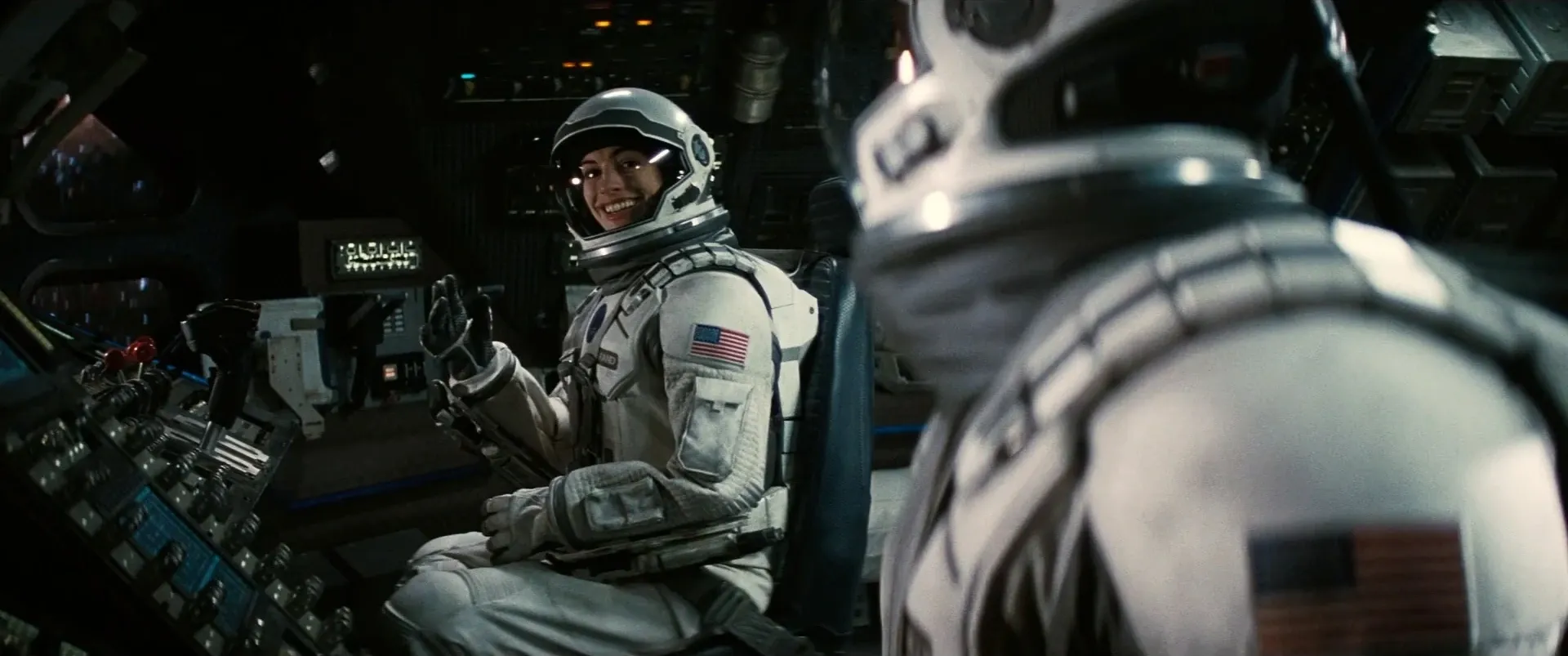
Look at how he lights the interiors, too. The cockpits in Interstellar run on the practical glow of the instrument panels — the same available-light instinct from his earlier films, just scaled up to a negative big enough to hold it. That's the through-line of the Hoyte van Hoytema cinematography style: whether it's a Swedish apartment or a spacecraft, the light in frame is usually the light that's actually there. If you're building toward that, the discipline starts with lighting a scene using practicals and nothing else.
He's not the only DP chasing scale and intimacy at once — Greig Fraser has been solving the same tension from a different direction — but van Hoytema gets there by physically remaking his equipment more often than anyone working at his level.
The black-and-white that didn't exist yet
The purest version of this showed up on Oppenheimer. Nolan wanted two timelines, one in color and one in black-and-white, and he wanted the black-and-white sequences shot on large-format film to match the rest. The problem: 65mm black-and-white film stock had never been manufactured. Not "was hard to find" — it didn't exist.
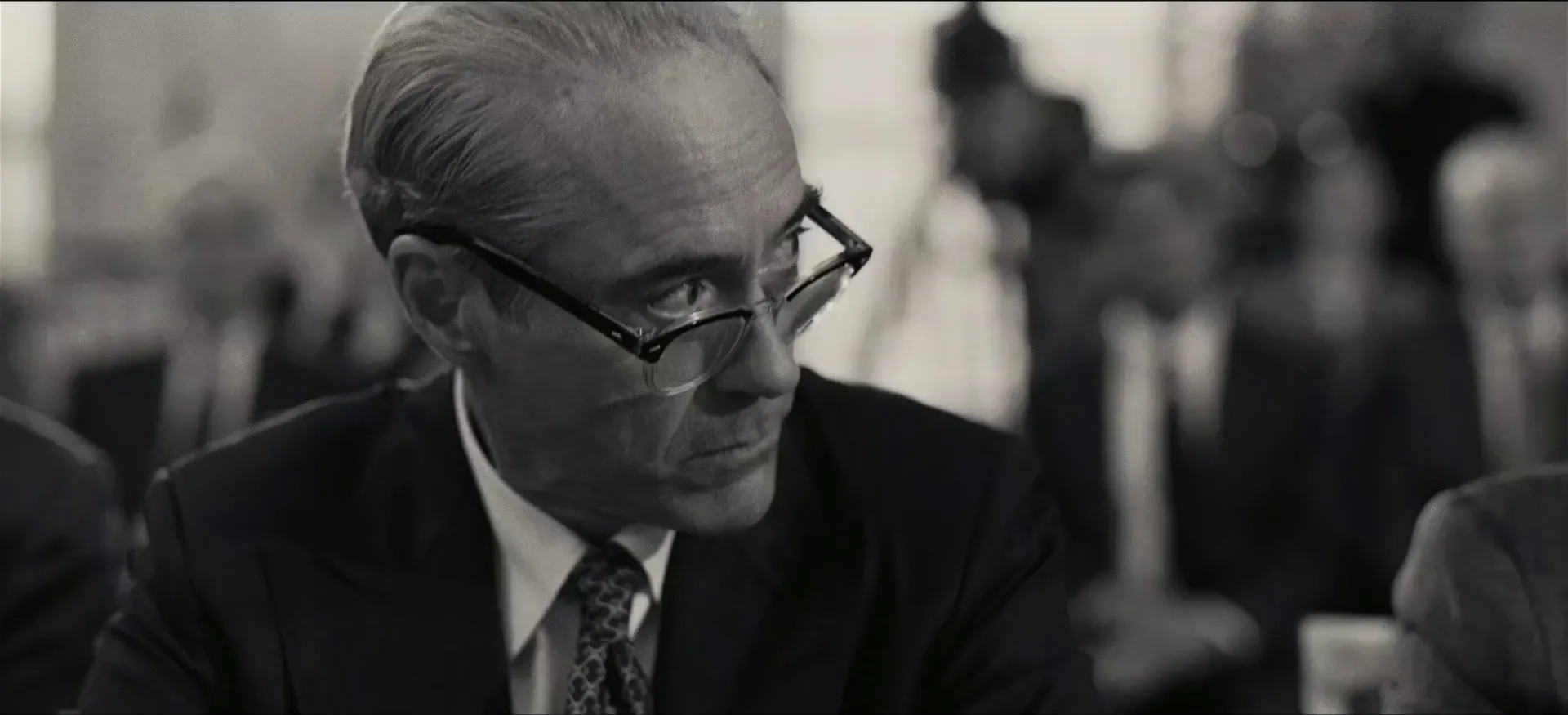
So van Hoytema went to Kodak and asked them to make it. They engineered a large-format version of their Double-X black-and-white emulsion specifically for the film, a first for a format that had only ever run color. The high-contrast, silvery monochrome you see in those hearing scenes is a film stock that exists because a cinematographer refused to fake the look digitally. Oppenheimer won him the Academy Award for Best Cinematography — his second nomination, first win.
The real lesson isn't the gadgets
It would be easy to file van Hoytema under "gearhead," but that misses it. Every one of these builds — the infrared rig, the handheld IMAX, the invented film stock — starts from a specific feeling the movie needs and works backward to the tool. He doesn't reengineer the camera because he can. He does it because the shot in his head doesn't have a camera yet.
That's a useful frame for any of us working with a fraction of his budget. You probably can't commission a new emulsion, but you can be that precise about the look before you ever roll. Know exactly what the frame should feel like — the contrast, the color, the source of the light — and pull real references that show it, so the whole crew is chasing the same image instead of ten different ones. That clarity is what a visual reference library is for: gather the frames that define your look, build them into your shotlist, and hand your DP a target instead of an adjective. Van Hoytema always knows the picture before he knows the machine. Start there.
How did you like this article?
Login to react to this article
Discussion (0)
💬 No comments yet. Be the first to share your thoughts!