Greig Fraser: Shooting for Scale Without Losing the Face
The DP behind Dune and The Batman builds frames the size of a planet, and never once loses the actor inside them.

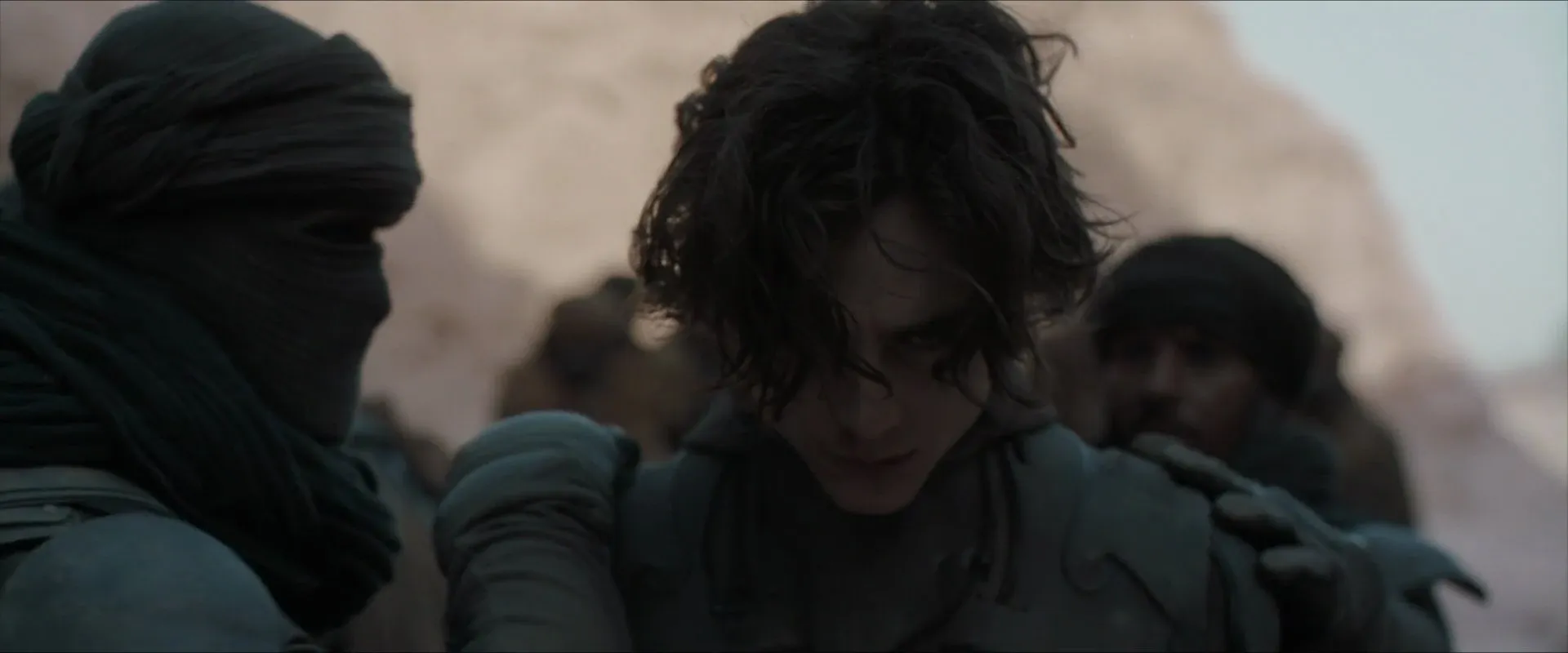
Point a camera at a thousand-foot dune or a rain-drowned city block and the easy mistake is to let the vista win. The landscape swallows the actor, the frame turns into a postcard, and the scene stops being about a person. What separates Greig Fraser's work is that the person never disappears. The scale is enormous and the face is still right there, still the thing you're watching.
That instinct — keep the human inside the epic — runs through everything the Australian DP has shot, from Villeneuve's Arrakis to Matt Reeves' Gotham. Fraser won the Oscar, the BAFTA and the ASC Award for Dune in 2022, the rare sweep of all three in a single year, after an earlier nomination for Lion. He also took an Emmy for The Mandalorian. The awards are the footnote. The method is the story.
Truth first, spectacle second
Fraser talks about his images in terms of honesty — that whatever the story, the light and the lens should feel true rather than decorated. On Rogue One, that meant making the default camera position handheld and stripping the apparatus of filmmaking off the set until the frame looked almost unlit. He and Gareth Edwards weren't chasing shaky-cam energy; they wanted you to feel like you were ducking for cover next to the characters. The reference points weren't other space movies. They were war films — the dirty, boots-on-the-ground kind.
That's the tell with Fraser. He reaches for the documentary version of a scene before the operatic one. It's why a Star Wars picture ended up feeling like Apocalypse Now with X-wings, and why his biggest frames still read as something a person could have actually stood inside and photographed.
The desert that doesn't erase the actor
Dune is the obvious stress test. Shoot two films almost entirely in open sand and the temptation is wall-to-wall grandeur. Fraser leaned the other way. He shot on ARRI's large-format Alexa system — the Mini LF on the first film, adding the Alexa 35 and the 65 on Dune: Part Two before printing to 70mm — and used the full sensor, but the format was in service of intimacy, not size for its own sake. The desert is vast and the close-ups are patient.
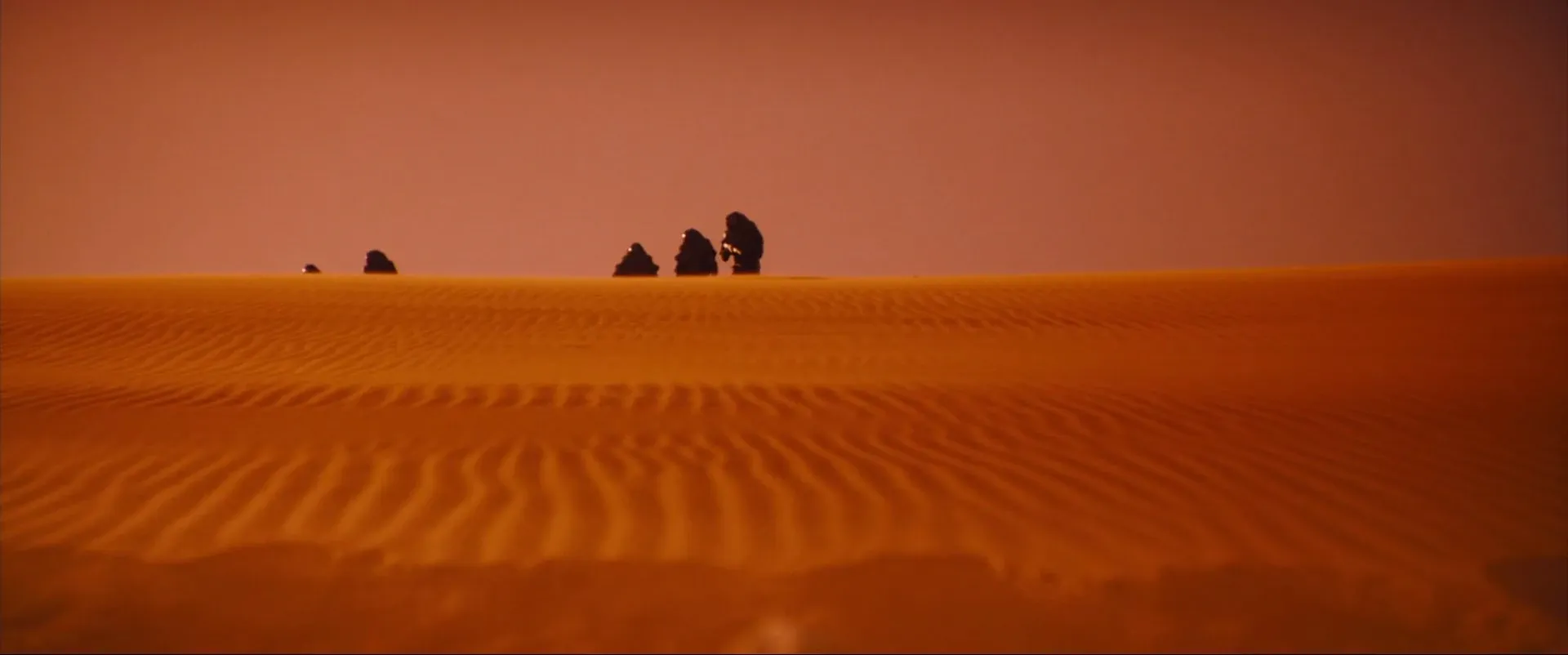
Look at how the wide shots are built. The characters are tiny against the dune, the light is hard sun and open shade doing exactly what real desert light does — and then the cut brings you in close, the background falling soft behind an actor's face, and the emotion is the whole frame. The scale earns the intimacy; the intimacy pays off the scale. Even the show-stopping sandstorm was shot on a stage packed with haze and graded to sand color afterward, because control served the shot better than the real thing.
Then there's Giedi Prime. For the Harkonnen homeworld, Fraser pulled the infrared filter out of a modified Alexa 65 and shot with an 87c filter blocking visible light, so the camera only recorded infrared bouncing off skin and cloth. Desaturated to a hard monochrome, it turned a sequence into something genuinely alien — an idea he'd been circling since experimenting with infrared on earlier films. That's a technician's move in service of a feeling, which is the through-line.
Gotham: finding the light instead of adding it
The Batman flips the problem. Instead of too much landscape, you've got near-total darkness, and the risk is you lose the actor in it. Fraser's answer was to treat the film as urban noir where darkness isn't the absence of light — it's the environment, punctured on purpose with small pockets of light in every frame.
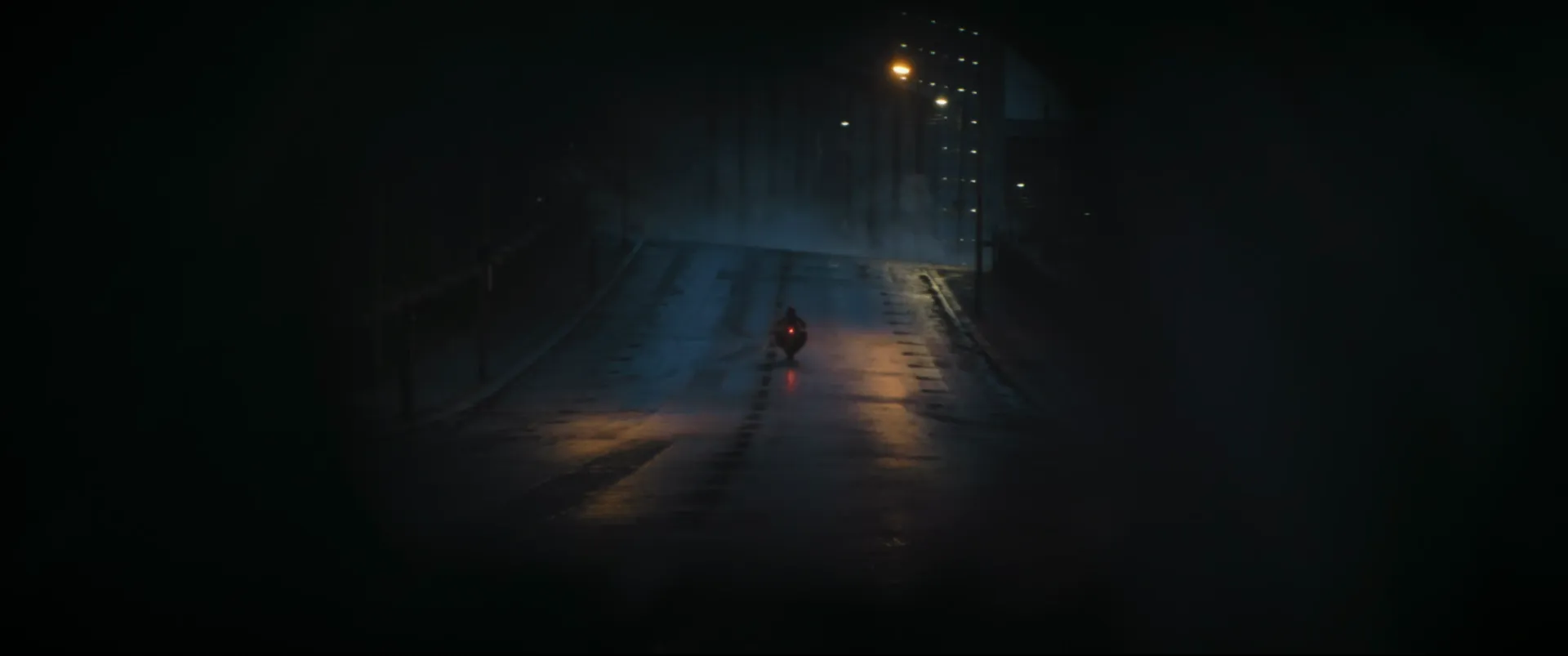
He and Reeves shot on the Alexa LF with custom ARRI ALFA anamorphic lenses, deliberately detuned so the glass had character instead of clinical sharpness. The rule Fraser set himself was that the light had to feel available — sodium streetlamps, storefront glow, headlights raking through rain — and that he'd never cheat a backlight in just to separate Batman from the black. If the audience can always find the character in the dark, it's because the pocket of light was placed with intent, not because the frame was flooded to be safe. The color sits dusty and desaturated, the opposite of a comic-book palette.
What a working DP can steal from this
Strip away the budgets and there's a portable idea here: decide what the frame is about before you decide how big it is. Fraser's scale never competes with his faces because he's already chosen the face. The wide shot is context for a person, not a replacement for one. The dark frame keeps one honest source of light because that light is aimed at the thing that matters.
His lens choices carry the same logic — clean spherical glass when the desert needs to feel real, characterful detuned anamorphic when Gotham needs a mood — which is the same call every DP weighs when they're choosing between anamorphic and spherical for a story. It's also the restraint that puts him in conversation with someone like Roger Deakins, whose whole style is light and discipline: both men trust a single motivated source over a rig full of insurance.
You plan that kind of frame long before the camera rolls — in the references you pull, the lighting you break down, the shots you block against real images instead of a vague mental picture. That's the part StillsLab is built for: collecting the exact frames that show how a DP like Fraser holds a face inside an enormous world, and using those stills as lighting and staging reference straight through prep. Steal the thinking, not just the look.
How did you like this article?
Login to react to this article
Discussion (0)
💬 No comments yet. Be the first to share your thoughts!