The Camera Shot Sizes Every Shotlist Uses (and When Each Earns the Cut)
Every shot size is a decision about how close the audience gets to stand. Here's the whole ladder, and how to write it down so the crew reads one intent.

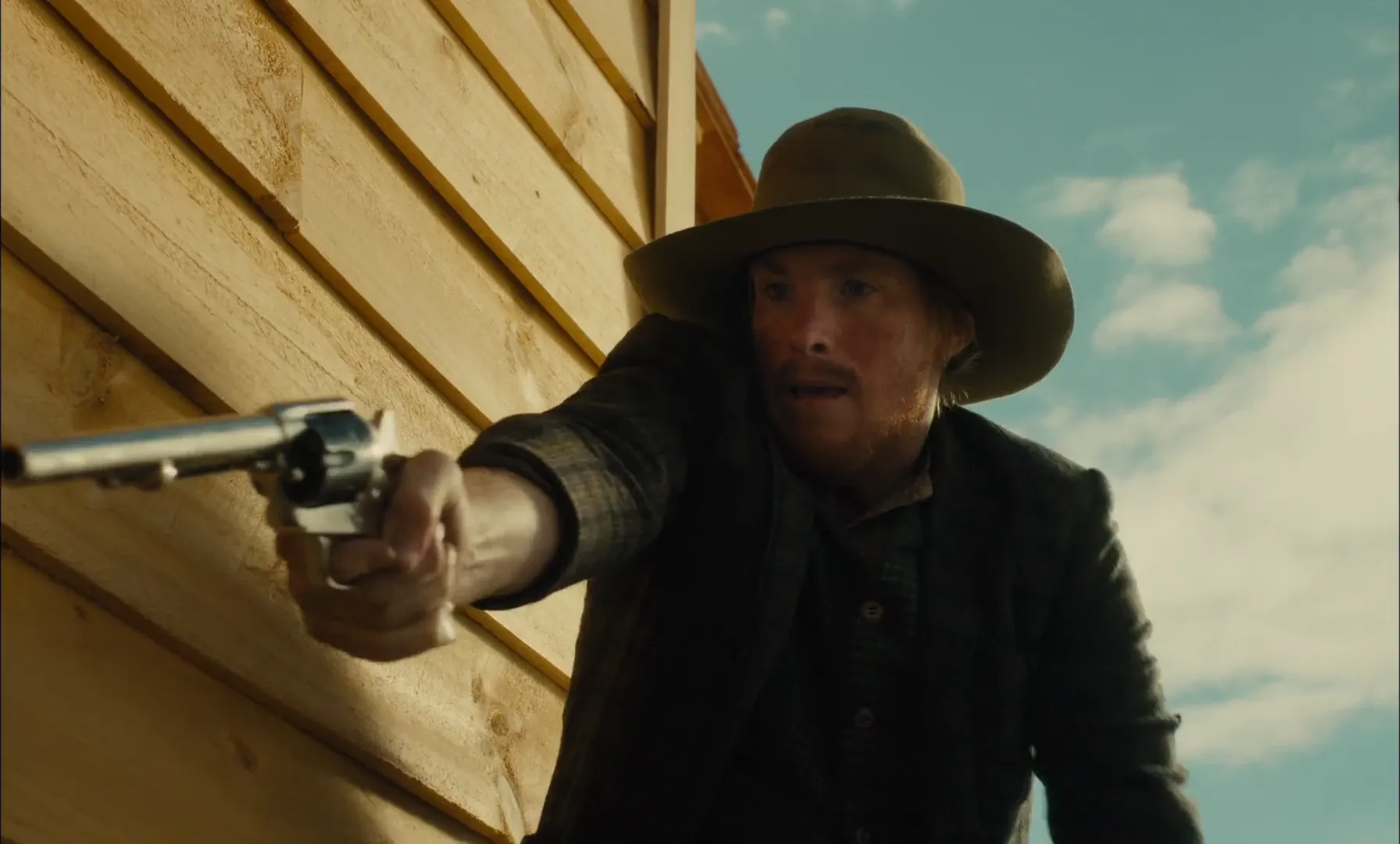
The shotlist cell says MED. The director pictured the audience close enough to catch the actor's jaw tighten before the line lands. Nobody wrote down which "medium" they meant, so the camera settles three feet too far back and the moment leaks out through the gap. Shot size is the first decision you make about any setup, and it's the one most often flattened into a lazy abbreviation that means something different to every person reading it.
The types of camera shots you'll actually use run along a single ladder — how much of the subject the frame holds, and therefore how close the audience gets to stand. From the top: extreme wide, wide, full, medium wide, medium, medium close-up, close-up, extreme close-up. Off to the side sit two shots defined by relationship rather than size — over-the-shoulder and point-of-view. Every one of them is a decision about distance, and distance is emotion. Pick the size for what you want the audience to feel, then notate it so the whole crew reads the same intent.
One thing to get straight before the ladder: shot size is not focal length. How much of the subject fills the frame is a separate choice from which lens you put on to get there — you can shoot a close-up on a 25mm from six inches away or an 85mm from across the room, and they feel nothing alike. That's a whole conversation of its own about how focal length changes what a shot feels like. Here we're only talking about size.
The wide end: put the subject in its place
At the top of the ladder the human figure stops being the subject and becomes a detail. An extreme wide shot (EWS) hands the frame to the world and lets the character shrink inside it. Use it to establish geography, yes, but the better reason is emotional: nothing isolates a person like scale.
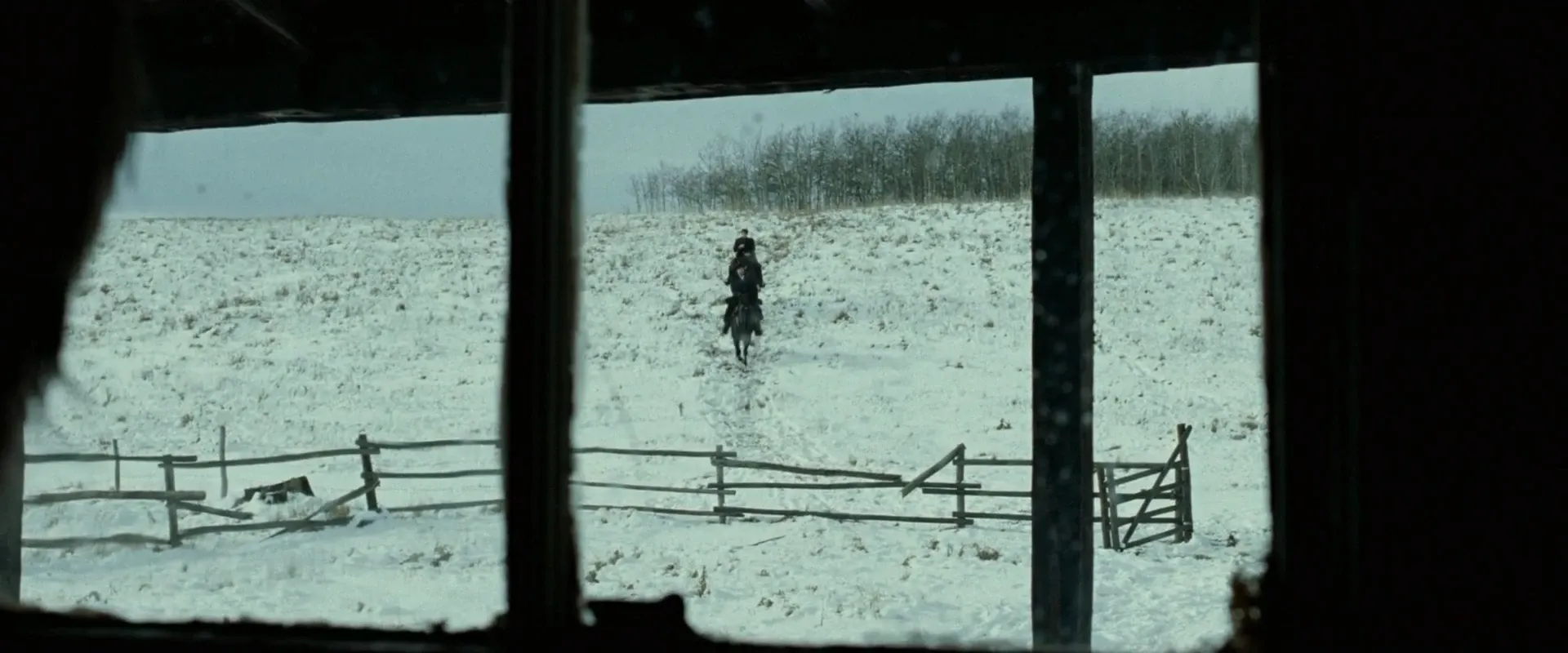
Look at how Roger Deakins frames the rider in The Assassination of Jesse James by the Coward Robert Ford — a speck crossing a snowbound field, watched through a window that boxes him even smaller. The landscape isn't background. It's the argument. Andrew Dominik's film keeps reaching for that vastness so its men feel like myths already dissolving into the country around them.
Step in one rung to a wide shot (WS, also long shot) and the figure is head-to-toe with room to spare — you can read the whole body, the posture, the walk. A full shot (FS) tightens that to the exact edges of the body: feet at the bottom, head near the top. It's the last size where physical performance — how someone stands, moves, occupies space — carries the moment before the face takes over.
The working middle: where scenes actually get shot
Most of your day lives in the medium range, because it's where dialogue works. A medium wide shot frames roughly from the thighs up. Its most famous variant is the cowboy shot — named because Westerns needed the actor's face and the holstered gun in the frame at once, close enough to read intent, wide enough to catch the draw. French critics called the same framing the plan américain.
A true medium shot (MS) cuts around the waist — the default two-person conversation size, enough face to act with, enough body for gesture and blocking. Tighten to a medium close-up (MCU), framed mid-chest, and you've quietly told the audience the scene just got more personal. The MCU is the workhorse of coverage: intimate enough to carry a reaction, loose enough that an eyeline or a hand still reads. When you're deciding how many shots a scene actually needs, the medium range is usually where the backbone of your coverage lives.
The close end: near enough to lie to
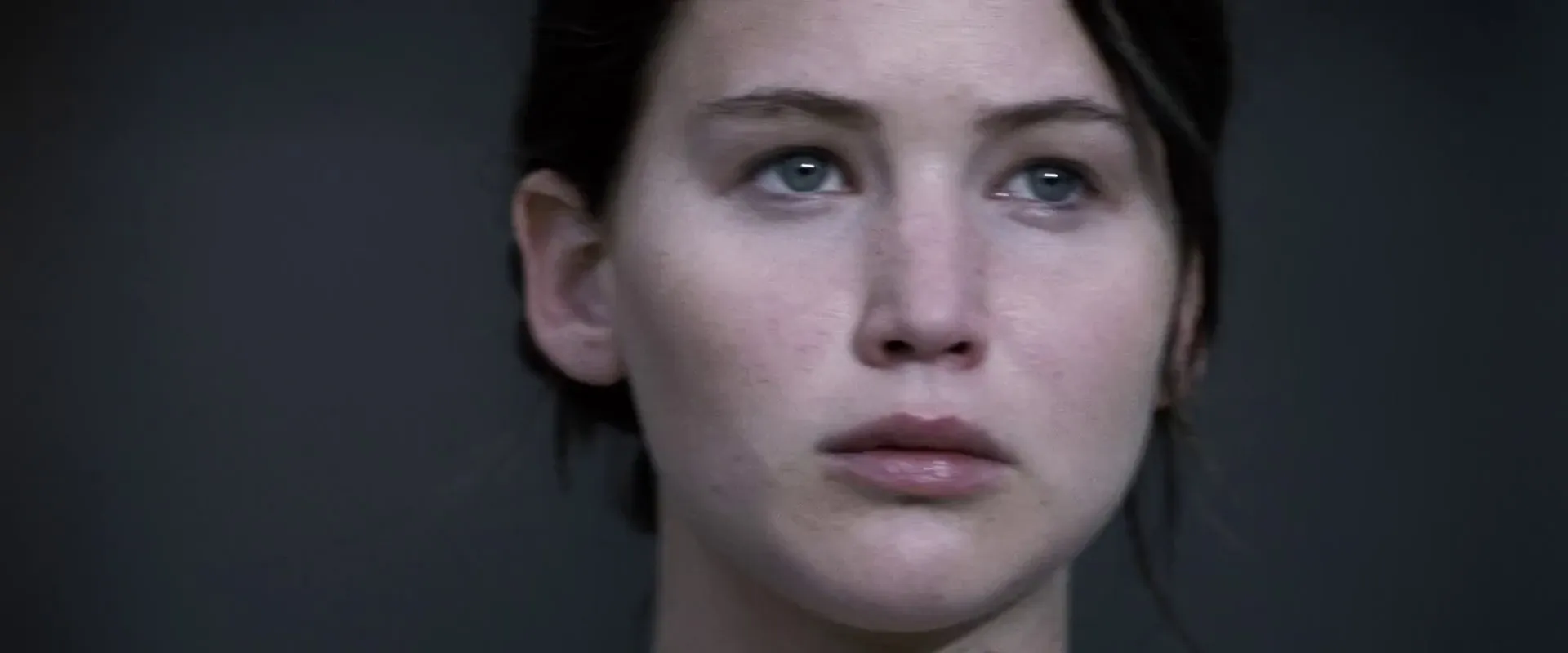
Once the frame is all face, you've stopped photographing a scene and started photographing a thought. A close-up (CU) fills the frame with the head — every micro-expression is now the whole event. Spend them carefully. A movie that lives in close-up has nowhere left to go when the real moment arrives.
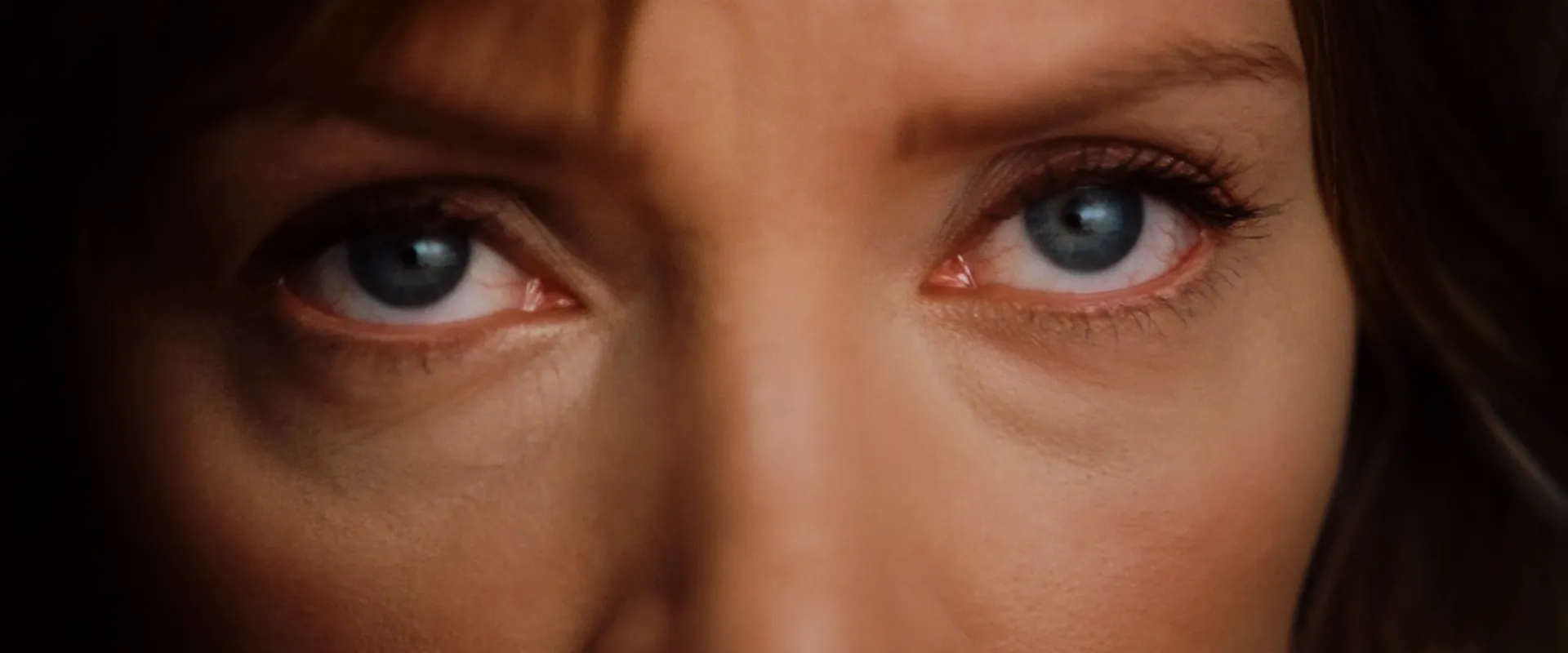
The extreme close-up (ECU) goes past the face to a single feature — the eyes, a mouth, a trembling hand. It's the most aggressive size in the language, and it works precisely because it's a violation of normal distance. Sergio Leone built entire standoffs out of it in Once Upon a Time in the West, cutting between vast landscapes and eyes that fill a widescreen frame until the tension has nowhere to release. His cinematographer, Tonino Delli Colli, would save the biggest close-ups for the end of the day and let nothing else into the frame — as the American Society of Cinematographers recounts, the wide-to-ECU whiplash is the whole engine of the film.
The relational shots: sized by who's in them
Two of the types of camera shots you'll notate every day aren't points on the size ladder at all. An over-the-shoulder (OTS) is defined by the foreground shoulder anchoring one character while we watch another — it can be tight or loose, but its job is to put the audience inside the geometry of a conversation. A point-of-view (POV) shot borrows a character's eyes outright: what they see, framed the way they'd see it. Both are about relationship — who we're standing behind, whose head we're inside — which is exactly why they carry weight that a plain size label can't. They also lean hard on screen direction, so keep the 180-degree rule in mind before you commit them to the list.
Notate it so the list survives the day
None of this helps if the shotlist reads MED and leaves the rest to memory. Under pressure — losing light, an AD calling the next setup — a shotlist has to communicate size at a glance. Standardize the abbreviations across the whole document and don't invent private ones:
- EWS / XWS — extreme wide shot
- WS / LS — wide (long) shot
- FS — full shot
- MWS — medium wide (the cowboy / American shot)
- MS — medium shot
- MCU — medium close-up
- CU — close-up
- ECU / XCU — extreme close-up
- OTS — over the shoulder
- POV — point of view
- 2S — two shot (add INS for an insert)
Pick one set, put a legend at the top of the document, and use size deliberately across a scene so the sequence reads as a plan and not a pile of setups. Because these are enums, not prose, they also survive a crew member running the page through a browser translator — the abbreviation stays put even when the notes around it shift language.
A shot size only means something when everyone can see the same reference behind it. That's the gap StillsLab is built to close: pull an extreme wide or an ECU straight from the library, drop it beside the line on your shotlist, and the director, the DP, and the operator are finally arguing about the same image instead of three different pictures in three different heads. Sizes are the vocabulary — and where they sit next to the storyboard is a related decision worth getting right. Build the list so every cut is earned before you ever roll.
How did you like this article?
Login to react to this article
Discussion (0)
💬 No comments yet. Be the first to share your thoughts!