The 180-Degree Rule: When to Follow It and When to Break It on Purpose
Kubrick and Demme both trained the audience to trust the frame, then pulled the floor out. Here's how to break the line so it lands instead of reading as a mistake.

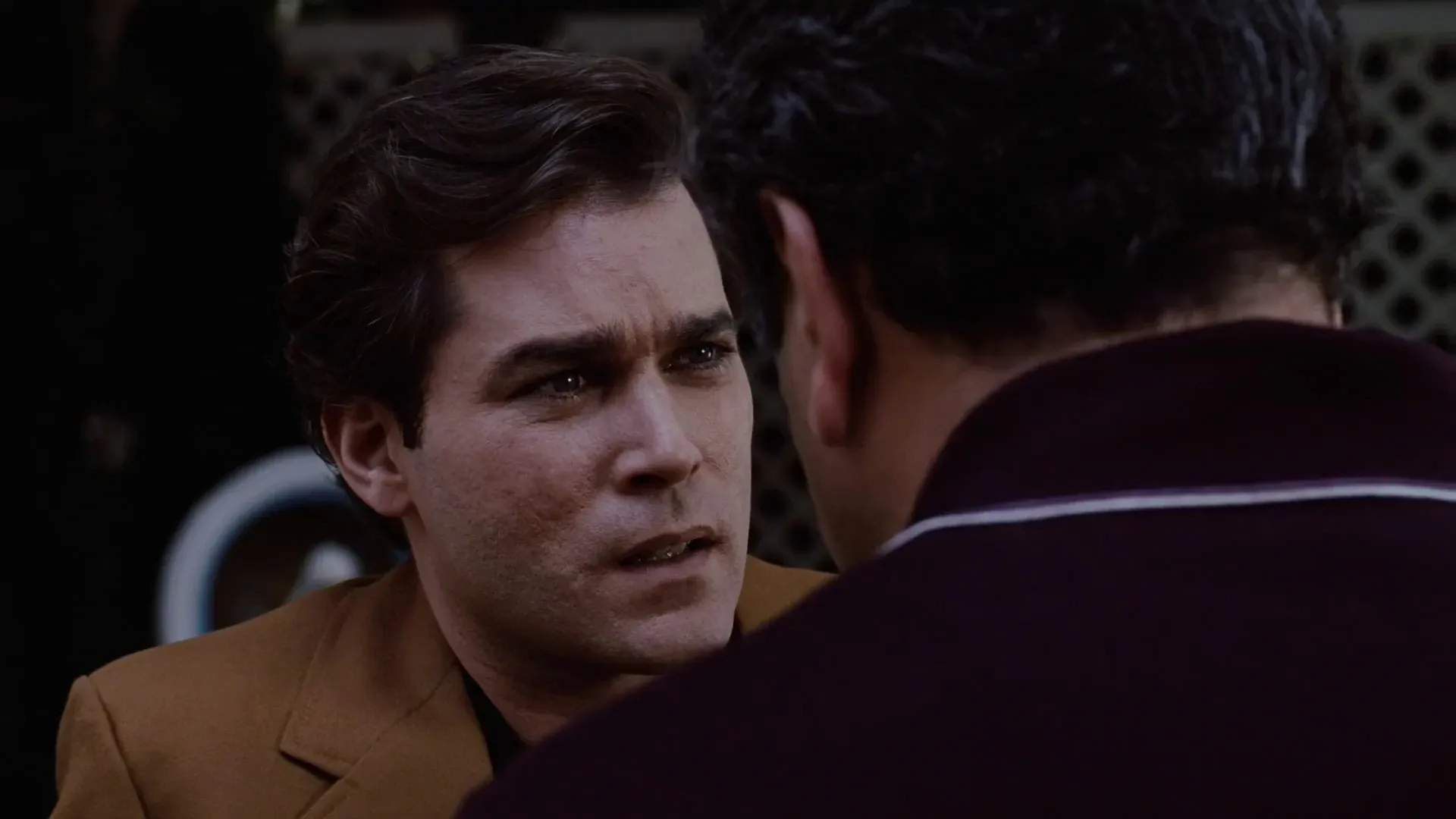
Two actors sit across a table. You shoot one looking screen-right, cut to the other looking screen-left, and the audience believes — without a second of conscious thought — that these two people are facing each other. Reverse one of those angles and the whole thing falls apart: suddenly both actors seem to be staring off in the same direction, talking to no one. That invisible fault line is what the 180-degree rule in filmmaking is really about, and understanding it as a promise to the audience rather than a law to obey is what separates directors who use it from directors who are just scared of it.
The rule itself is simple to state. Draw an imaginary line through the two people (or the two points of interest) in your scene. Keep your camera on one side of that line for all your coverage, and screen direction stays consistent — eyelines match, left stays left, right stays right. Cross it without a reason and you break the spatial logic the audience has been building in their head shot by shot.
The 180-degree rule is a contract, not a fence
Think of the 180-degree line as a contract you sign with the viewer in the first wide shot of a scene. That establishing shot tells them where everyone is standing. Every angle after it is you keeping your word: this person is on the left, that one is on the right, and when they look at each other their eyes will meet across the cut.
Standard over-the-shoulder coverage is the rule doing its quiet work. The favored actor faces one way, the reverse favors the other, and the shared foreground shoulder anchors the geometry so the cut feels invisible. This is why over-the-shoulder pairs are the workhorse of dialogue coverage — they make the contract legible. If you want a fuller breakdown of how many angles a scene like this actually needs, we get into that in our guide to coverage.
Why "never cross the line" is the wrong lesson
Most explanations of the rule stop at "don't cross it," which is how you end up with filmmakers who treat the line like an electric fence. That framing misses the point. The rule isn't sacred. It's a tool for controlling one specific thing — the audience's sense of space — and there are scenes where you want to take that sense away from them.
The moment you understand the line as a spatial contract, breaking it stops being an error and becomes a choice with a known effect: disorientation. Break it by accident and the audience just feels that something is off and blames the editor. Break it on purpose, at the right moment, and that same wrongness becomes the point.
When the break lands: Kubrick's Overlook
Stanley Kubrick's The Shining (1980), shot by cinematographer John Alcott, is the textbook case of crossing the line as a deliberate weapon. Alcott had already won an Academy Award shooting Barry Lyndon for Kubrick, so none of this comes from not knowing the rules.
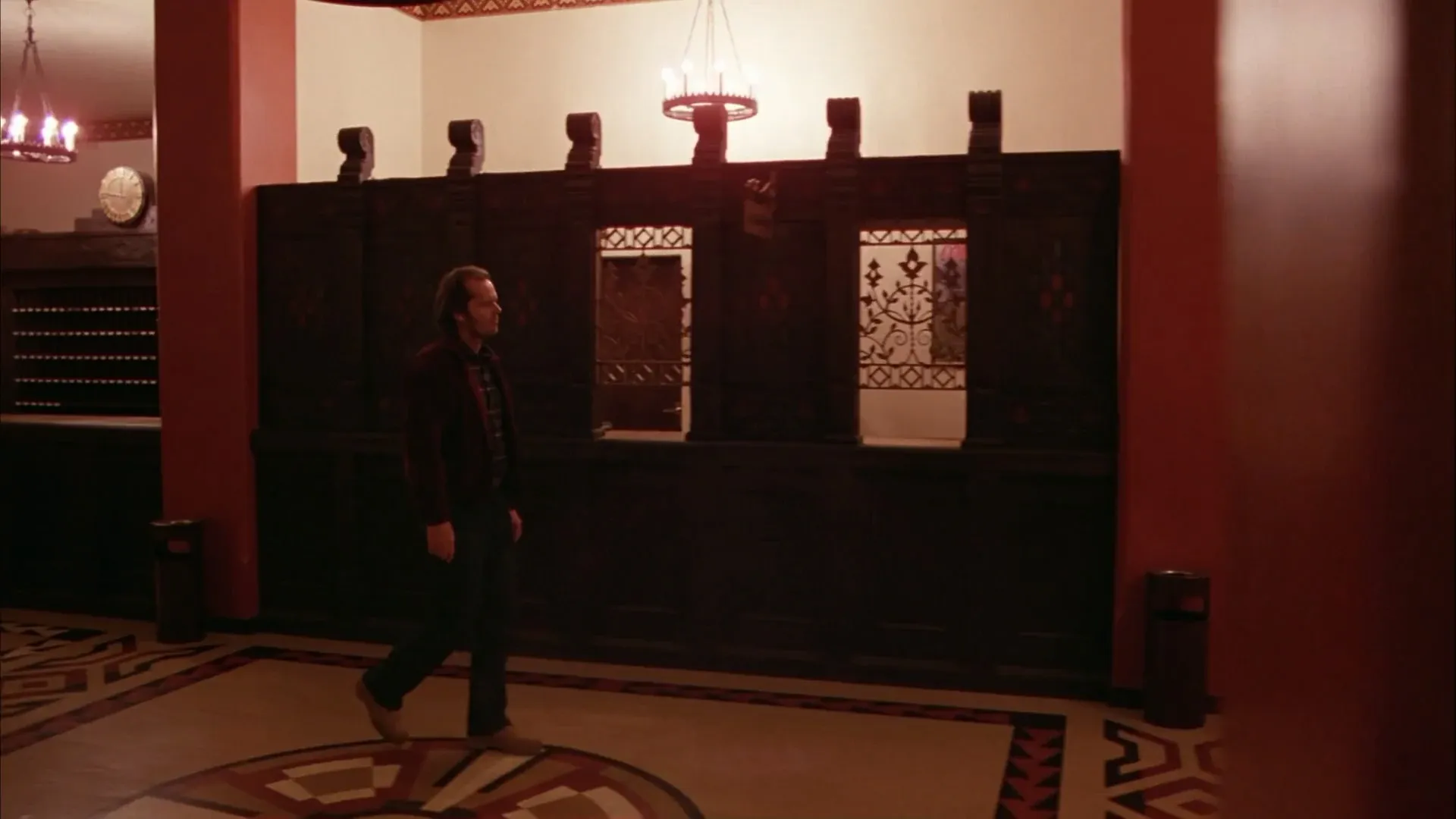
The whole film is built to make the Overlook feel spatially impossible — corridors that couldn't connect, a hotel whose floor plan won't resolve in your head no matter how many Steadicam moves you follow. Against that background, Kubrick crosses the 180-degree line in conversations to twist the knife. In the scene where Jack talks with the ghostly caretaker Grady, the coverage jumps across the line so that figures seem to swap sides of the frame, and the exchange curdles from strange to genuinely wrong.
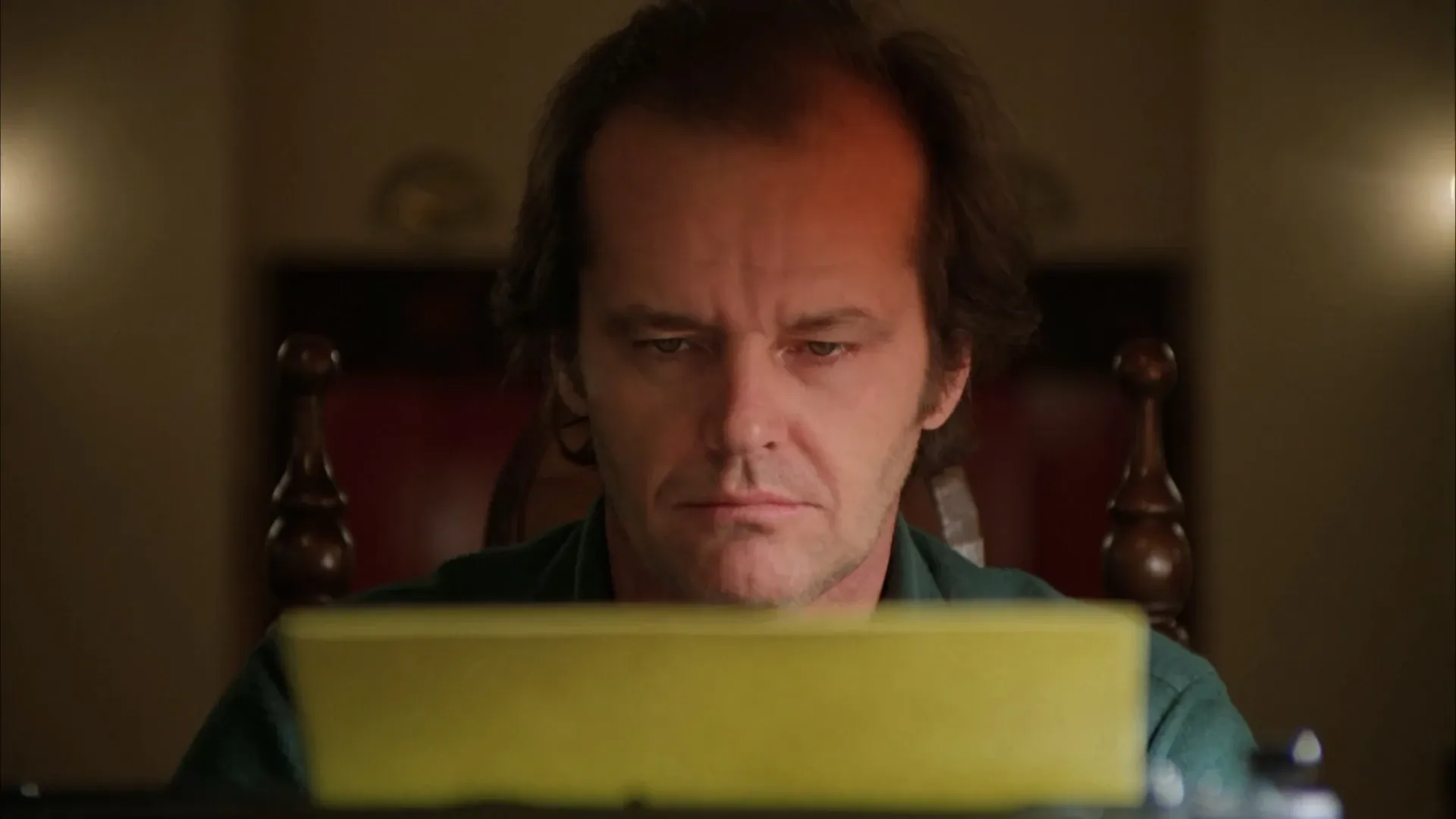
You feel it before you can name it. That's the tell of a good line break — the audience registers unease without diagnosing the cause, which is far more unsettling than any jump scare. Kubrick isn't confusing you by accident; he's withdrawing the spatial contract on purpose, in a place where a man is losing his grip on reality.
The eyeline variant: shooting down the lens
There's a close cousin to the line break that lives in the same continuity system: the eyeline. In The Silence of the Lambs (1991), director Jonathan Demme and cinematographer Tak Fujimoto threw out the polite over-the-shoulder convention and put the lens directly on the characters' eyelines. When Hannibal Lecter speaks to Clarice Starling, he looks almost straight down the barrel of the camera — at her, and at you.
It's not a classic line-cross, but it works on the same nerve. Normal coverage keeps the actors angled off-axis so you feel like an observer. Demme collapses that angle, breaks the fourth-wall buffer, and traps you inside the exchange. The discomfort of The Silence of the Lambs is partly a staging decision — the same family of rule-bending, aimed at the same target: your sense of where you safely stand. Demme understood, like Kubrick, that these conventions exist so that violating them means something.
Flag your crossings before the day
Here's the part that actually protects you on set: an intentional line break only reads as intentional if the coverage around it is disciplined. Cross the line by accident inside an otherwise clean scene and it just looks like a mistake. The break has to sit inside a scene the audience trusts, so that the moment you pull the rug, they feel the rug.
That means the decision belongs in prep, not in the edit. When you build the scene's coverage, mark where your line sits and note the exact shot where you intend to cross it and why. Screen direction for entrances and exits, eyeline matches, which shoulder carries the over — all of it gets easier to hold in your head when it's written down before the truck rolls. This is exactly the kind of spatial thinking a shot list is built to carry, and it's where a crossing goes from a gamble to a plan.
The most reliable way to lock it is to stop describing space in words and start showing it. Pull the frames from the films that break the line the way you're planning to — the Grady scene, a Demme two-hander — drop them next to your shot list, and let your operator and editor see the target instead of guessing at it. Building that kind of visual reference is what StillsLab is for: a pointed still that says "this wrongness, here" will align a crew faster than any paragraph about imaginary lines ever could.
How did you like this article?
Login to react to this article
Discussion (0)
💬 No comments yet. Be the first to share your thoughts!