Portrait of a Lady on Fire: Claire Mathon's Argument for Candlelight
One film, two temperatures — firelit interiors that never flatten a face, and a coast lit like the opposite of romance.

Watch the bonfire scene in Portrait of a Lady on Fire once and you follow the story. Watch it twice and you start watching the light. Héloïse stands across the fire from Marianne, a chorus of women rising around them, and the hem of her dress catches — a small, real flame climbing green fabric while she keeps staring, refusing to look away. The whole film is in that one shot: warmth and cold in the same frame, a face lit by fire and holding its ground.
That collision is what makes the Portrait of a Lady on Fire cinematography worth pulling apart shot by shot. Claire Mathon, shooting for Céline Sciamma in 2019, built the look on a single stubborn argument — that you can hold a face in warm, low light without ever letting it go soft or muddy — and then spent two hours proving it against the cold grey daylight of a Breton island. The work won Mathon the César for Best Cinematography, and it's one of the cleanest examples of palette-as-story you can put in front of a crew.
The candlelight argument, with no candles in the frame
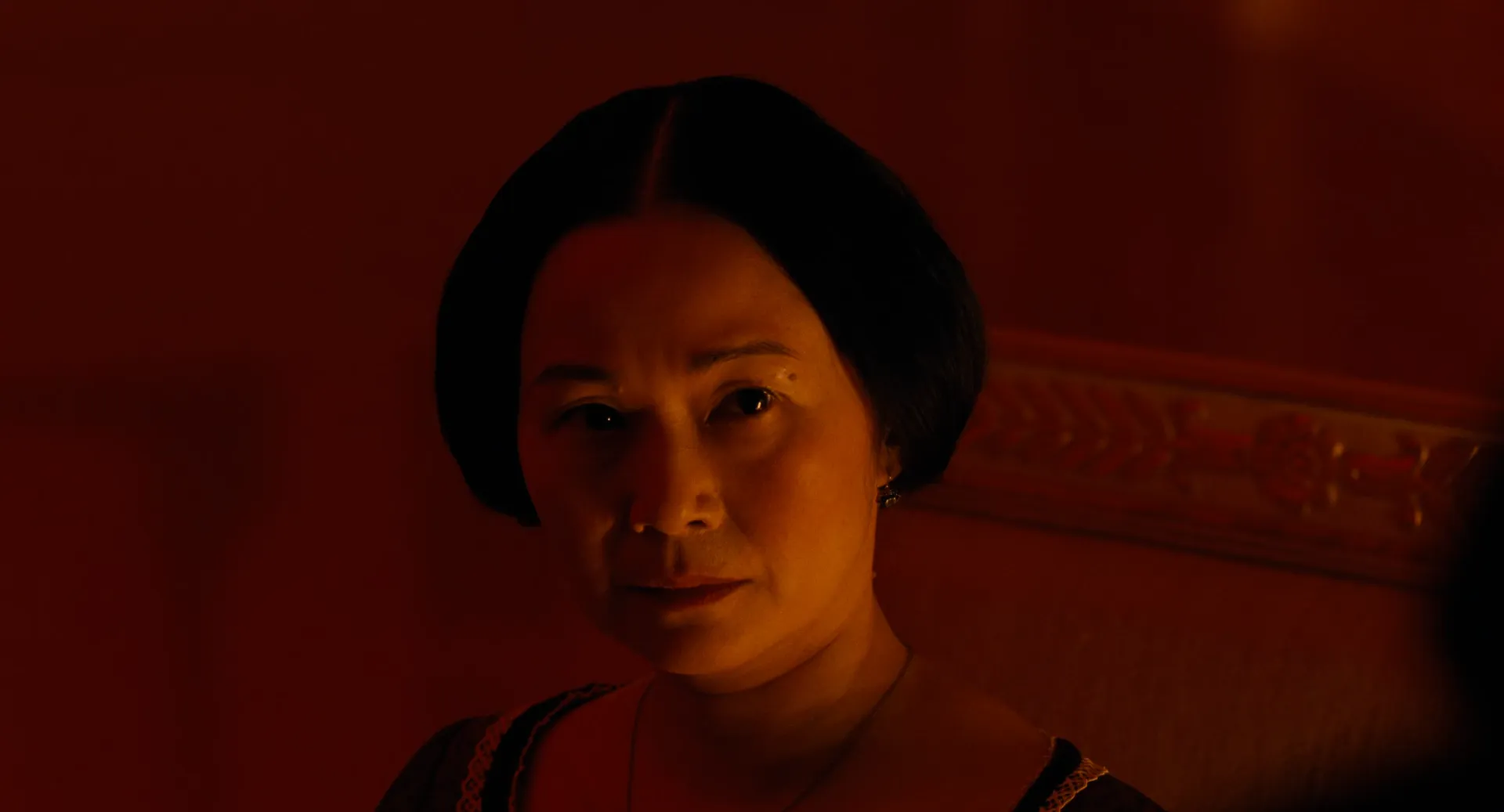
Here's the part most write-ups skip. Those glowing night interiors were largely built without candles doing the lighting. Sciamma has talked about the night work as inventing candlelight — putting light into the room so it reads as flame — rather than exposing for the practicals themselves. The candle you see on the table is set dressing; the light on the face is engineered to behave like it.
Technically, Mathon shot on a RED Monstro 8K VV with Leitz Thalia primes at 1.85:1, and after early tests locked a film-look LUT. That combination — a big sensor, those lenses, that grade — is where the skin tone came from. She and Sciamma spent prep in galleries studying how women painters of the 18th century rendered skin, and you can feel that homework in every close-up: light wrapping a face like oil on canvas, never a flat wash.
A face that never flattens
The hard part of warm, low-key light isn't making it warm. It's keeping real contrast while you do — a falloff into shadow that still leaves the eyes, the cheekbone, the edge of the jaw legible instead of sinking everything into brown mud.
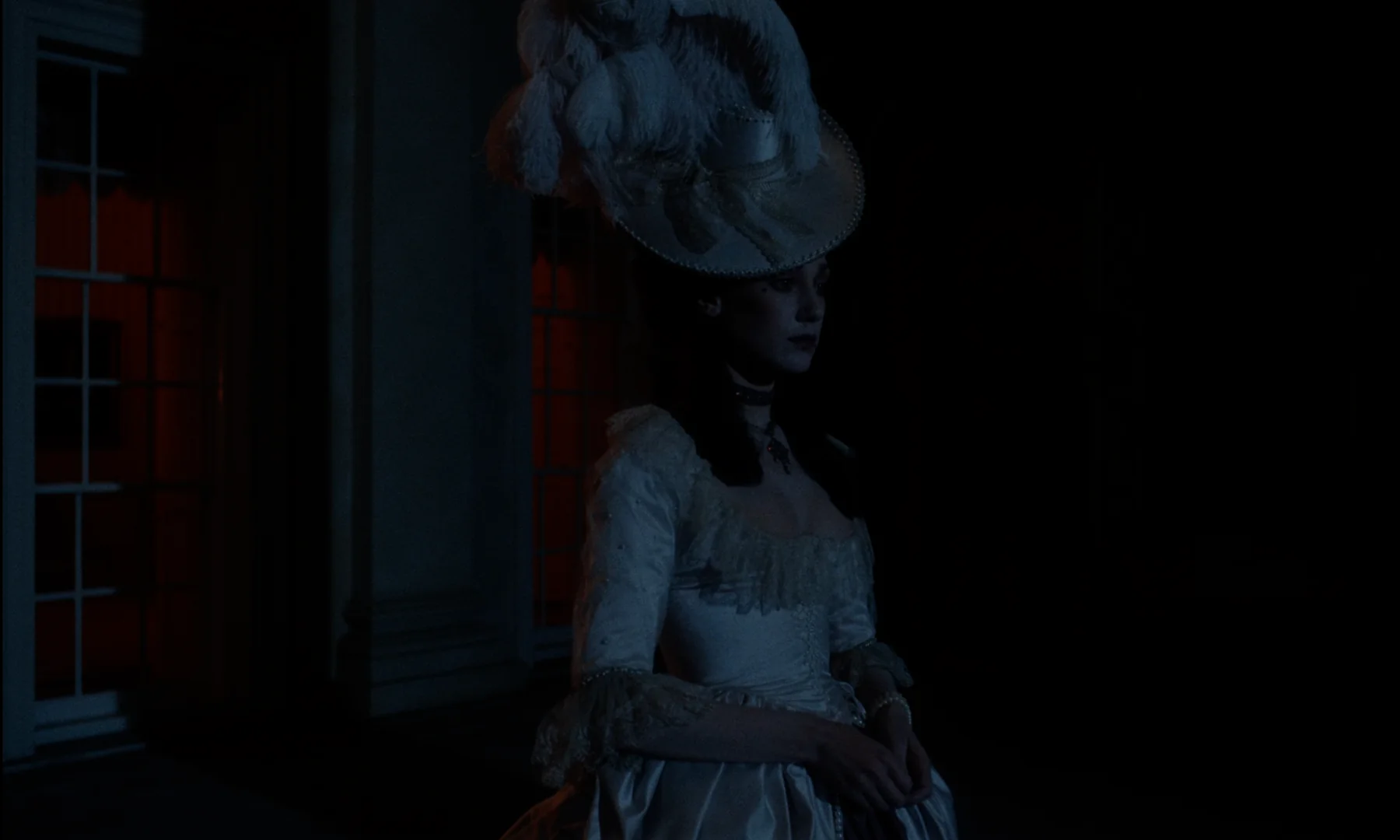
This is old ground with a long lineage. Kubrick got there in 1975 the hard way — shooting Barry Lyndon by candlelight on a repurposed NASA lens — betting the whole look on real flame and impossibly fast glass. Mathon gets to the same destination digitally: sources placed low and close, kept just off the face so the light shapes rather than fills. The lesson is the same across forty years. Warm does not mean soft, and low-key does not mean losing the person. If you want that look with nothing but practical sources on set, the discipline is in the falloff, not the fixture.
The cold coast on the other side
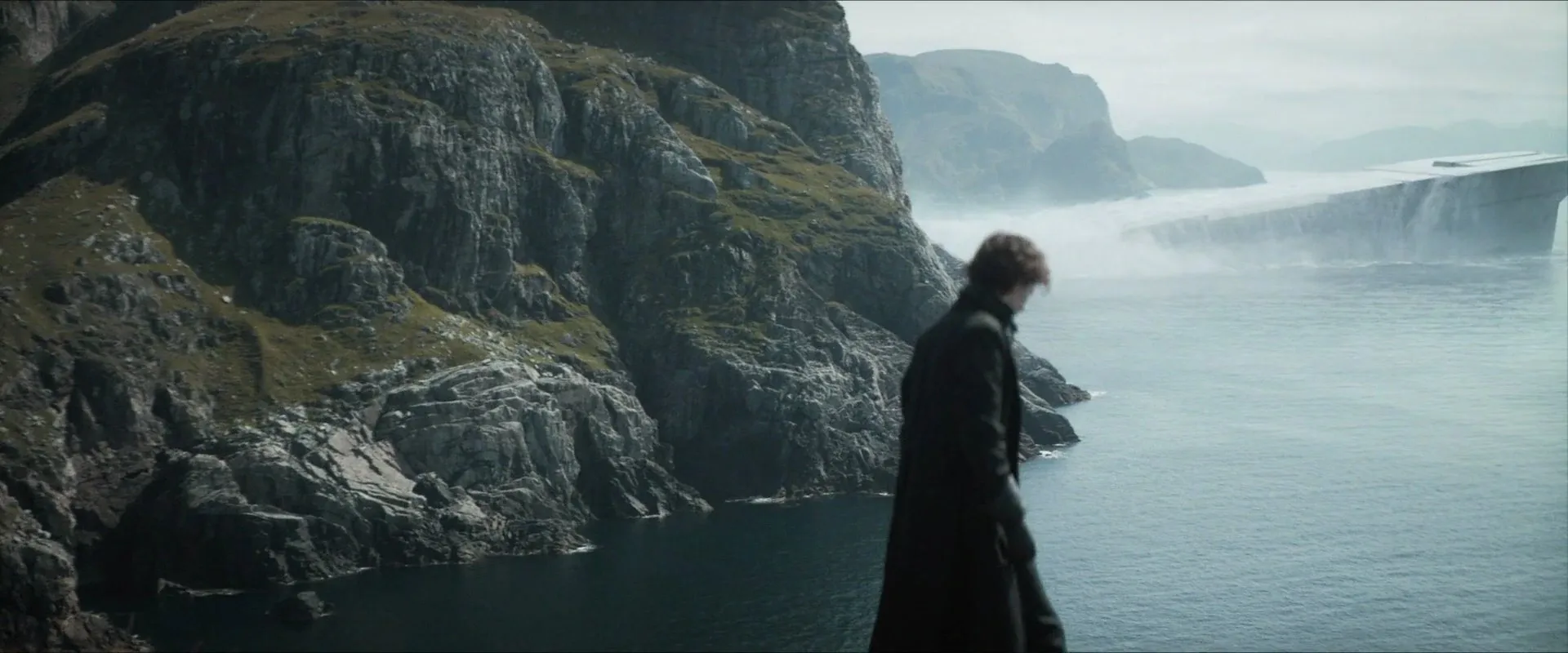
Step outside and the film changes temperature completely. The exteriors — the cliffs, the beach, that flat Atlantic light — are cold, blue-grey, and deliberately unromantic. Nobody is glowing out there. The wind is real and the sky is doing nothing for anyone.
That split is the entire point. Warm interiors are where Marianne and Héloïse can see each other; the cold coast is where the world is watching and the marriage is waiting. The two temperatures aren't decoration, they're the romance mapped onto the color chart. It's the clearest argument I know for deciding your palette before you ever get to set — Mathon's warm-versus-cold logic only lands because it's consistent for two straight hours.
The bonfire, where both temperatures touch
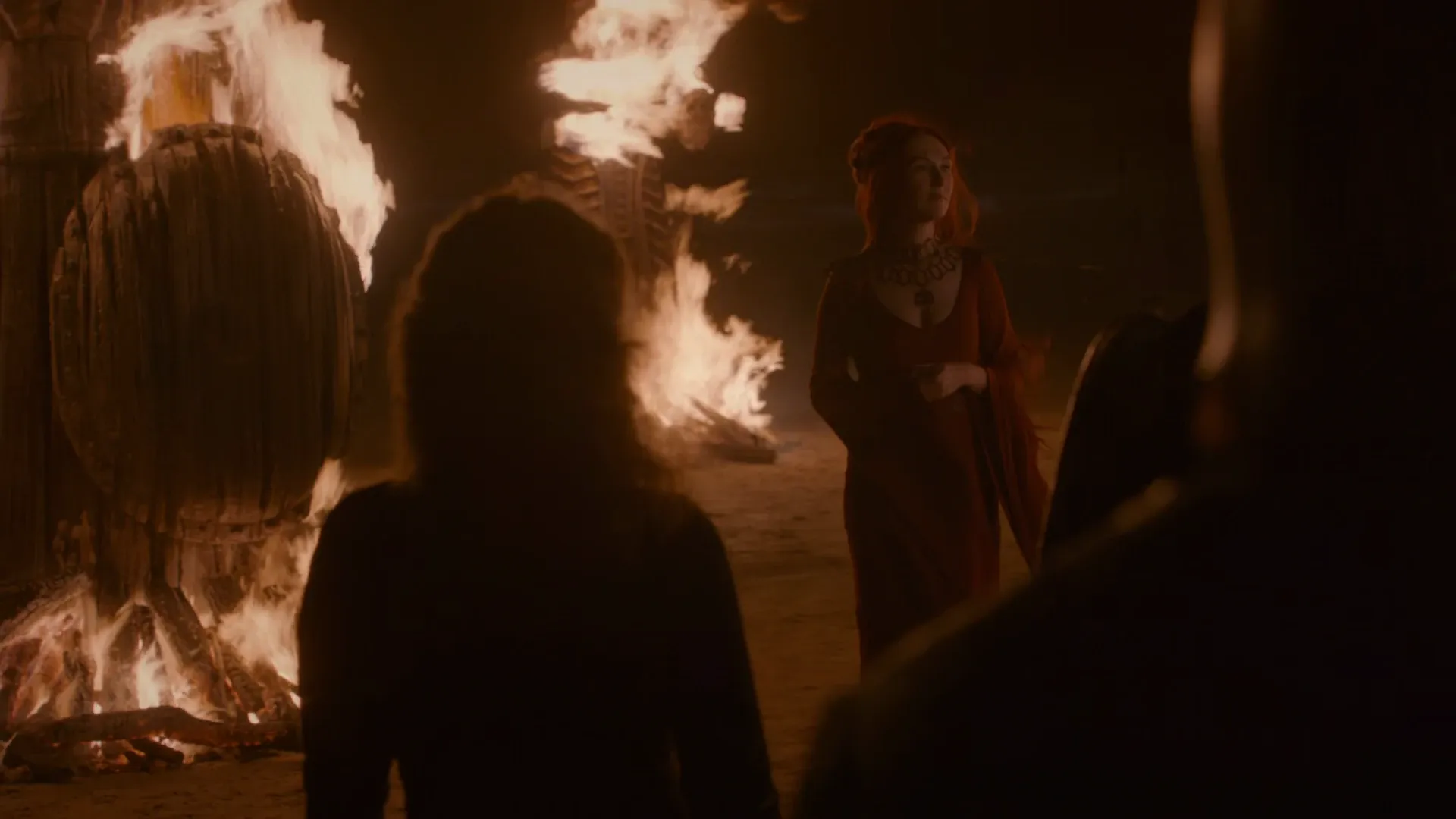
The bonfire is the one scene where the two palettes finally meet — warm fire against cold night, the women singing "La Jeune Fille en Feu," the Latin line non possum fugere, "I cannot flee." Héloïse's dress catches at the hem, and she barely reacts, because she's looking at Marianne across the flames.
Sciamma has called it the film's turning point, and the cutting proves it: the fire on the dress hands straight off to the beach where the two of them finally close the distance. It's also where the title stops being a metaphor. A woman, on fire, refusing to break the look. Every lighting choice in the movie has been quietly building toward a frame where warm and cold occupy the same shot and neither one wins.
What you can take to your own set
You don't need a Monstro or a period drama to use any of this.
- Warm light doesn't have to be soft light. Place your source low and close, then protect the shadow side. Contrast is what keeps a warm frame from turning to soup.
- Pick your two temperatures before the scout. Portrait works because the split is decided and never wavers. Assign warm and cold to meaning, then hold the line.
- Let the practical sell the source, not carry the exposure. A candle in frame reads as motivation. The light doing the actual work can sit just outside it.
The reason a film like this rewards a frame-by-frame look is that the decisions are legible — you can see the palette split, the falloff, the direction of every source, and copy the logic onto a shoot with a tenth of the budget. That's the whole case for keeping a visual reference library you actually pull from: real stills you can hand your gaffer as lighting reference instead of saying "warm, but not soft" and hoping it lands the way Mathon made it land.
How did you like this article?
Login to react to this article
Discussion (0)
💬 No comments yet. Be the first to share your thoughts!