There Will Be Blood: Robert Elswit's Case for Firelight and Anamorphic Space
Elswit won an Oscar shooting a film about greed by making its greediest man look powerless. The trick was everything he refused to add.

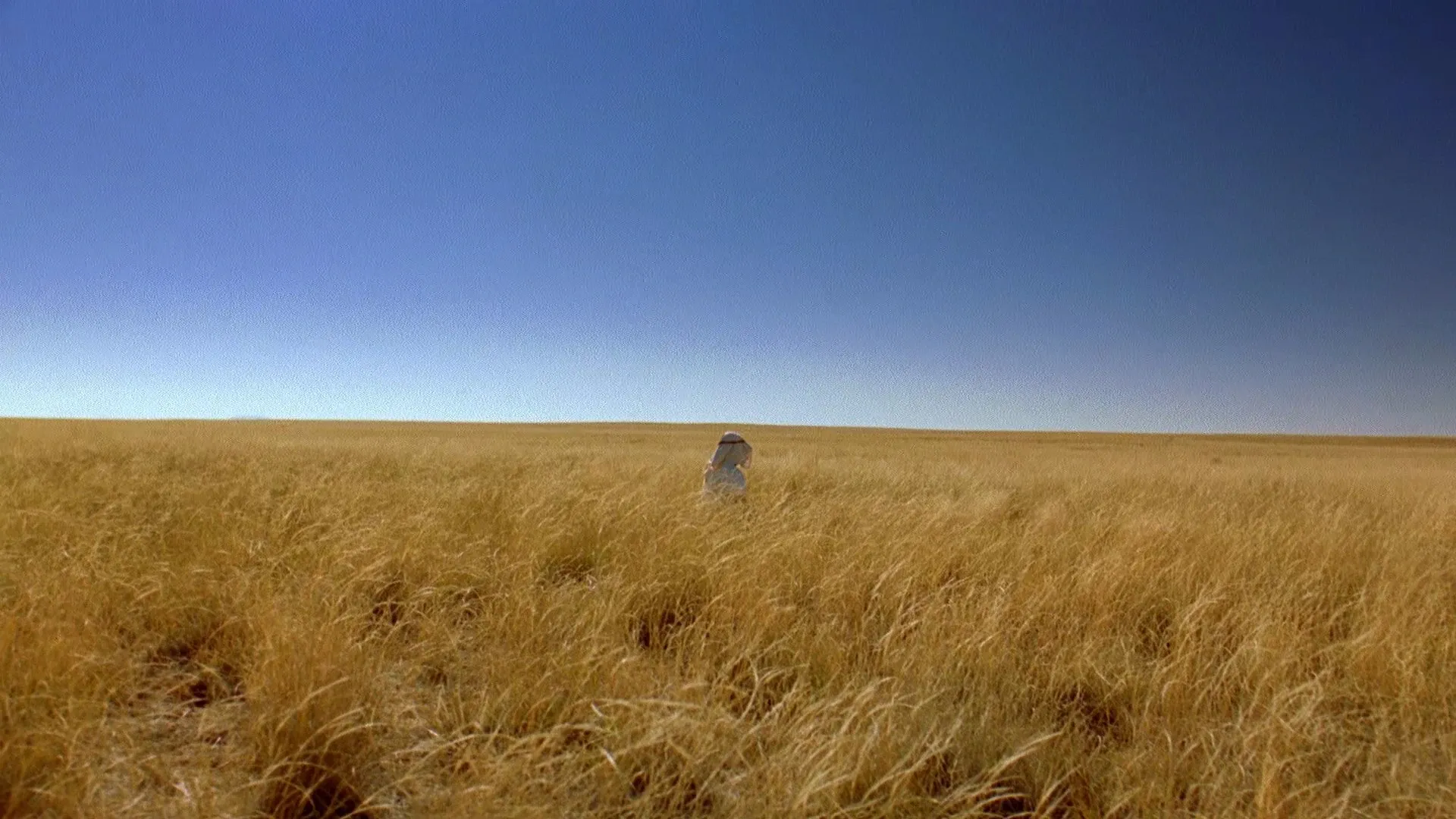
Daniel Plainview drags himself out of a collapsed mineshaft with a broken leg and crawls across miles of dead ground to file a silver claim. Robert Elswit shoots most of that opening from far enough back that the man is a smudge on the land. That's the entire film compressed into its first reel: someone who wants to own everything, made tiny by the dirt he's clawing through.
People discuss There Will Be Blood cinematography as if it were a grand statement, but it's closer to a series of refusals. Elswit and Paul Thomas Anderson had every reason to reach for scale and spectacle — a period oil epic with a bottomless lead performance — and instead they kept taking things away. Fewer lights. Wider frames. A camera that hangs back and refuses to editorialize. It won Elswit the Academy Award for Best Cinematography at the 80th Academy Awards, and almost none of what earned it looks like "cinematography" in the show-off sense.
There Will Be Blood cinematography, in plain gear terms
Anderson wanted true anamorphic, not Super 35 cropped to a scope aspect ratio, and you can feel that decision in every setup. Elswit shot on Panavision Panaflex Millennium XL and Platinum bodies with Panavision anamorphic glass — Super High Speed, C Series, and E Series lenses, plus a modified Pathé 43mm — finishing at the full 2.39:1 frame. The negative was Kodak Vision2: fine-grained 50D for the punishing exteriors and 200T when the light dropped. Nothing exotic. The choices are conservative on paper; what's radical is the discipline behind them.
It helped that these two had been working together since Hard Eight, through Boogie Nights, Magnolia, and Punch-Drunk Love. By the time they hit the Marfa, Texas ranch where most of the film was shot, Elswit could read Anderson's shorthand — a director who blocks loose, plants no marks on the floor, and expects the camera department to keep up with a scene that's still finding itself.
Small against the land
Anamorphic isn't just a wider rectangle. It changes how you stage in depth and where the eye goes, and Elswit uses that to keep Plainview perpetually outmatched by his surroundings. Put a lone figure low in a 2.39 frame under a huge sky and the geometry does the storytelling for you — ambition reads as insignificance.
This is where the format choice earns its keep, and it's the same reasoning behind picking anamorphic over spherical glass in the first place — the lens is a story decision, not a texture decision. The wide exteriors never feel like postcards because there's always a person being swallowed by them.
Lit by whatever's in the room
The interiors are where the restraint gets almost stubborn. Elswit lit the period scenes to match the sources that would actually have been in those rooms in early-1900s California — oil lanterns, candles, and daylight through a window. That's the whole plan. No motivated-but-invisible units cheating extra fill onto a face, no soft key pretending to be a lamp.
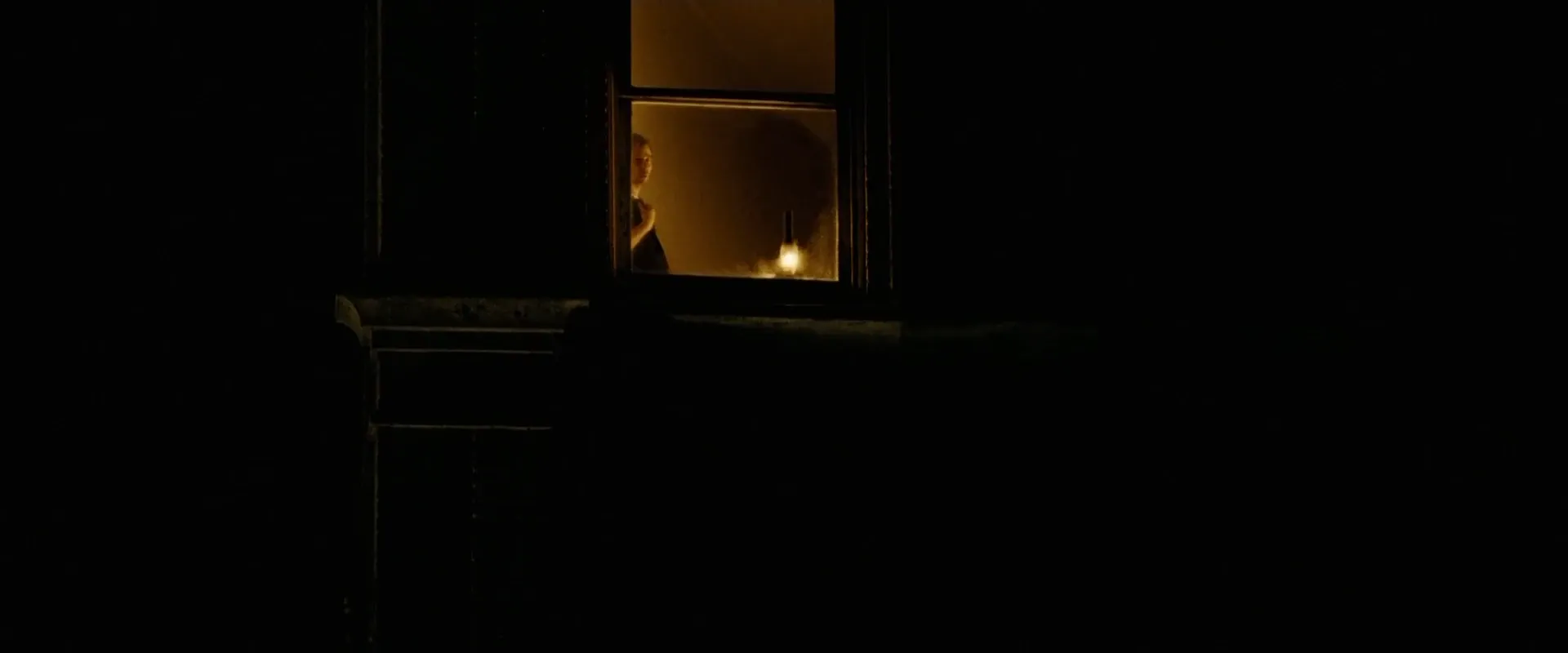
Shooting this way is unforgiving. A flame throws a fraction of the output of a movie light, so you're working near the bottom of the exposure and living with whatever falloff the room gives you. Faces slide into shadow when someone leans back. That's not a bug they fixed — it's the look, and it's the same logic behind lighting a scene with practicals and nothing else: commit to the source and let it misbehave.
The fire that could only burn once
Then there's the gusher. When Plainview's derrick strikes oil and catches fire, Anderson didn't fake it. The production built an 80-foot pine derrick and burned it for real, and once the dry desert heat had it going they couldn't put it back out — the whole thing had to go up in a single night, and every shot they wanted had to be captured in that window. Cameras were placed where no operator could sit, including a rig in a firebox at the base and a crash box positioned to catch the collapse.
The payoff isn't the flames. It's the reverses — Plainview and his son watching, half-lit orange on one side and black on the other, because the fire is doing the lighting.
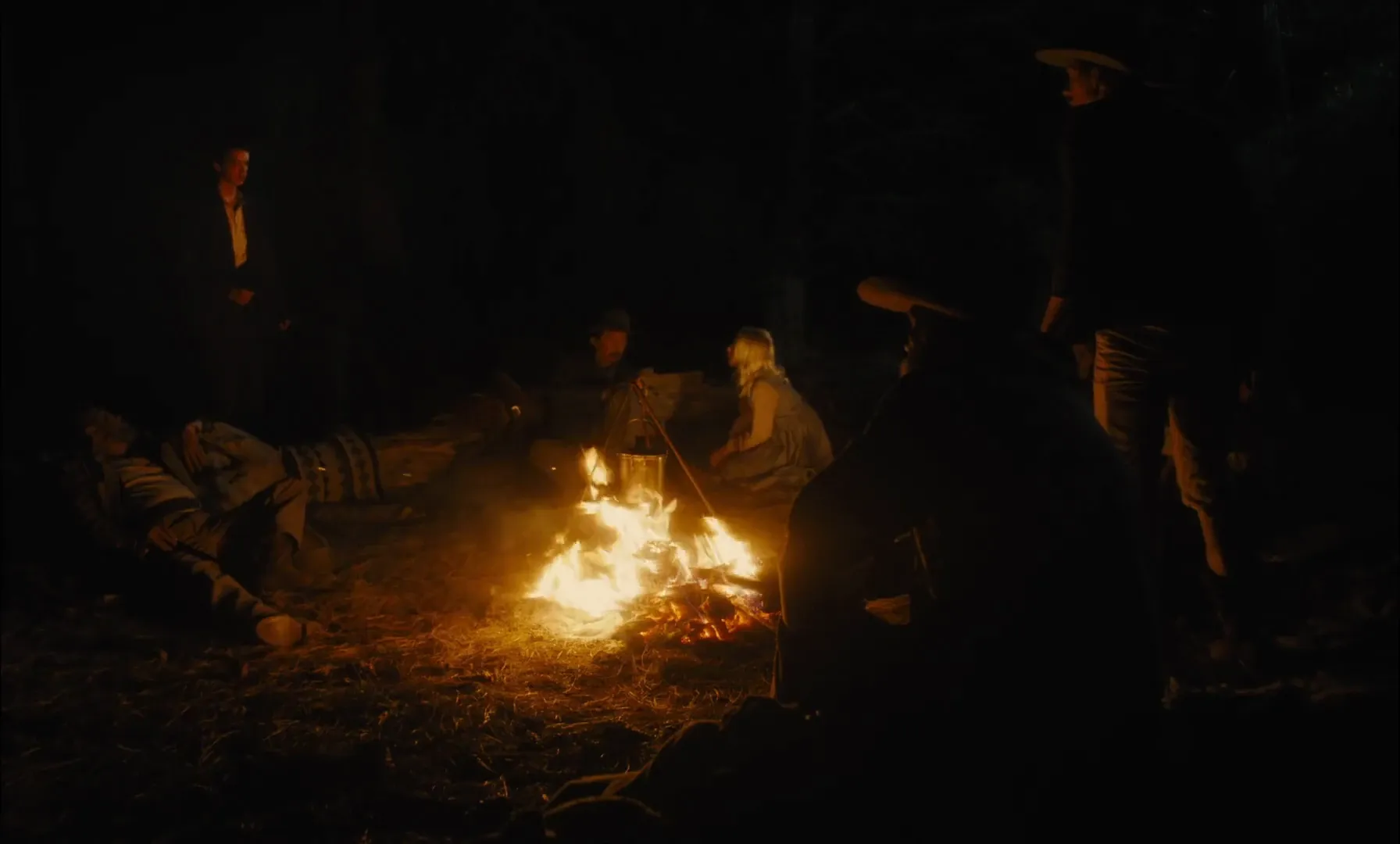
That's the through-line of the entire film in one image: a light source that exists in the world of the story, doing exactly what it would do, and the camera trusting it to be enough. No sweetening. The severity is the point.
What to actually take from it
You don't need a burning derrick to steal from this movie. The lesson is that a coherent look is usually a narrower set of decisions than you think — one aspect ratio, one lighting logic, one relationship between the figure and the frame, held for two and a half hours without blinking. Restraint like this is a plan, not an accident, and the DPs who pull it off tend to be the ones who treat holding back as the hard part.
The catch is that everyone on the crew has to be looking at the same reference before day one, or "motivated by a single oil lamp" turns into three different ideas on set. That's the practical reason to pull the exact frames you're chasing — the falloff, the staging, the way a face reads at the edge of the light — into a shared board your DP, gaffer, and director can all point at. Build that visual reference library in StillsLab before the truck rolls, and the restraint has somewhere to live besides your head.
How did you like this article?
Login to react to this article
Discussion (0)
💬 No comments yet. Be the first to share your thoughts!