The Godfather Cinematography: Gordon Willis and the Case for Burying the Eyes
Paramount wanted the DP who lit The Godfather fired for keeping the light off Brando's face. The Academy took 37 years to admit he was right.

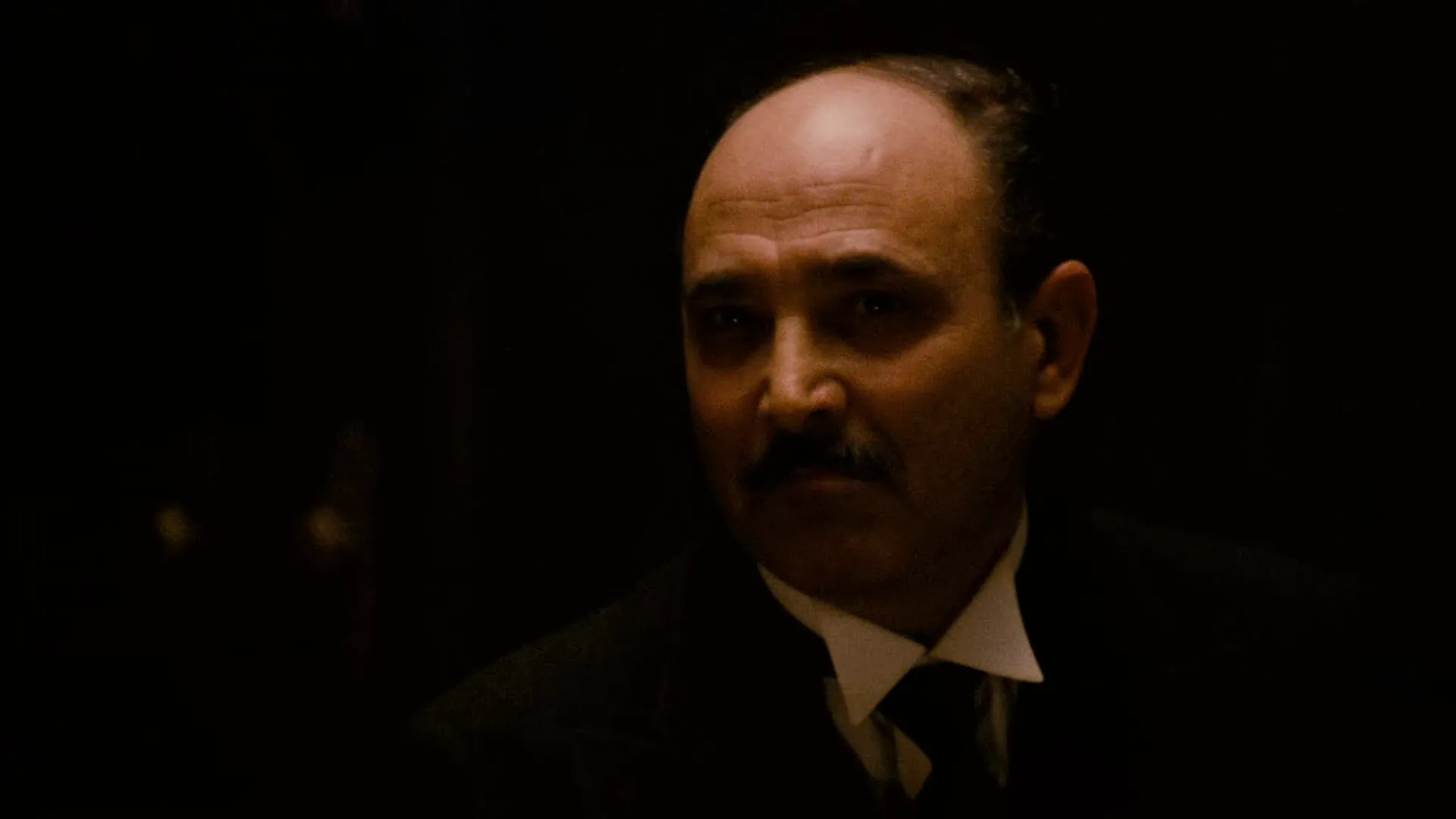
Somewhere in the first week of dailies on The Godfather, Paramount executives watched Marlon Brando's face sink into shadow and started asking a reasonable-sounding question: why can't we see his eyes? The cinematographer, Gordon Willis, had an answer ready. "I know," he reportedly told them. "That was the idea." It's a small exchange, but it sits at the center of everything people mean when they talk about The Godfather cinematography — a look so far outside 1972 studio convention that it very nearly got the man who invented it thrown off the picture.
Willis earned a nickname for it: the Prince of Darkness. He meant to keep faces lit the way the story needed, not the way the lab wanted, and that meant refusing the one thing every studio DP was expected to deliver — a clean, evenly filled face with both eyes reading.
The trick was where the light came from
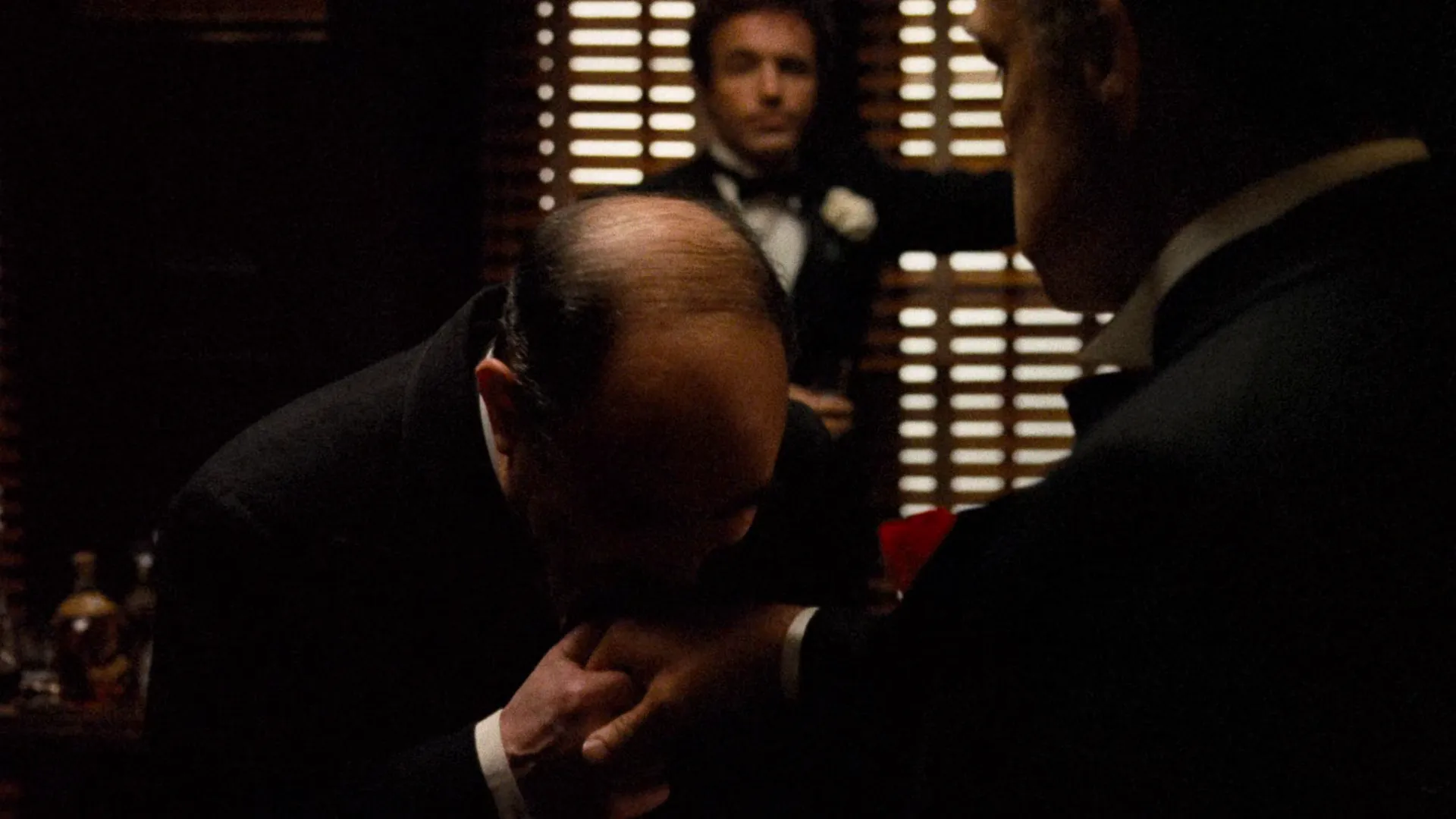
Look at how Willis lit interiors and the pattern is almost always the same: the key comes from above. Overhead sources, hard-edged, with the fill pulled way down or gone entirely. When you drop a light straight onto the top of someone's head, the brow casts a shadow into the eye sockets and the eyes go dark. Do that to Don Corleone and you get a man whose intentions you can never quite read — power that watches you from inside a shadow you can't see into.
With Brando specifically there was a practical reason to work from overhead, tied to the makeup and the aging he was carrying, but Willis pushed it into a principle. He wasn't lighting a face; he was lighting a character's relationship to the truth. This is the part worth stealing: the choice of where the light sits does more storytelling than how much of it there is. Willis' contrast — a sliver of warm light emerging from deep black — became the film's whole moral argument about a family that does terrible things in beautiful rooms.
Underexposed on purpose, and warm all the way down
The other half of the look is exposure. Willis printed the film darker than any studio timer would have chosen, letting shadow areas fall to true black and pulling a heavy amber cast through the whole frame. On paper that's a technical error. On screen it reads as candlelight, old money, secrets. It's the same conviction you see in a DP like Bradford Young decades later — the idea that shooting into shadow and trusting underexposure can carry more feeling than a properly filled frame ever will.
The risk is real. Underexposed footage gives a colorist and a lab almost nothing to pull back if you got it wrong, which is exactly why the studio panicked. But Willis wasn't guessing. He knew precisely how far he could crush the blacks and still hold a jaw, a collar, the wet edge of an eye. That's the difference between dark cinematography and murky cinematography: one is measured, the other is a mistake.
Lighting as a character arc
Here's where Willis moves past "moody" into something genuinely structural. Watch Michael across the film. When he comes home from the war in his uniform, he's the clean one — lit openly, a full face, the son who was supposed to stay outside the family business.
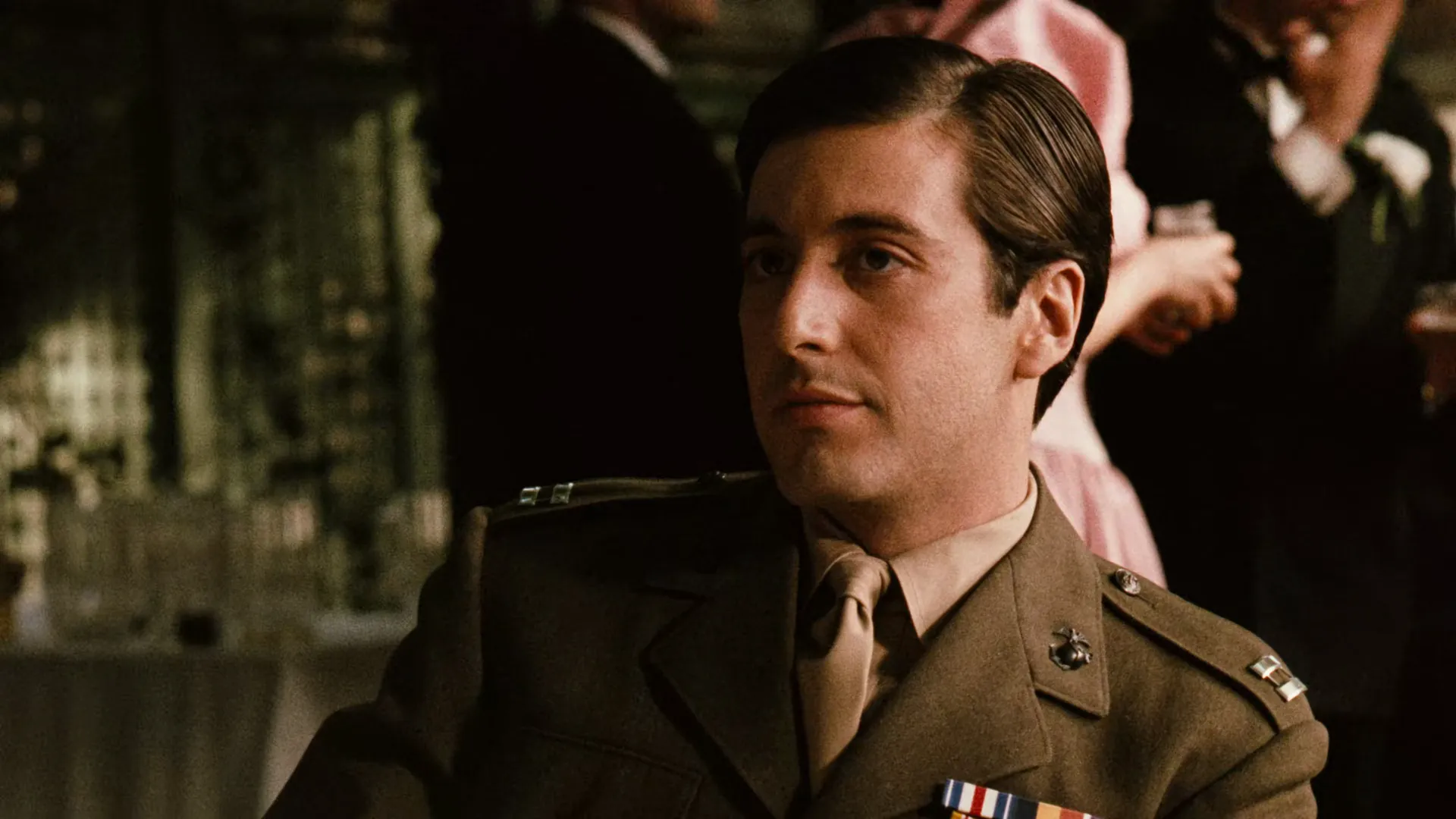
As Michael sinks deeper into what the Corleones actually do, Willis takes the light off him. By the end he's shot the way his father was — eyes in shadow, face half-swallowed. Nobody says a word about it. The lighting does the character work that dialogue would have flattened. If you ever needed proof that exposure is a screenwriting tool, this is it: the same actor, the same room, a face that goes dark one scene at a time as a man loses his soul.
Mostly it looks like a real room
For all the talk of shadow, a lot of what makes The Godfather cinematography hold up is how motivated it feels. The office scenes read as if the only light is the lamp on the desk and the slatted daylight coming through the blinds. Willis wasn't hanging obvious movie units where you'd see them; he built the look around sources the room could plausibly own, then shaped and subtracted until only the storytelling light survived.
That instinct — start from what a space would actually have, then take away — is the same discipline behind lighting a scene with practicals and nothing else. You don't need a truck of gear to get a Willis frame. You need the nerve to leave three-quarters of the face in the dark and trust that the audience will lean in rather than complain.
The Academy took 37 years to admit he was right
The punchline to the whole fight: Gordon Willis was not nominated for an Academy Award for The Godfather. He wasn't nominated for Part II either. Across a run in the 1970s where the films he shot pulled in a wall of Oscars, the branch kept passing over the man lighting them — the dark look was too strange, too far from what a "well-photographed" film was supposed to be. He earned exactly two competitive nominations in his whole career, for Zelig and for The Godfather Part III.
The Academy finally handed him an Honorary Award in 2009, praising his "unsurpassed mastery of light, shadow, color and motion" and, pointedly, his "willingness to fly in the face of convention." Which is a polite way of saying: the thing we couldn't nominate you for is the thing that changed how movies look. Every underlit interior and eyes-in-shadow close-up shot since owes him.
If you're chasing that kind of controlled darkness on your own set, the move is to study it frame by frame before you ever touch a light — pull the exact Willis shots you're after and use them as lighting reference on the day. Build the reference into your shotlist in StillsLab so the whole crew is looking at the same black, not arguing about it in the dark.
How did you like this article?
Login to react to this article
Discussion (0)
💬 No comments yet. Be the first to share your thoughts!