The Brutalist's VistaVision Cinematography: Epic Scale on a $10M Budget
A 1950s format Paramount abandoned, one 50-year-old camera, and 34 shooting days — how Brady Corbet and Lol Crawley built scale without a blockbuster budget.

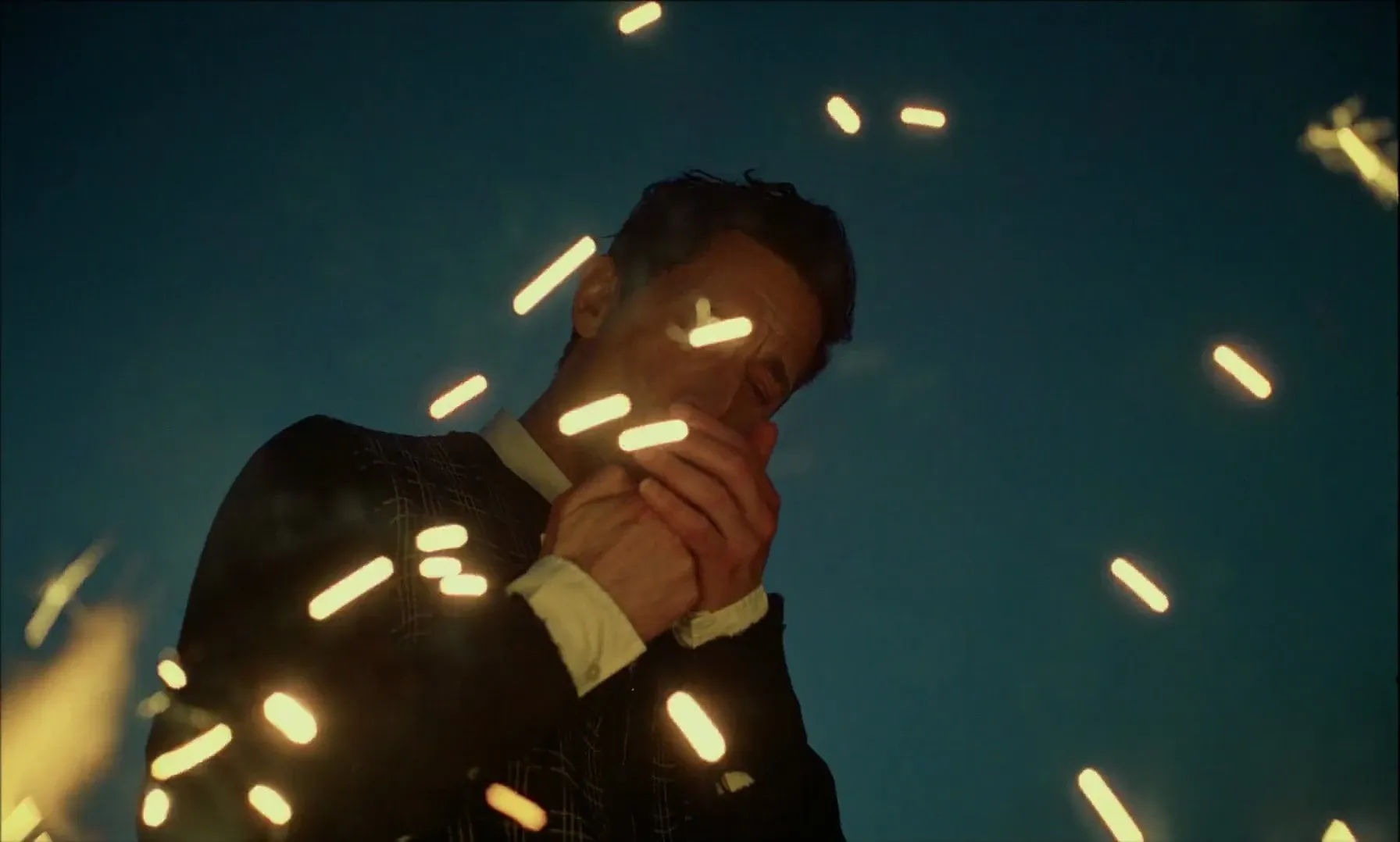
Brady Corbet shot a three-and-a-half-hour period epic in 34 days for under ten million dollars, and it looks like it cost twenty times that. No CGI city blocks, no army of extras filling a virtual stadium. Just a story about an immigrant architect, told on a film format that Paramount effectively retired in the late 1950s. The Brutalist is the first English-language feature shot in VistaVision since Marlon Brando's One-Eyed Jacks in 1961 — and Lol Crawley won the Academy Award for Best Cinematography for it.
That combination is the whole point. The reason to study this film isn't nostalgia for celluloid. It's that Corbet and Crawley engineered a genuinely epic image out of constraints most productions would call fatal.
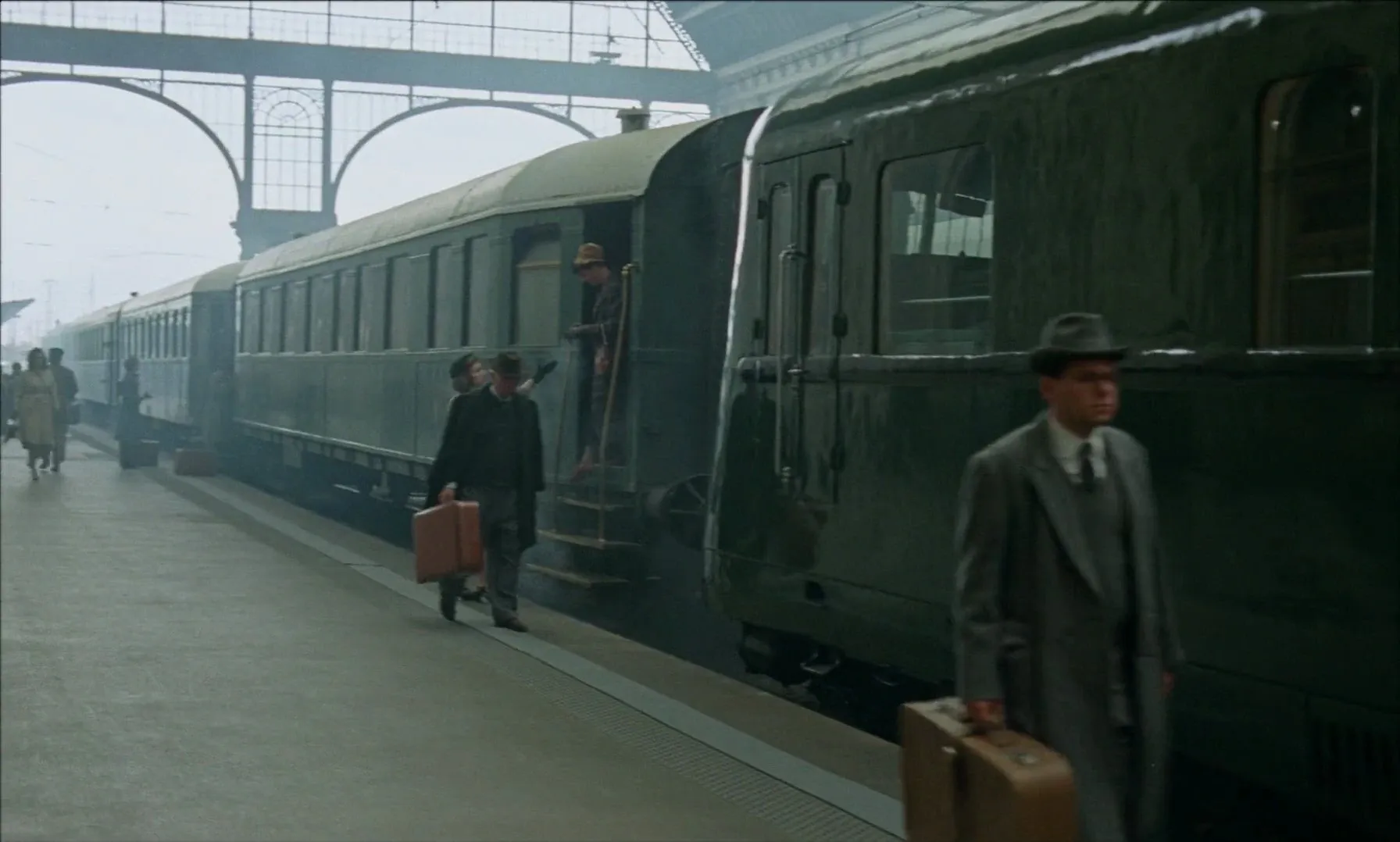
What VistaVision actually is
Standard 35mm runs the film vertically through the camera, exposing four perforations per frame. VistaVision turns the film on its side and runs it horizontally, exposing eight perforations per frame — the same trick a stills camera uses when it shoots 35mm in landscape. The result is a negative more than twice the area of a normal 4-perf frame.
More negative means more resolution, finer grain, and a shallower-feeling image at a given stop. Paramount built the format in the mid-1950s as its answer to CinemaScope, ran it through a handful of titles like Vertigo and The Ten Commandments, then shelved it as too cumbersome. It survived for decades mostly as a visual-effects format, prized because a bigger negative held up through the optical-printing pipeline. What almost nobody did was shoot a whole narrative feature on it again. Understanding the trade-offs here is really an extension of choosing an aspect ratio and capture format for your film — the negative you commit to shapes everything downstream.
The Brutalist's VistaVision cinematography leans on that oversized negative for one specific reason: the film is about buildings, and buildings punish small formats.
Why a film about architecture demanded the big negative
Photograph architecture on a normal frame and you're constantly fighting a choice. Get the whole structure in and you're forced onto a wide lens, which bends verticals and exaggerates perspective — the building leans, the lines converge, the geometry lies. Back off to a longer lens that keeps the geometry honest, and now you can't fit the building in.
VistaVision's wider field of view breaks that trade. Because the negative sees so much more, Crawley could stay on a longer, less distorting lens and still take in the full space. Verticals stay vertical. The concrete reads as the brutalist architect László Tóth intended it — monumental, unforgiving, exactly the emotional register the story needs.
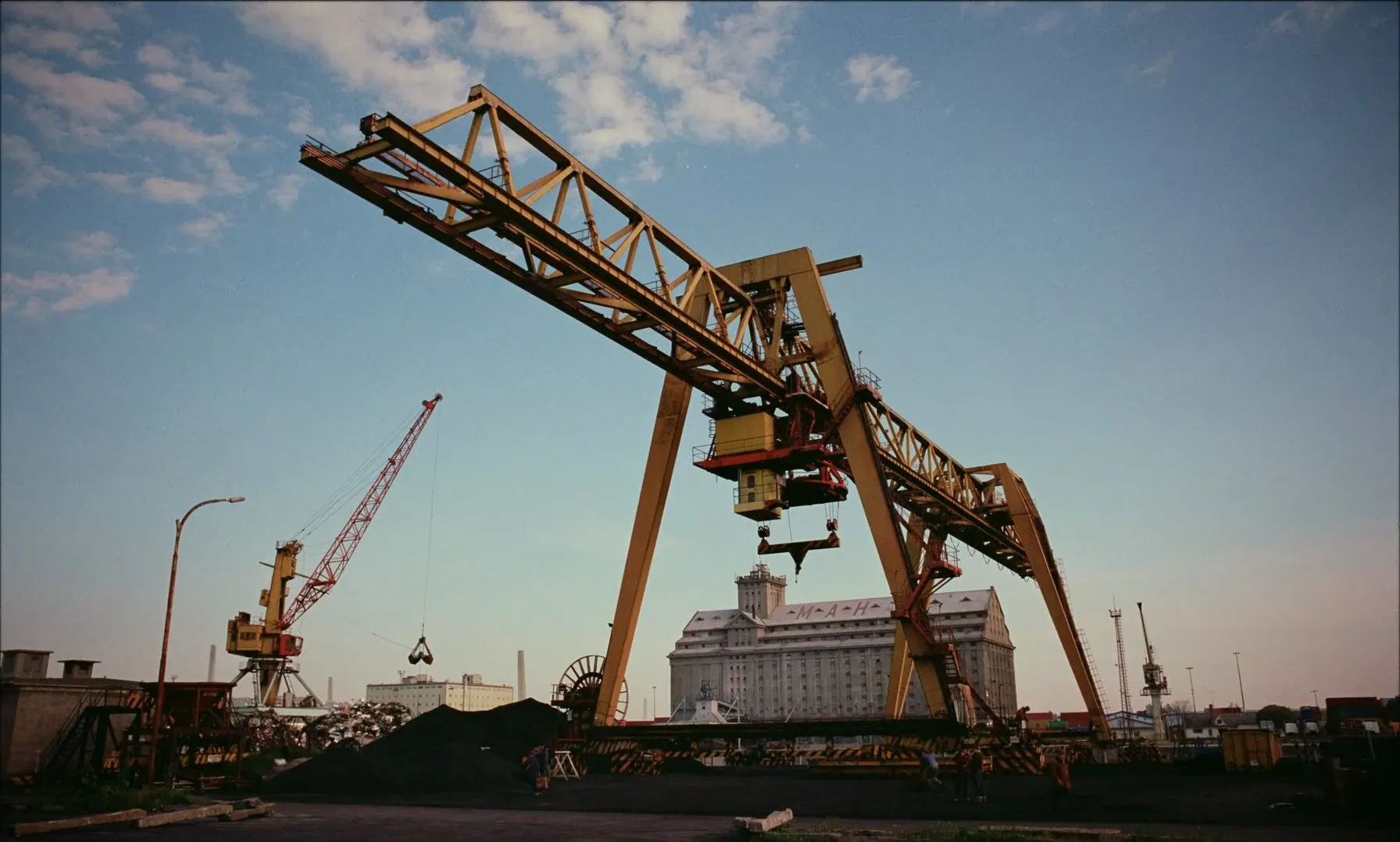
You feel it most in the scale shots. A crane against the sky, a marble quarry, a half-built monument — these land as genuinely large because the format resolves detail all the way into the distance instead of smearing it. Scale on screen isn't about how big the thing was on set. It's about how much true detail the frame holds, and a bigger negative simply holds more.
What the format does to a face
The oversized negative doesn't only serve wide shots. Bring it in close and it renders skin, hair, and fabric with a density that digital sensors chase but rarely match at this size. That's a gift and a problem at once. Crawley has said the format's resolution risked looking "too clean" — clinical, almost, in a way that would fight a story set in the grain and grime of the postwar 1940s and '50s.
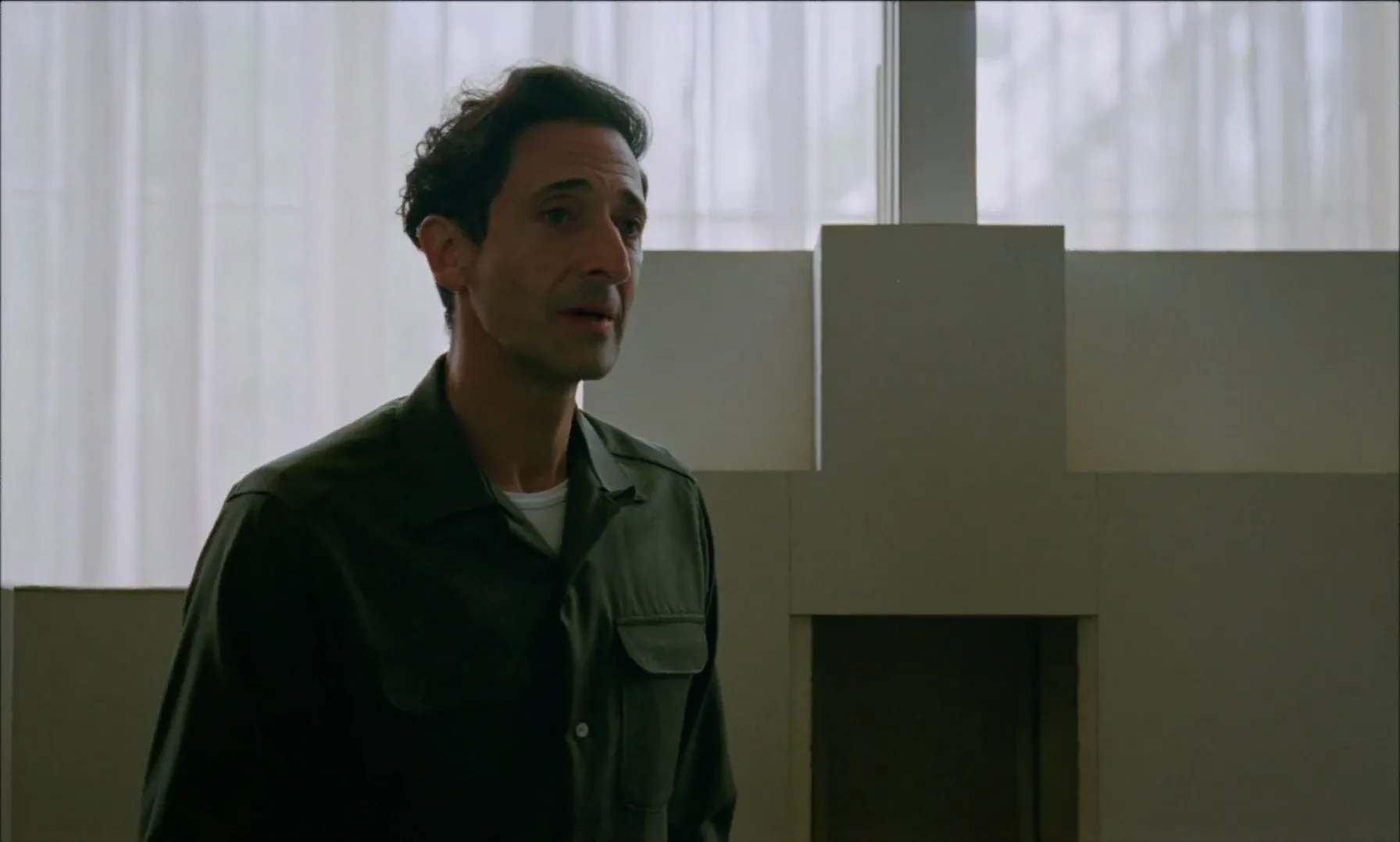
The answer was to fight the sharpness on purpose. Crawley shot Kodak Vision3 stocks and pushed the processing to build density into the shadows — what he described as reaching for the deep, weighted blacks of a Bruegel painting rather than a crisp modern digital look. This is the part worth internalizing: choosing a format is only half the decision. How you expose and develop it — where you let it stay clean and where you deliberately dirty it up — is what turns a technical spec into a look.
Constraints, not budget
Here's the number that should stick with you: 34 shooting days. One VistaVision camera, a body from the 1970s with an outdated video tap and none of the ergonomics of a modern rig. To cover the big frame, the team mounted medium-format Leica stills glass. That's not a blockbuster kit. It's a working indie package pointed at an unusually ambitious target.
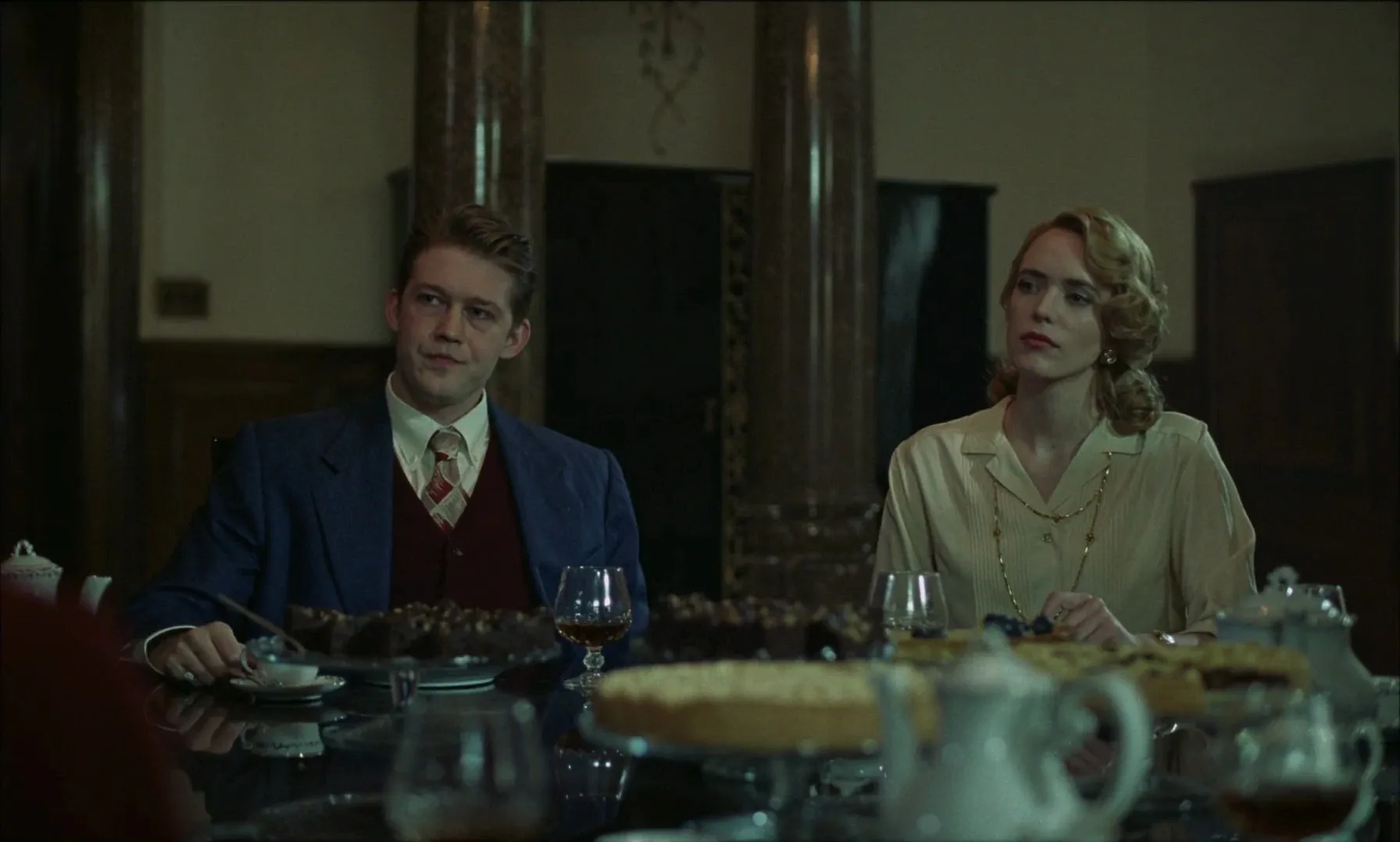
Crawley has framed the whole exercise as a kind of argument — that a film doesn't have to cost two hundred million dollars to feel enormous. The epic quality came from format, composition, and restraint, not from spend. Every frame is built to make its space feel bigger than the day it was shot in, using a longer lens that a wide format made possible and a negative that keeps the far corners of the frame alive.
That's a lesson that survives the film-versus-digital debate entirely. Whether you're on VistaVision, large-format digital, or Super 35, scale is a decision about where you put your attention — which lens keeps the geometry true, how deep you hold focus, where the light falls off. The wide-format capture choice sits right alongside the anamorphic-versus-spherical question: both are really about matching the shape and texture of the image to what the story is about.
The most portable takeaway is the least technical one. Corbet and Crawley knew exactly what they wanted the film to feel like before a foot of that precious single-camera negative ran through the gate, because they'd studied how monumentality reads on screen. That kind of pre-visual clarity is what separates an ambitious look from an expensive accident — and it's a lot cheaper to pull real frames from films that already nailed the look you're chasing than to discover it on the day. Building that visual reference library before you shoot is how a small production starts thinking at the scale of a big one.
How did you like this article?
Login to react to this article
Discussion (0)
💬 No comments yet. Be the first to share your thoughts!