Sinners: The First Film Shot in Both IMAX and Ultra Panavision 70
The aspect ratio doesn't just change on screen in Sinners — it changes what the movie is doing to you. Inside Autumn Durald Arkapaw's two-format gamble.

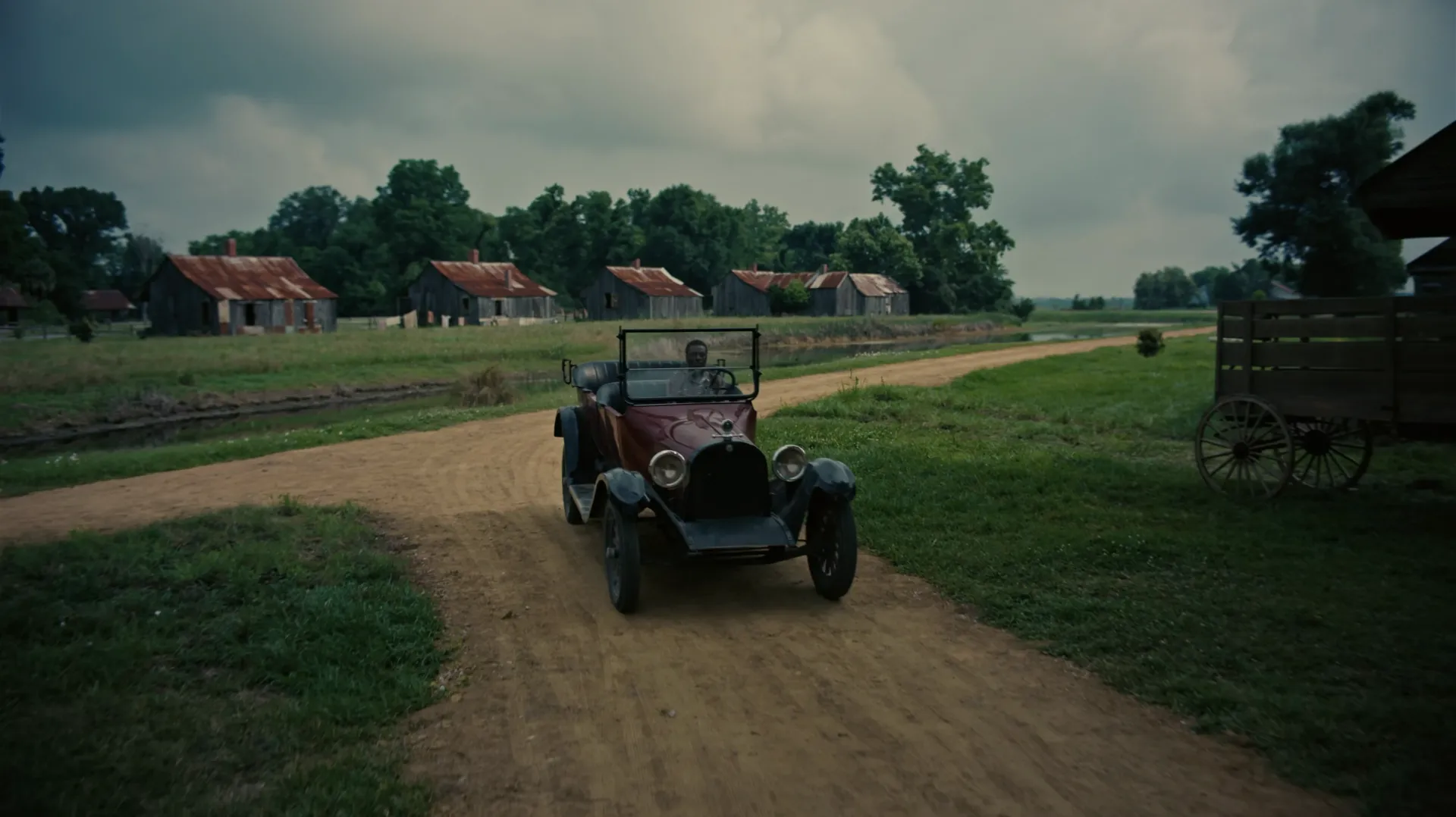
There's a moment in Sinners where the screen quietly grows. The black bars at the top and bottom retreat, the image climbs upward, and the whole frame swallows more of your field of view. If the projection is right, you feel it in your chest before your brain catches up to what changed. That expansion isn't a gimmick reel or a projection error. It's the movie telling you, without a word, that the ground just shifted.
Ryan Coogler and cinematographer Autumn Durald Arkapaw built that sensation into the film's DNA. Sinners is the first feature ever shot on both IMAX 15-perf 65mm and Ultra Panavision 70, cutting between a nearly square 1.43:1 frame and an ultra-wide 2.76:1 one inside the same story. The Sinners cinematography earned Durald Arkapaw the Academy Award for Best Cinematography at the 98th Oscars — the first time a woman has won the category, and she was already the first woman to shoot a feature on 65mm film at all. The records are real, but they're not the interesting part. The interesting part is what the format changes are doing to the story.
Two formats that were never meant to share a movie
IMAX 15-perf and Ultra Panavision 70 sit at opposite ends of the large-format world. IMAX runs 65mm film horizontally through the gate, 15 perforations per frame, and produces the tallest image in commercial cinema at 1.43:1 — close to a square. Ultra Panavision 70 does the opposite: 5 perforations, an anamorphic squeeze, and the widest theatrical frame there is at 2.76:1, the format Panavision built for Ben-Hur in 1959 and dusted off decades later for The Hateful Eight.
Nobody had put them in the same film before because they fight each other. One wants height, the other wants width. Durald Arkapaw and Coogler treated that conflict as the point. Instead of picking a single canvas and living in it, they assigned each format a job and let the seams show. If you've ever wrestled with how to choose an aspect ratio for your film, Sinners is a master class in refusing to choose just one — and making the switch mean something.
The wide frame is for the world
Most of Sinners lives in Ultra Panavision's 2.76:1. That extreme width is doing what widescreen has always done best: placing people inside a landscape. The film is rooted in 1930s Mississippi Delta, and the wide frame lets the flat land, the sky, and the distance between characters carry weight. A juke joint at dusk, two figures small against a corrugated wall, cars trailing off toward the treeline — the format holds all of it in one breath.
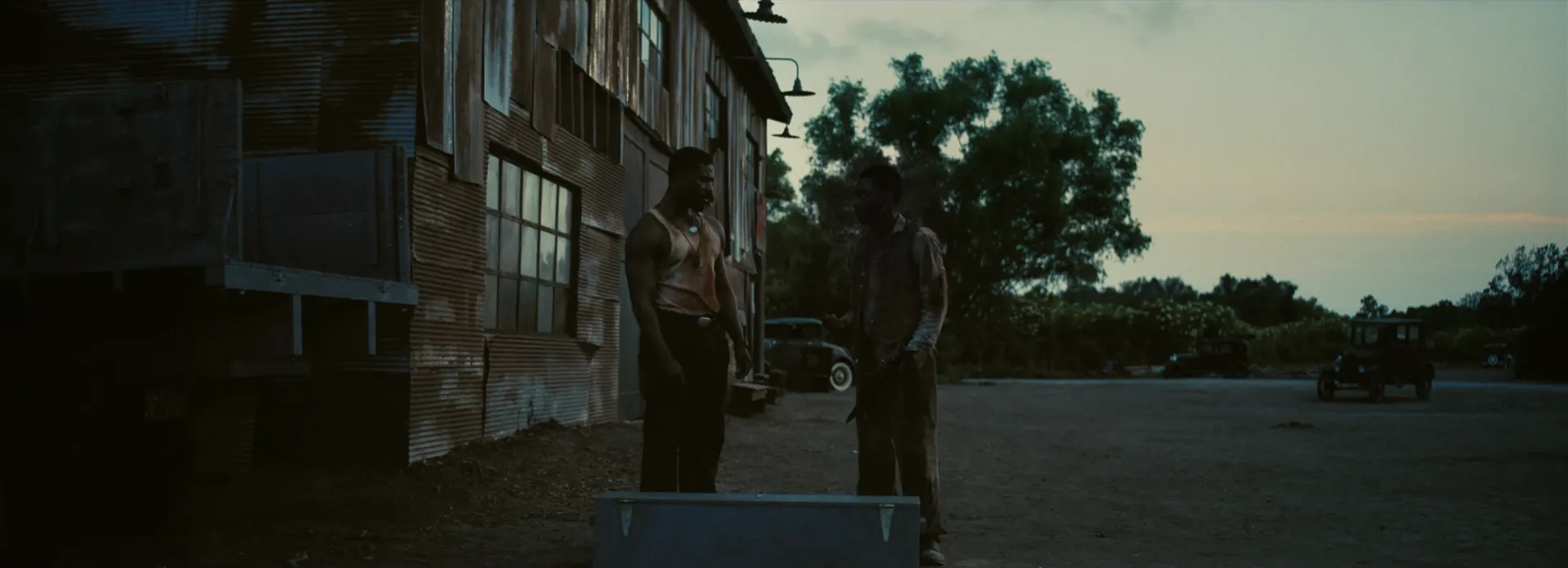
Width is also social. When the frame is that long, you can hold three or four people in the same shot without cutting, and the geography between them becomes readable — who's close, who's apart, who's being left out at the edge. For a story about community, music, and the things that prey on both, the 2.76:1 frame keeps the whole social fabric in view instead of chopping it into singles.
The tall frame is for the nerve
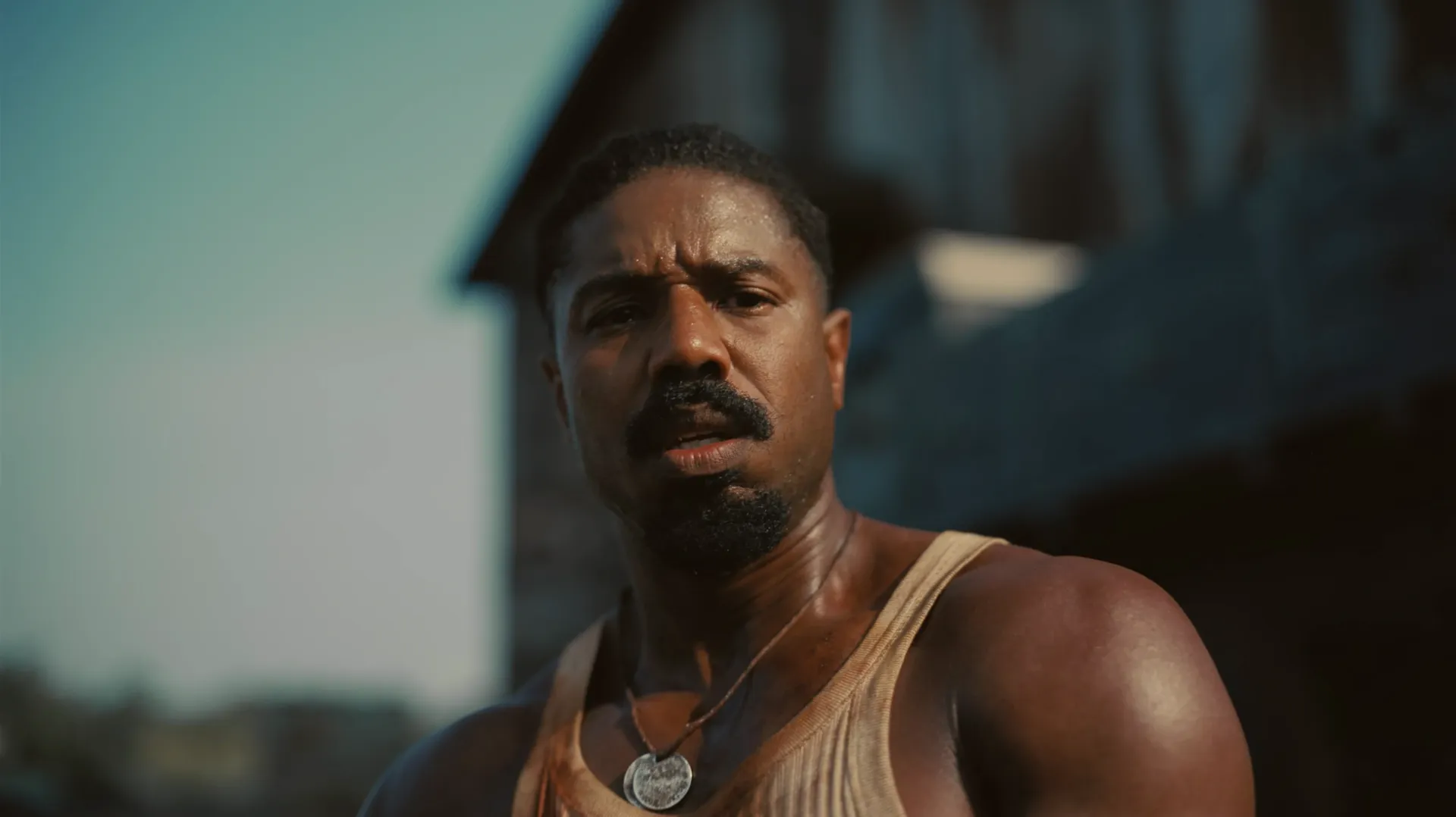
Then the frame grows, and the movie gets closer to your skin. Durald Arkapaw and Coogler reserve the 1.43:1 IMAX frame for the moments that need to press in — musical peaks, dread, the supernatural pushing through. The near-square shape wraps a face and pins you to it. As Durald Arkapaw has put it, the IMAX frame makes your eye scan across the image, where a wide frame lets you take it in all at once. That difference in how you look is the difference between watching a scene and being inside it.
That's why the biggest emotional beats climb into the taller ratio. A sweat-slicked close-up at magic hour, a performer alone in a pool of warm light, a moment of horror that fills the screen top to bottom — the format expands exactly when the film wants your guard down. It's the same logic Christopher Nolan has leaned on for years, and if you liked how Oppenheimer used its Nolan frames to shift register, Sinners takes the idea further by pairing IMAX with a second, opposing format instead of one flat backup ratio.
What it cost to shoot this way
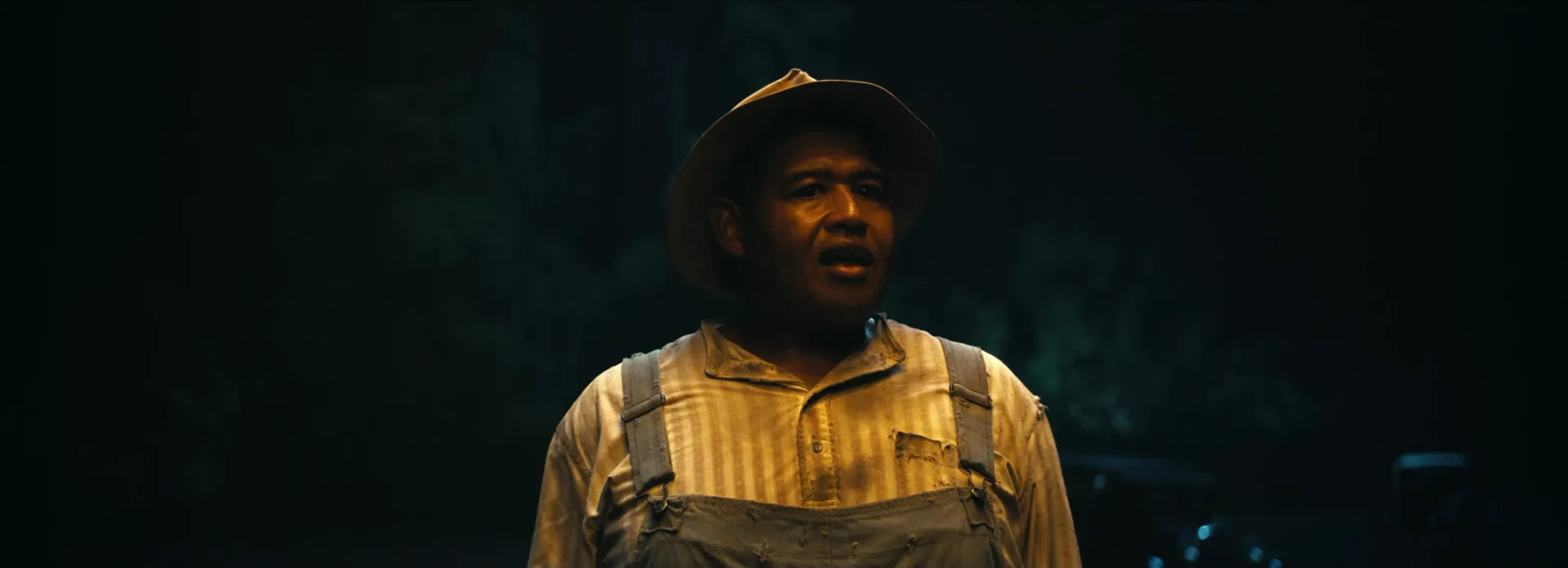
None of this was convenient. The production ran 66 days across southeastern Louisiana in the spring and summer of 2024, in heat past 100 degrees with humidity to match, hauling IMAX cameras that weigh around 65 pounds. Those cameras are loud enough that dialogue-heavy scenes had to be re-recorded in ADR later. A full 1,000-foot IMAX magazine buys you roughly two and a half minutes before a reload. Every setup carried that overhead.
The stock choices were just as deliberate. Durald Arkapaw shot on Kodak Vision3 500T (5219) throughout, then switched to Ektachrome — a reversal stock, punchy and saturated — for a key flashback, a texture change you can feel even if you can't name it. On the glass, she paired Panavision's Ultra Panatar 1.3x anamorphics for the wide work with Panavision IMAX optics for the tall frame, lenses that don't match exactly but share a soft, forgiving falloff toward the edges. The point wasn't technical purity. It was two distinct looks that still belong to one film.
The takeaway isn't the gear
You can't rent your way to Sinners. Ten venues on the planet could even project the full 1.43:1 IMAX version. But the thinking behind it scales down to any budget: aspect ratio is a storytelling instrument, not a delivery spec you settle at the end. Deciding when the frame should feel wide and when it should feel close is a creative choice you can make with two lenses and a matte, or in the edit, long before you have a 65-pound camera on your shoulder.
The move is to plan it. Look at how films you admire use their frame — where they open up, where they clamp down — and build that into your shot list before you're on set bleeding daylight. That's the kind of study a strong visual reference library is built for: pulling real frames, reading how the ratio carries the emotion, and bringing that language to your own board. Sit with a stack of Sinners stills and you can see the two formats arguing across the film — which is exactly the conversation worth having about your own.
How did you like this article?
Login to react to this article
Discussion (0)
💬 No comments yet. Be the first to share your thoughts!