Moonlight Cinematography Breakdown: Three Chapters, Three Film Stocks, One Face
Barry Jenkins called it a fever dream. The color science underneath used three different film stocks to tell one boy's story as he grew.

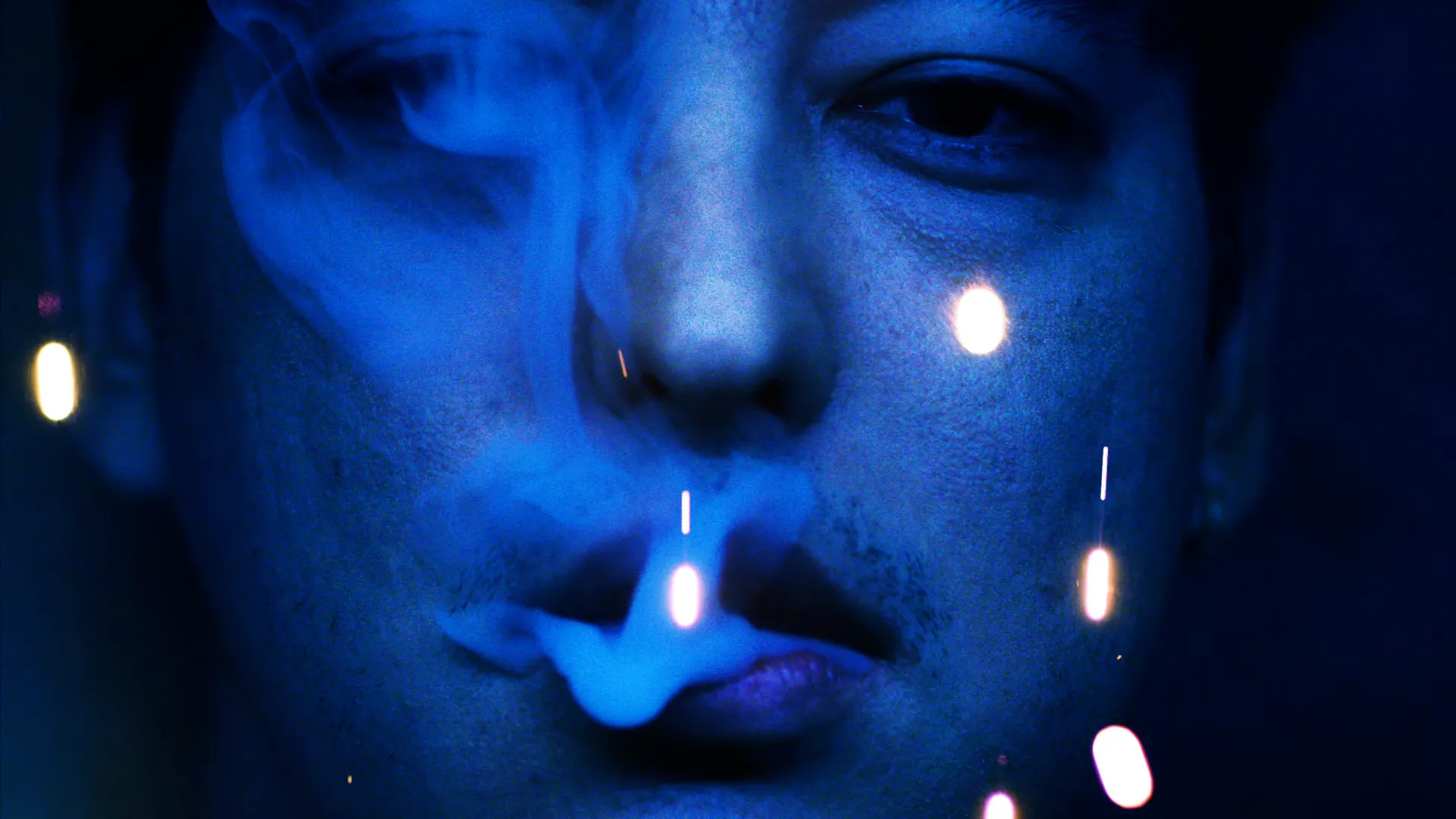
Watch the opening shot of a boy's face in Moonlight and notice what isn't there: fill light. James Laxton lets the shadow side of Chiron's face fall off into black, and the skin that does catch light reads with a depth most movies sand smooth. Then, an hour of screen time later, that same face is lit and colored like a different film stock entirely — because, in the grade, it is.
That's the move at the center of any honest Moonlight cinematography breakdown. Barry Jenkins built the film in three chapters — "Little," "Chiron," and "Black," the three names one person answers to from childhood to manhood — and each chapter was graded to emulate a different film stock. Color here isn't decoration laid over the story. It ages with the character.
Three chapters, three film stocks
Jenkins and Laxton shot on an ARRI Alexa XT, recording ProRes rather than raw — Laxton's testing found the Alexa's latitude in ProRes gave them everything the movie needed without the raw pipeline. On set, they monitored a plain Rec 709. The looks that people remember didn't exist yet during production. They were built in the digital intermediate.
That work fell to colorist Alex Bickel, who developed film-emulation LUTs with color scientist Bill Feightner. These weren't grain overlays. They were reverse-engineered from scans of real stocks, designed so digital color would respond to light and shadow the way a specific emulsion would. One stock per age of Chiron's life:
- Fuji for childhood. A little warmer, and it pulls texture out of skin instead of flattening it — the right register for a kid still open to the world.
- Agfa for adolescence. The old German stock pushed cyan into the highlights, giving the teenage chapter an almost turquoise cast, cold and self-conscious.
- Kodak for adulthood. Modified for more pop and shine, matching a grown Chiron who has armored himself into "Black."
Three emulsions, one face. The grade does what a voiceover would have wrecked.
Lighting dark skin without the fill
The film-stock trick gets the headlines, but the more teachable choice is what Jenkins and Laxton did with light on set. They pulled the fill. Rather than lifting the shadow side of a dark-skinned face to a "safe" exposure, they let it go, and sculpted with the key and whatever the shadows gave back.
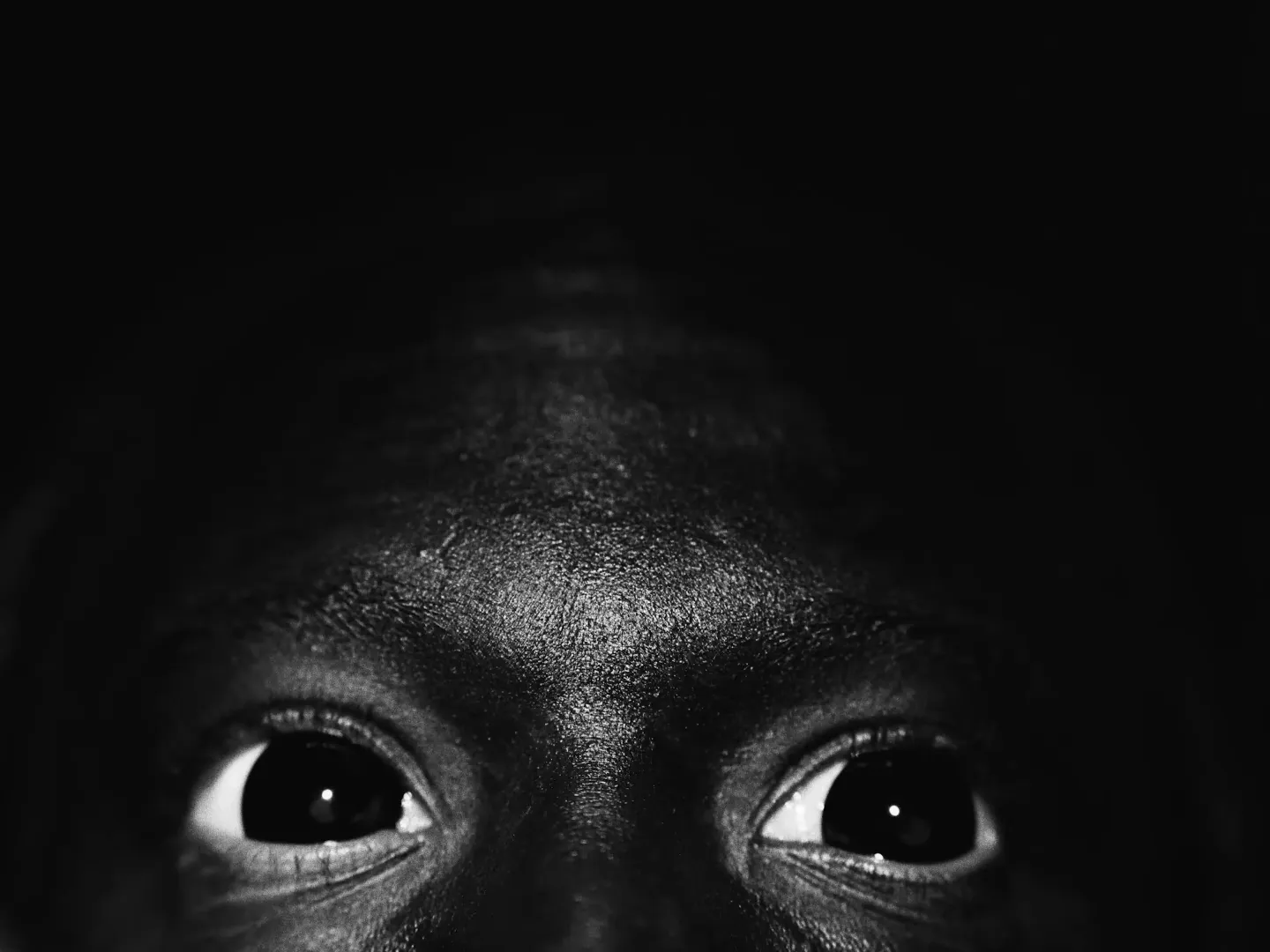
This is subtractive lighting, and it's the opposite of the reflexive advice to fill until nothing clips. Dark skin holds up to it. Take away the fill and you get texture — pores, sweat, the specular roll-off across a cheekbone — instead of an evenly lit mask. It reads as a real person in a real room. The Fuji-flavored warmth of the first chapter was chosen partly because it brings that skin texture forward rather than smoothing it out.
If you take one thing from a Moonlight cinematography breakdown into your own work, make it this: decide what you're willing to lose to shadow before you decide what to light.
"In moonlight, black boys look blue"
The title isn't a mood. It's a line. Moonlight is adapted from Tarell Alvin McCraney's play In Moonlight Black Boys Look Blue, and in the film Juan tells young Chiron that an old woman once said it to him — that under a certain light, dark skin turns blue. The Agfa chapter's cyan-pushed highlights are the whole movie quietly paying that line off.
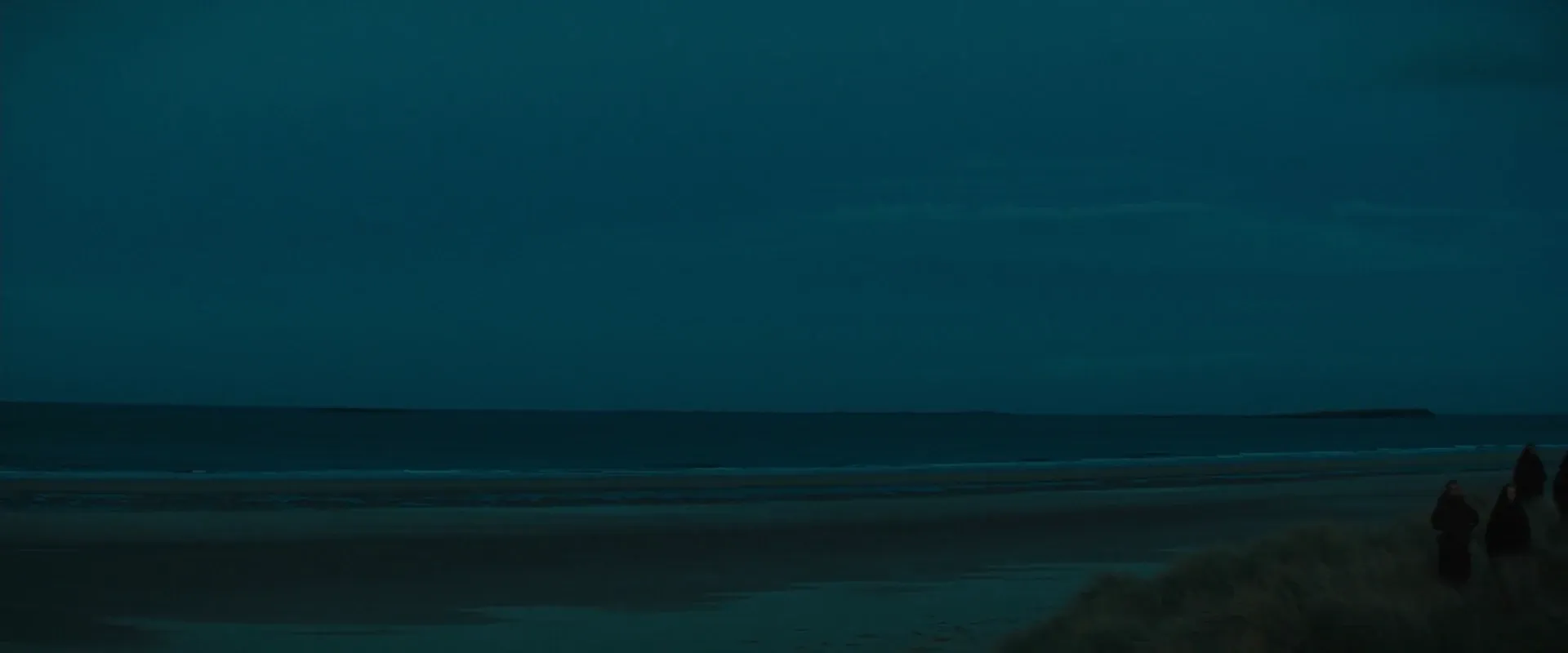
Blue runs through the film as water — the ocean off Miami where Juan teaches Chiron to swim, where Chiron later has his one tender night as a teenager. Laxton doesn't fight the color. He leans the whole adolescent chapter toward it, so the turquoise cast on a face and the blue of the sea belong to the same world.
That's a lesson worth stealing whatever your budget: a single dominant color, committed to across a whole act, does more than a scene-by-scene palette that never settles. It's a cousin of the discipline behind orange-and-teal color grading and knowing when to break it — except here the "when to break it" is the entire structure, the stock changing under Chiron as he changes.
Why emulate a stock at all
Laxton has said Jenkins pitched Moonlight as a fever dream — they never meant it to look realistic. That framing explains why film-stock emulation was the right tool instead of a straight naturalistic pass. A real emulsion doesn't just tint an image; it decides how highlights bloom, how shadows sit, how saturated a red gets before it clips. Emulating Fuji, Agfa, and Kodak in turn gives each chapter its own physics, not just its own filter.
The anamorphic widescreen frame does its part too. Shot with Hawk anamorphics, the movie gives a small, interior story the scope of something epic — one boy's face filling a 2.39:1 frame, treated with the seriousness of a landscape. If you're weighing that choice for your own project, it's worth understanding what the glass actually buys you before you commit, which is the real question behind anamorphic versus spherical lenses and which look fits your story.
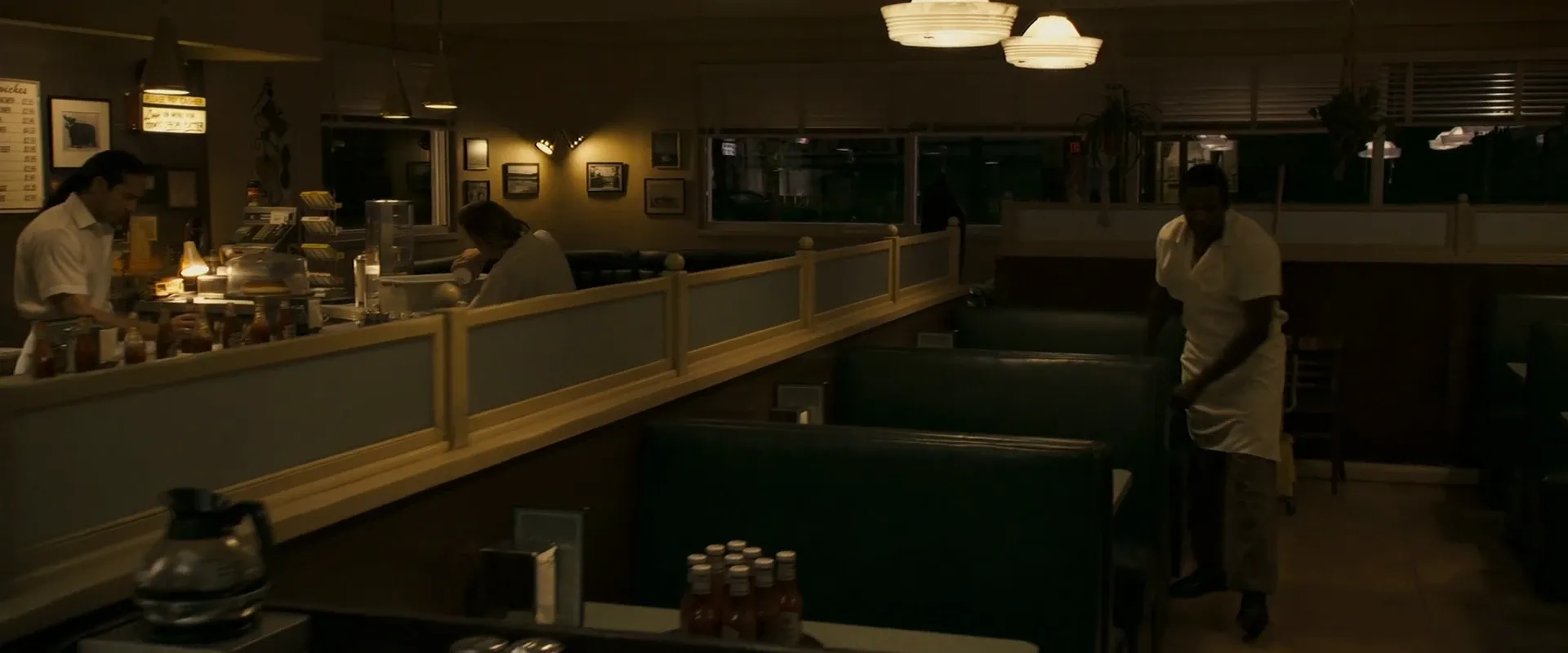
By the adult chapter, the Kodak-flavored warmth returns — most memorably in the diner where Chiron and Kevin finally sit across from each other, the room all soft amber and held breath. After a childhood of Fuji warmth and a teenage stretch of Agfa cold, the color coming home is the reunion, before either man says much of anything.
Steal the method, not the LUT
You don't need Bickel's LUTs or an Alexa to use what Moonlight figured out. What it proves is that color can carry structure — that a look, held long enough and shifted at the right moment, tells the audience where they are in a life without a word of explanation. That only works if you plan it before the shoot, chapter by chapter, reference by reference.
That's the case for building a visual language on paper before you build it on set. Pulling stills that nail the exact warmth of your first act and the exact cold of your second, laying them beside your shot list so the DP and director are arguing over the same frames — that's where a decision like Moonlight's stops being a happy accident in the grade and starts being a plan. Start assembling that reference library in StillsLab while the idea is still just a feeling about color, and the grade at the end has something to aim for.
External reference: IndieWire's breakdown of Moonlight's color and skin tone.
How did you like this article?
Login to react to this article
Discussion (0)
💬 No comments yet. Be the first to share your thoughts!